Karl W. Wilkes stands out as a multifaceted artist whose works transcend traditional artistic boundaries to explore deep cultural, historical, and societal themes. Known for his renaissance-inspired approach, Wilkes doesn’t just create art for visual appeal; he crafts pieces that encourage audiences to question their understanding of reality, their perceptions of history, and their place in the world. With a practice that spans across multiple mediums, from painting to large-scale murals, Wilkes has made a significant impact in the art world by pushing viewers to think, feel, and reflect in profound ways.
A Commitment to Authenticity
At the heart of Wilkes’s work lies an unwavering commitment to authenticity. For him, art is not just about making beautiful objects; it is a tool for personal expression and social reflection. Wilkes believes that art has the power to transcend time, space, and identity. His pieces serve as gateways into conversations about culture, history, and human identity, inviting the audience to embark on a journey that merges the past, present, and future into one universal language.
Each of Wilkes’s works carries this ethos, blending the complexity of human experience with the richness of historical and cultural narratives. His belief in art’s transformative potential is reflected in every piece, which challenges not only the viewer’s understanding but also their assumptions. Rather than reinforcing societal norms, Wilkes’s art aims to disrupt them, offering a fresh perspective on issues often ignored or taken for granted.
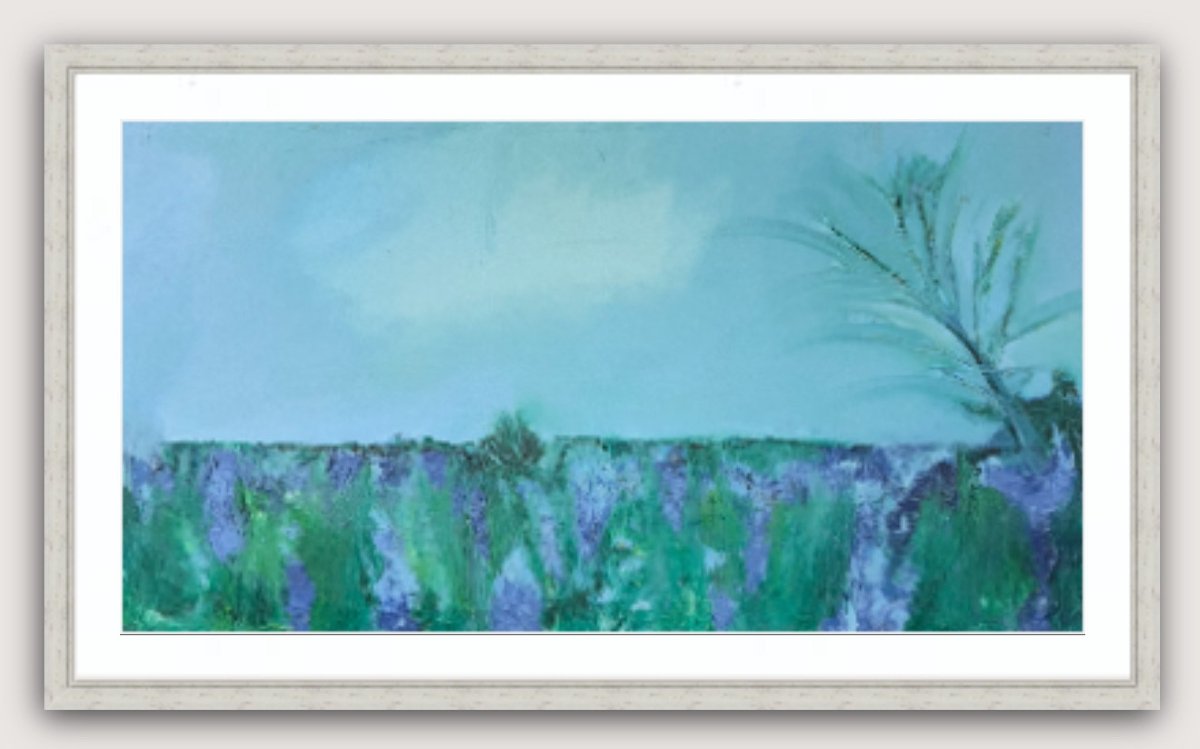
Photo Courtesy: Karl W. Wilkes (Blue Bonnets oil on canvas 22×43, 2022)
The Power of Multi-Medium Expression
Wilkes does not limit himself to a single medium. His artistic practice spans painting, sculpture, and murals, each serving a different yet equally significant purpose. Rather than creating mere decorative pieces, his works are carefully crafted vessels of meaning. The variety of mediums allows him to explore different methods of expression and expand the impact of his messages. Whether on a canvas or in a larger-than-life mural, every piece is designed to spark dialogue and reflection.
For Wilkes, each piece of art is an invitation, a call to viewers to engage, to reflect, and to interpret. This diversity in artistic expression not only enriches his portfolio but also ensures that his work speaks to a broad audience, meeting them where they are. The visual language he uses transcends cultural and societal boundaries, making his art accessible to a wide range of people while still remaining deeply meaningful and thought-provoking.
An Invitation to Personal Interpretation
Wilkes’s approach to art is deeply personal. It is driven not just by aesthetic goals but by a desire to fulfill humanistic urges. In his own words, “As an artist, I create to express and satisfy my aesthetic and humanistic urges. Whether that stimulation is positive or negative matters less than the fact that my work provokes a response.” This philosophy underpins the way his art engages viewers.
For Wilkes, the success of his art is not determined by whether the reaction is universally positive, but by the extent to which it sparks thought and reflection. His works are designed to provoke a range of emotions, whether joy, discomfort, nostalgia, or contemplation. He encourages viewers to examine their own emotional responses and derive their own interpretations.
By embracing ambiguity in his work, Wilkes ensures that his pieces are never static. Each viewing becomes a unique experience, shaped by the viewer’s individual context, emotions, and interpretations. This fluidity elevates the role of the audience in the artistic process, making them active participants in the conversation rather than passive observers.
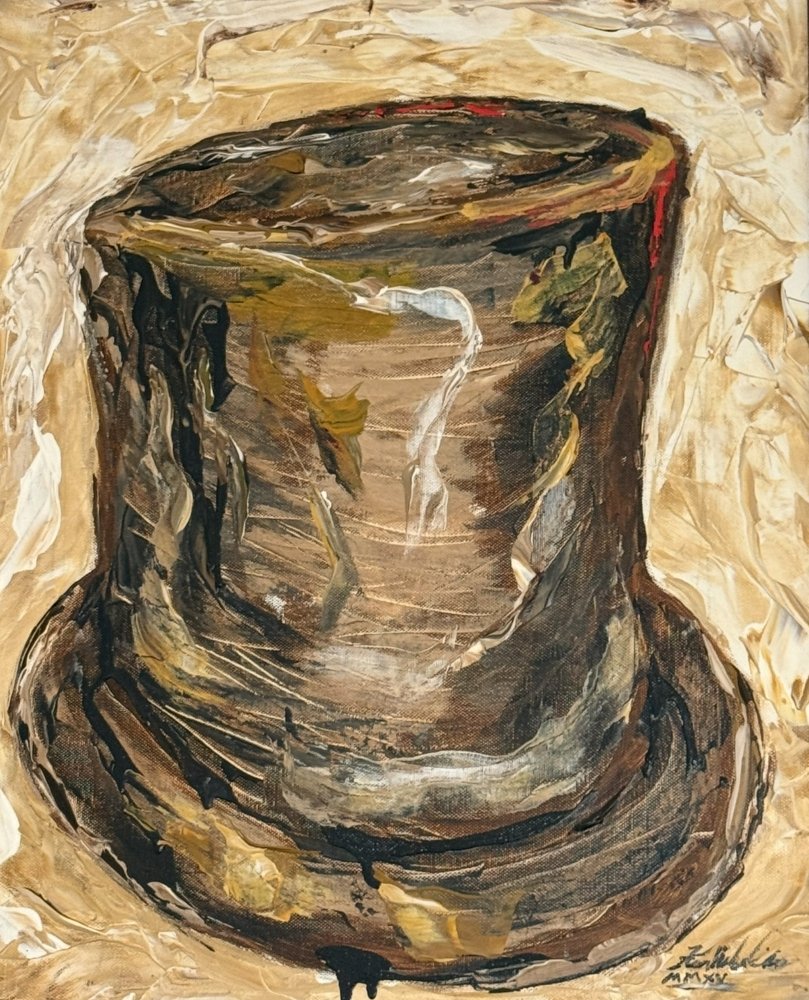
Photo Courtesy: Karl W. Wilkes (Lincoln’s Hat -POTUS Holy Grail oil on canvas
18×24, 2020)
A Dialogue Across Time and Space
One of the central tenets of Wilkes’s work is its ability to transcend time and space, creating a dialogue that spans across generations. Whether through the intimate strokes of a painting or the grandeur of a mural, his pieces offer an invitation to reflect on the interconnectedness of the past, present, and future. His art serves as a medium through which the stories and experiences of different eras and cultures can be explored, understood, and appreciated.
This ability to bridge temporal and cultural divides makes Wilkes’s work relevant across various contexts. His art does not belong to one specific time or place; rather, it exists as a universal language that anyone, regardless of background, can engage with. By confronting societal norms and cultural assumptions, Wilkes encourages his audience to rethink how these narratives shape their personal identities and societal roles.
The Lasting Impact of Wilkes’s Art
Wilkes’s impact goes beyond his artwork’s aesthetic value. His work is a catalyst for social and intellectual discourse, fostering a deeper understanding of human experiences. Through his diverse mediums, his emphasis on authenticity, and his commitment to provoking thought, Wilkes has succeeded in creating art that does more than adorn a space; it challenges and expands the way we view the world and ourselves.
Art, for Wilkes, is not a passive experience. It is an invitation to engage, reflect, and question. His work aims to encourage a dialogue about the human condition, offering an opportunity for viewers to delve deeper into their own beliefs and assumptions. By creating art that encourages such introspection, Wilkes has positioned himself as a visionary artist who pushes beyond traditional boundaries, making a lasting contribution to the world of art.