
By Daniel Mercer
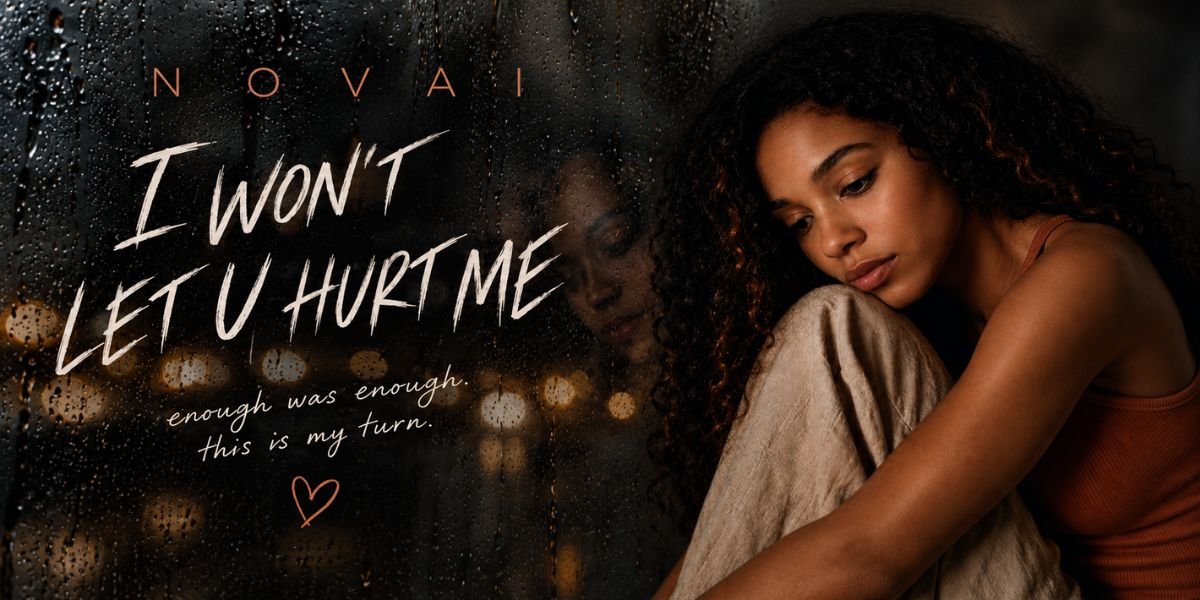
The title of Novai’s “I Won’t Let U Hurt Me” contains its most important word before the song even begins: “let.”
This isn’t simply a breakup song accusing someone of cruelty. Nor is it another streamlined empowerment anthem in which heartbreak conveniently disappears once the chorus arrives. Written by Michael Stover, “I Won’t Let U Hurt Me” is concerned with something more complicated: the moment when suffering becomes a choice the wounded person realizes she can refuse.
Novai begins with the facts. “You made me cry / Every time I trusted you,” she sings, quickly establishing a cycle of faith, deception and disappointment. There’s little abstraction in Stover’s lyric. The language is conversational and deliberately plain, reflecting the clarity that can arrive when someone has spent too long rationalizing what should have been obvious.
Then pain itself becomes instructive: it tells her “it’s time to go.”
That reversal gives the song its underlying momentum. Hurt is no longer merely something inflicted upon the narrator; it has become information. The very emotion that kept her trapped has begun directing her toward freedom.
The chorus makes the decision explicit. Novai promises herself that she won’t be hurt “anymore,” repeating the word until it begins to sound less like emphasis than reinforcement. She is not negotiating with the person who betrayed her. She is establishing terms for herself.
There is an important distinction between singing “You won’t hurt me” and “I won’t let you hurt me.” The former imagines control over another person’s behavior. The latter recognizes the limits of that control and relocates agency where it belongs.
Yet “I Won’t Let U Hurt Me” wisely complicates its own confidence.
In the second verse, Novai admits, “I’m scared, but I’m willing to try.” It may be the song’s most revealing line. Popular music has an enormous appetite for instant transformation: wounded protagonists become invincible between verse and chorus, leaving relationships with impeccable certainty and immaculate self-esteem.
Novai doesn’t quite offer that fantasy.
Fear remains.
What changes is her willingness to act despite it.
Her vocal performance follows that progression. She doesn’t approach the opening as an opportunity for virtuosity; she lets the words establish their own weight. As the song moves forward, her delivery gathers firmness, mirroring a narrator gradually becoming convinced of the boundary she has drawn.
That restraint is crucial. A song about emotional damage could easily invite vocal excess, turning every grievance into a crescendo. Novai instead allows determination to accumulate.
Musically, the single sits at the intersection of contemporary R&B, pop and adult contemporary, a combination well suited to Novai’s broader musical identity. The arrangement provides polish without obscuring the narrative. An instrumental passage interrupts the confrontation before the final chorus, giving the track a momentary release before Novai returns with greater certainty.
Stover’s lyric also permits anger to remain unresolved.
By the song’s later passages, Novai tells her former partner, in effect, to find somebody else to hurt. It isn’t magnanimous, but it is psychologically credible. Pop songs often treat healing as moral purification, as though deciding to leave should simultaneously eliminate resentment.
Real departures tend to be less orderly.
That rough edge helps “I Won’t Let U Hurt Me” avoid becoming a generic self-help slogan. The narrator has gained agency, not sainthood.
The song also provides an illuminating counterpart to Novai’s earlier “No Regrets.” That single celebrated liberation with the imagery of flight: brokenness transformed into wings. “I Won’t Let U Hurt Me” examines the decision that has to come before such freedom is possible.
One song looks backward from escape.
The other stands at the door.
That makes “I Won’t Let U Hurt Me” particularly significant within the emotional terrain of This Is Novai, an album that moves among romantic disappointment, self-definition, celebration and Christian faith. Across those subjects runs a recurring question: Where does identity come from when someone else has spent considerable energy defining your worth?
Here, Novai’s answer is unusually practical.
She stops participating.
There is no guarantee that leaving will immediately produce happiness. The song never promises that another relationship will be better, or even that loneliness will be easier. It simply recognizes that repeated injury has become unacceptable.
That modesty makes the conclusion more persuasive than a grand declaration of victory would have been.
“I Won’t Let U Hurt Me” isn’t really about defeating an ex. It’s about recognizing the difference between what someone does to you and what you continue allowing them to do.
By its final moments, Novai hasn’t erased the hurt.
She has changed its authority.
And sometimes the beginning of freedom is exactly that small: not forgetting what happened, not pretending it didn’t matter, but deciding it will no longer determine what happens next.