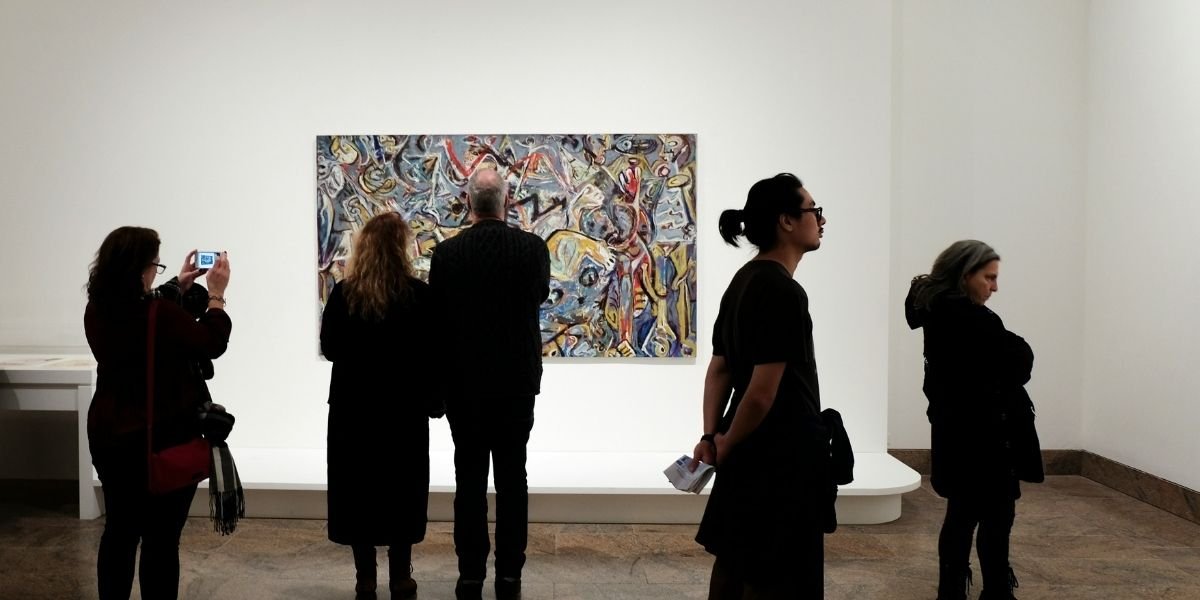

Museum Ludwig in Cologne is hosting an eagerly awaited retrospective of Yayoi Kusama, one of the most groundbreaking artists of the 20th and 21st centuries. The exhibition, titled Kusama: A Retrospective, takes visitors on a journey through Kusama’s seven-decade career, exploring her evolution from her early works in Japan to her internationally recognized installations that have redefined the boundaries of contemporary art.
The exhibition, open until August 2026, is a comprehensive showcase of Kusama’s artistic journey, featuring over 300 works, including paintings, sculptures, and large-scale installations. It highlights her signature use of polka dots, infinity rooms, and immersive environments, while emphasizing her profound influence on the global art world. Kusama’s career-long exploration of themes such as repetition, identity, and infinity has made her one of the most important and widely celebrated artists of her time.
A Deep Dive into Kusama’s Artistic Evolution
The retrospective at Museum Ludwig offers a thorough look at Kusama’s evolution as an artist. Beginning with her early works in Japan, the exhibition traces her journey to New York in the 1960s, where she became an integral part of the avant-garde movement. Kusama’s art was rooted in her personal experiences, and the exhibition captures the psychological intensity that characterizes much of her work. From her early drawings and paintings, which feature swirling dots and repetitive patterns, to her later immersive installations, Kusama’s work has always been defined by a powerful sense of infinity.
The exhibition’s historical depth provides visitors with insight into Kusama’s significant role in the development of modern art. Her avant-garde approach to painting and sculpture challenged traditional ideas about art, making her a central figure in the American avant-garde scene of the 1960s. Kusama’s move to New York marked a pivotal moment in her career, as she became closely associated with figures like Andy Warhol, Claes Oldenburg, and Donald Judd. Her works during this time, which include Infinity Net paintings and soft sculptures, demonstrate her interest in psychological and emotional exploration, making her art both deeply personal and universally resonant.
Infinity Rooms and Immersive Art
One of the central highlights of the retrospective is Kusama’s Infinity Mirror Rooms. These works have become some of the most iconic and widely recognized pieces in contemporary art. Kusama’s use of mirrors and light creates an illusion of endless space, drawing viewers into an immersive, multi-sensory experience. These rooms are not just art objects; they are designed to envelop the viewer, creating a space that feels both infinite and intimate at the same time.
The Museum Ludwig exhibition presents Kusama’s Infinity Rooms alongside her other immersive works, allowing visitors to experience the evolution of her approach to space and perception. The Infinity Mirror Rooms at Museum Ludwig include pieces like Phalli’s Field (1965), in which hundreds of soft, polka-dotted sculptures are arranged in a vast, mirror-lined space. These installations draw on Kusama’s obsession with repetition and infinity, creating environments that are both mesmerizing and disorienting.
The exhibition also includes newer installations that continue to push the boundaries of what an art experience can be. Kusama’s more recent works, including Flowers That Speak All About My Heart Given to the Sky (2018) and I’m Here, But Nothing (2000/2026), continue the artist’s exploration of infinite space, yet with an evolving aesthetic. These pieces demonstrate Kusama’s ongoing innovation and her ability to engage audiences through both familiar and new visual strategies.
Kusama’s Cultural Influence Beyond the Gallery
Kusama’s influence extends far beyond the traditional confines of the art world. Over the years, her distinctive use of polka dots, mirrored environments, and psychedelic color patterns has transcended galleries, becoming a global cultural phenomenon. Her art has been embraced by fashion designers, musicians, and pop culture, with her signature motifs appearing on everything from clothing lines to album covers.
The retrospective at Museum Ludwig situates Kusama’s work within this broader cultural context. While Kusama’s art remains rooted in the deeply personal, her global influence underscores her capacity to connect with diverse audiences. Her works have been incorporated into fashion collections by major designers like Louis Vuitton, and her Infinity Rooms have inspired artists and designers across multiple industries. Kusama’s polka dots have become a visual shorthand for creativity and boldness, representing both playfulness and introspection.
The Cologne exhibition highlights Kusama’s cultural resonance beyond the art world, showing how her work speaks to universal themes of connection, repetition, and self-identity. Kusama’s ability to engage with the public imagination makes her one of the most important artists of the contemporary era.
Kusama’s Enduring Relevance in the Art World
The exhibition at Museum Ludwig comes at a time of growing international recognition of Kusama’s work. Over the years, Kusama has become a household name, with her works regularly featured in major museum exhibitions across the world. The Cologne retrospective is a testament to her enduring relevance and her status as one of the most important living artists. Kusama’s work continues to attract large audiences, and her influence can be seen in the works of a new generation of contemporary artists.
The exhibition also highlights the global dimension of Kusama’s art. In recent years, Kusama has been celebrated in both Europe and the United States, where her installations are shown in major museums and galleries. The Cologne exhibition provides insight into how European institutions are engaging with Kusama’s legacy and ensuring her place in art history. For American audiences, the retrospective offers a glimpse into how European museums are recognizing artists who have reshaped global visual culture.
Kusama’s work resonates with a broad spectrum of viewers, from art enthusiasts to casual museum-goers. Her Infinity Rooms have become a must-see attraction for visitors worldwide, drawing attention from both art critics and general audiences. This exhibition underscores the power of contemporary art to transcend geographical and cultural boundaries, inviting viewers to reflect on creativity, resilience, and the infinite possibilities of imagination.