

For any musician, the name Carnegie Hall carries a singular, almost mystical weight. It is more than a venue of impeccable acoustics and gilded history; it is a monument to aspiration, a verb in the lexicon of success, and a hallowed space where artistic legacy is forged. To perform is to step onto a stage where the very air seems ionized by the echoes of Tchaikovsky, Mahler, and Bernstein. For violist Ms. Ding, this legendary stage has not been a single, fleeting dream realized, but rather the recurring and evolving backdrop for pivotal chapters in her artistic journey. Her series of appearances forms a narrative of growth, revealing a profound musicality that consistently merits a return invitation and the trust of conductors and institutions alike.
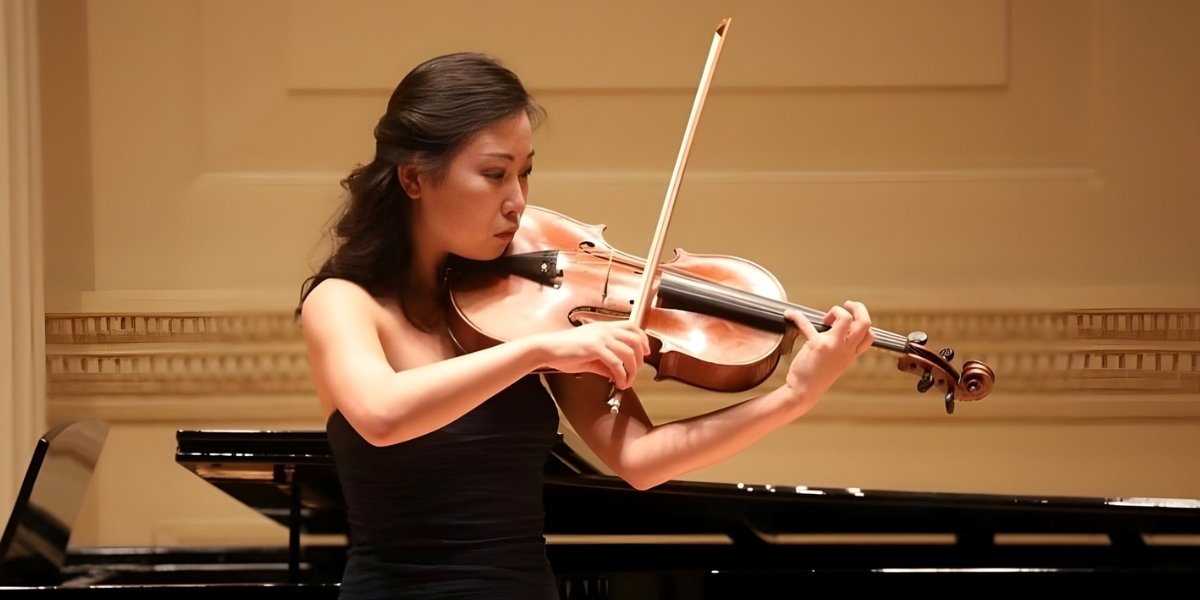
Her Carnegie Hall story began in 2014 with a powerful debut: the William Walton Viola Concerto with the New York Concerti Sinfonietta. To introduce oneself to the knowledgeable Carnegie audience with Walton is a profound statement. Composed in the late 1920s, the concerto is a masterpiece of contrasts, weaving languid, melancholic lyricism with sharp, jazzy syncopations and formidable technical passagework. It demands an artist who can navigate its emotional complexity—from the wistful introspection of the opening to the almost reckless exuberance of the finale—with both intellectual clarity and raw, passionate expression. Ms. Ding’s successful navigation of this challenging work did more than showcase her technique; it announced the arrival of a mature musical voice. She demonstrated an ability to command the vast space, not through sheer volume, but through nuanced phrasing and a rich, projected tone that could carry the concerto’s poetic weight. This debut was less a final destination and more a powerful opening statement in an ongoing musical discourse.
This initial success became a springboard for more opportunities on this prestigious stage. In 2016, she returned to Carnegie Hall to engage with the very foundation of the modern viola repertoire: Paul Hindemith’s Der Schwanendreher. If Walton’s concerto is a conversation with mid-century English modernism, Hindemith’s masterpiece is a pinnacle of Germanic structure and sonority, a concerto written by a composer-virtuoso for his own instrument. Based on old German folk songs, the work is a robust, deeply textured dialogue between soloist and orchestra, requiring not just technical mastery but a profound understanding of its architectural grandeur and earthy lyricism. Ms. Ding’s choice to present this work signaled a confident artist moving into the core philosophical territory of her instrument. It represented a shift from introducing her voice to refining and defining it within a more rigorous, historically grounded framework.
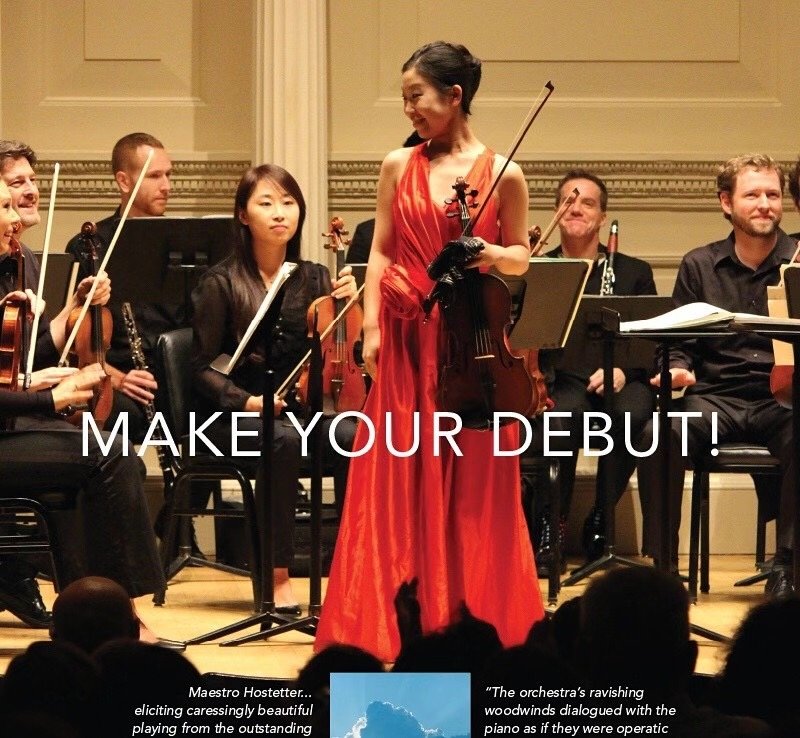
Photo Courtesy: Xue Ding
Later that same year, a different facet of her artistry was illuminated when she was awarded the Golden Classical Music Awards. Her victory performance featured the blistering precision of Paganini’s Caprice No. 5, arranged for the viola. This selection was a daring and strategic display of bravura. To transpose the fiendish fast runs and arpeggios spanning four octaves, rapid spiccato bowing, and soaring melodic lines of Paganini—originally conceived for the violin—onto the bigger viola is a monumental technical challenge. It demands a left hand of extraordinary agility and a right arm capable of translating violinistic fireworks into violistic brilliance. Her successful execution served as a powerful reminder that her musical depth is underpinned by exceptional, world-class technique. It proved that her artistic choices were born from capability, not limitation, and that she could command the stage with both cerebral repertoire and breathtaking virtuosity.
Perhaps the most resonant symbol of her established place within the professional musical ecosystem came in 2019. She was selected to perform with the Manhattan School of Music orchestra during its historic Centennial Concert at Carnegie Hall. This invitation carries a significance distinct from a soloist engagement. To be chosen from among the elite ranks of a premier conservatory to represent it on such a milestone occasion speaks volumes. It indicates that she was viewed not only as a talented soloist but as a collaborative artist of the highest caliber, a musician whose ensemble sensibilities and leadership were trusted to help embody a century of institutional excellence. This performance bridged her identity as a soloist with her foundational role as an orchestral musician, placing her inside the fabric of a celebrated tradition she was helping to perpetuate. It marked her as an integral voice within a legacy institution, sharing in the collective responsibility to honor the past while performing in the present.
Yet, the journey of a true artist continues unabated. Certain performances, however, remain cherished milestones that solidify an ongoing legacy. For Ms. Ding, one such enduring memory is her distinguished role as Principal Viola with the New York State Symphony Orchestra Musicians at Carnegie Hall’s Weill Recital Hall on November 12, 2023. This performance represents a full-circle evolution: from soloist to collaborative leader. As Principal, she was no longer just the singular voice but the anchor of the viola section, setting the bowings, shaping the phrase, and providing the harmonic bedrock for the entire orchestra. To assume this leadership role on the Carnegie stage is a testament to the deep respect she commands from her peers and signifies her complete integration into the professional orchestral landscape. It is a role that combines technical authority with soulful musicianship, proving that her artistry enriches every ensemble she joins.
Ms. Ding’s Carnegie Hall narrative is thus distinguished by its thoughtful continuity and organic growth. Each appearance represents a deliberate step in the development of her artistic portfolio: from the Romantic-modern fusion of Walton, to the rigorous core literature of Hindemith, to the dazzling firework display of Paganini, to a celebratory institutional centennial, and culminating in the leadership of a principal chair. This is not the trajectory of an artist with a single, static showpiece, but of a curious and intelligent musician building a substantive, multi-faceted dialogue with her audience, her instrument’s canon, and the history of the stage itself.
The adage asks, “How do you get to Carnegie Hall?” The punchline, of course, is “Practice.” But Ms. Ding’s journey reveals a more nuanced truth. Getting there once is a triumph of practice, preparation, and opportunity. Being invited back—to explore different corners of the repertoire, to celebrate institutional milestones, to lead as a principal, to be repeatedly entrusted with ever-more-significant roles—is a triumph of sustained artistry, interpretive integrity, and a compelling musical voice that promises and delivers new insights. Her performances at Carnegie Hall are more than prestigious entries on a biography; they are resonant declarations. Each one is a distinct chapter in an ongoing story, affirming her evolving place among the distinguished artists who have not only graced that storied stage but have contributed meaningfully to its enduring echo.