
A strand of calmness, melancholy, and wildness runs through Jingchao Yang’s video art, until it leads us to find ourselves in a world away from how we have it now: with immediacy, a chronological sense of prediction is instilled in the viewers. Churning Seas has the immensity of a planet predominantly submerged in water as a central theme, and as a prelude to this realisation, it makes us start our sensorial journey — enhanced by an immersive soundscape — on a seaside during Spring, where the sunlight pours over rocks whilst squawking seagulls glide across the screen. The focal point in this fragment of multi-channel moving image is the unsettling swarming of insects hovering over a rocked, abandoned vessel, its fragility emphasised by the presence of a tiny folded paper boat lingering by it, as to dramatise the promptness through which the composition evokes, at antithetical ends, the mighty complexity of marine life and the current global ecological crisis.
This prelude is redolent of memory and the past, yet it also points to the teleological narrative that Yang reflectively constructs in this work, as scenes and events poetically unfold before our eyes. Accordingly, and with a wise use of colour as an atmospheric factor, organically shaped or elongated silver-blue strings of glaciers are shot through zooming in and out, thereby conveying the insignificance of our civilisation in environments where human existence is tenuous or impossible. Yang extends this compositional and highly cinematic approach by incorporating panoramic movements from left to right and vice versa throughout the work. Functioning as an artist and dystopian eco-philosopher, he clearly pursues deliberate ends and advocates a final cause.
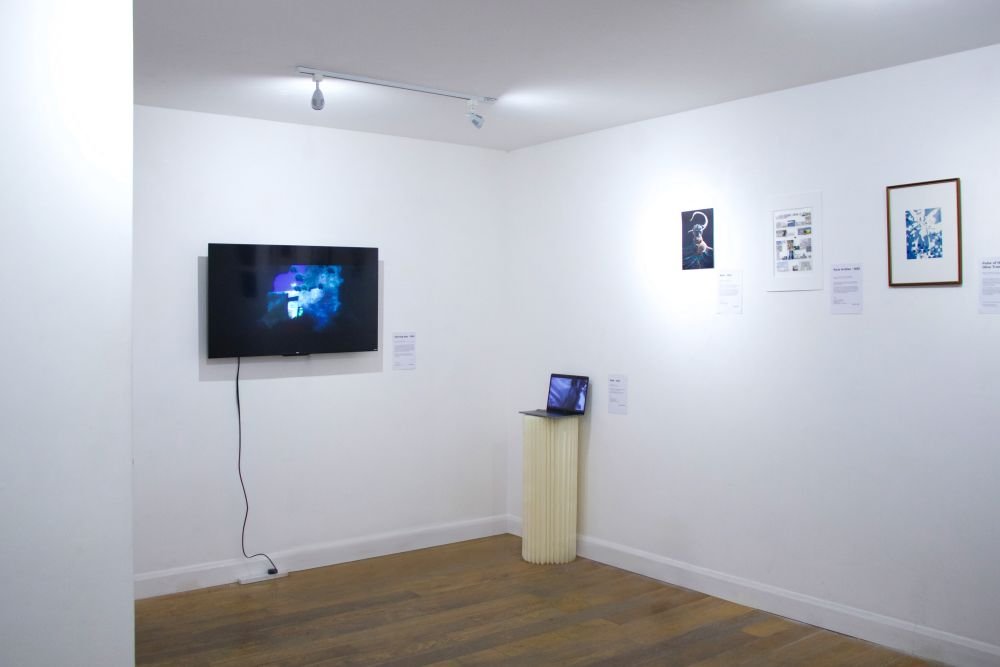
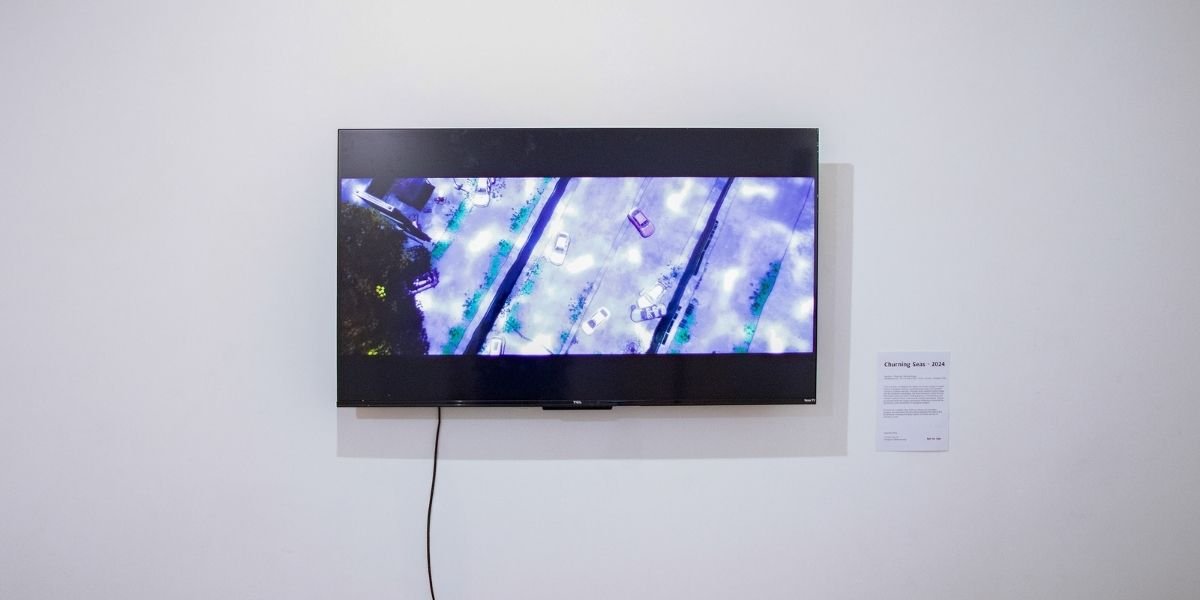
Photo Courtesy: Jinming Liu (The Installation view of “Churning Seas, 2024”, at the Fitzrovia Gallery, London)
Vertical constructions of motion picture are also applied, often instilling in the viewer a sense of the dilapidated and the oblivious: this is the visual decision through which Yang lets the vulnerable paper boat sink into the ocean, and, as it reaches the void, a deluged metropolitan space materialises. As Churning Seas enters the final steps of its poignant message, this strategy plunges us into a prophetic setting: scattered underwater vehicles signifying despair and the forgotten, zebra crossings overlapped by wave reflections from above signalling hopelessness and the spectral presence of those who have been drowned. Lights beam from derelict buildings whilst a swarm of fish float across the ghostly scenario, finally finding themselves back to the condition in which they may, undisturbed, inhabit uncontaminated waters.
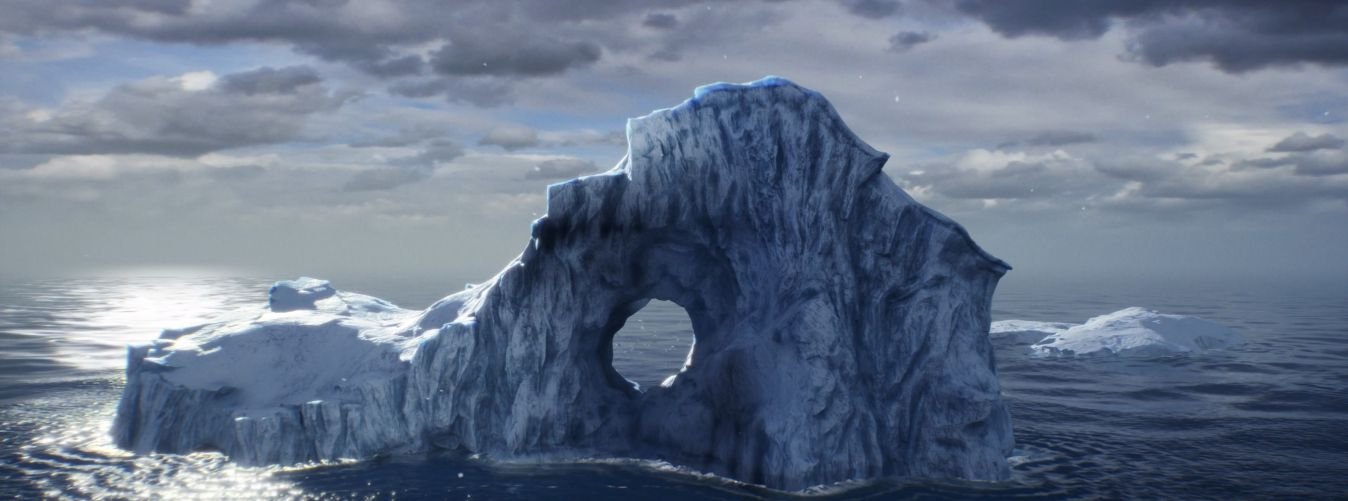
Photo Courtesy: Jinming Liu
Still Image of “Churning Seas”, 2024
Churning Seas is both a hymn to poetry through satellite data, field recordings, and simulated imagery and a warning about the imminent death of Gaia. It is an enveloping multidimensional experience shown at the exhibition Borderlines, the interactive dimension of which carries a destabilising and apocalyptic environmental message. Yet, this dual-purpose works also as foresight: the redemptive reclamation of Nature at the expense of the obliteration of progress and, ultimately, of the only species that obtusely and self-destructively engages with it, mankind.
Author’s Bio:
Kalinca Costa Söderlund is an art historian, critic, and cultural producer based in London. She holds a PhD in Art History and Theory, an MA in Contemporary Art, History and Criticism, both from the University of Essex, and a BA in Fine Art from Central Saint Martins School of Art and Design. Kalinca’s research has been presented internationally at symposia, congresses, and conferences, from the University of Peking (the Harvard of China) to the University of Salamanca (the Oxford of Spain), as well as through seminars, artist interviews, and didactic initiatives. Her publications include the RIHA Journal and Routledge’s Journal of Art History.
A specialist in Latin American art, her work engages with contemporary art and curatorial practice, emphasising voices from the Global South, and experimental and original practices at the margins of the global art system. Her transdisciplinary methodology draws on social and economic history, postcolonial and decolonial theory, biopolitics, posthumanism and transhumanism, and alternative epistemologies.