
By: Sujan Pariyar
In the heart of Hollywood, where dreams are sold by the square foot, and most stories never leave the sidewalk, one man stands out not for polished fame but for raw, unfiltered perseverance. Tyran Lee Ingram’s journey stretches from the quiet streets of South Bend and Elkhart to the glittering, unforgiving Walk of Fame. A former Army National Guard member, Christian high school graduate, and self-taught musician, he has slept outside to pay for studio time, held cardboard signs for spare change, and still managed to place his song “Thank the Lord” on international platforms. His remarkable work and humble, faith-driven career have already earned him features in LA Magazine, Hollywood Times, and Los Angeles Magazine. While he continues to look ahead with quiet determination to Billboard, Hollywood Reporter, and TMZ, his path has never been easy, yet it has always been guided by faith. In this exclusive conversation, Tyran opens up about the long march that brought him here, and why he still believes the best is yet to come.
You say the first song you ever taught yourself was “When the Saints Go Marching In.” Why does that still matter?
Tyran Lee Ingram: Because it was mine. Nobody handed it to me. I struggled a lot as a kid, but when I moved from South Bend to Elkhart, something shifted. Joining the Army National Guard felt like a door opening. I worked at Kroger, went to basic training, and turned eighteen while I was there. After that, I came back to Elkhart, called my recruiter, and kept doing drills in South Bend. I graduated from a Christian high school. I still remember giving them a picture of four of us together. Those years planted something. The song wasn’t just notes. It was the first time I felt like I could create something on my own.
You also worked at the old YMCA in Elkhart and trained at Steve’s Gym downtown. How did those places shape you?
Tyran Lee Ingram: They were real. No glamour. I bought a guitar and a chord chart. My room was pure Army camouflage, bedding, blinds, everything. I practiced, but I was never any good at guitar. Still, the discipline stayed with me. Years later, when I landed in Salt Lake City, I knew immediately I wanted to sing. My voice had been quiet for so long it fought me at first. I had to retrain it from the ground up.
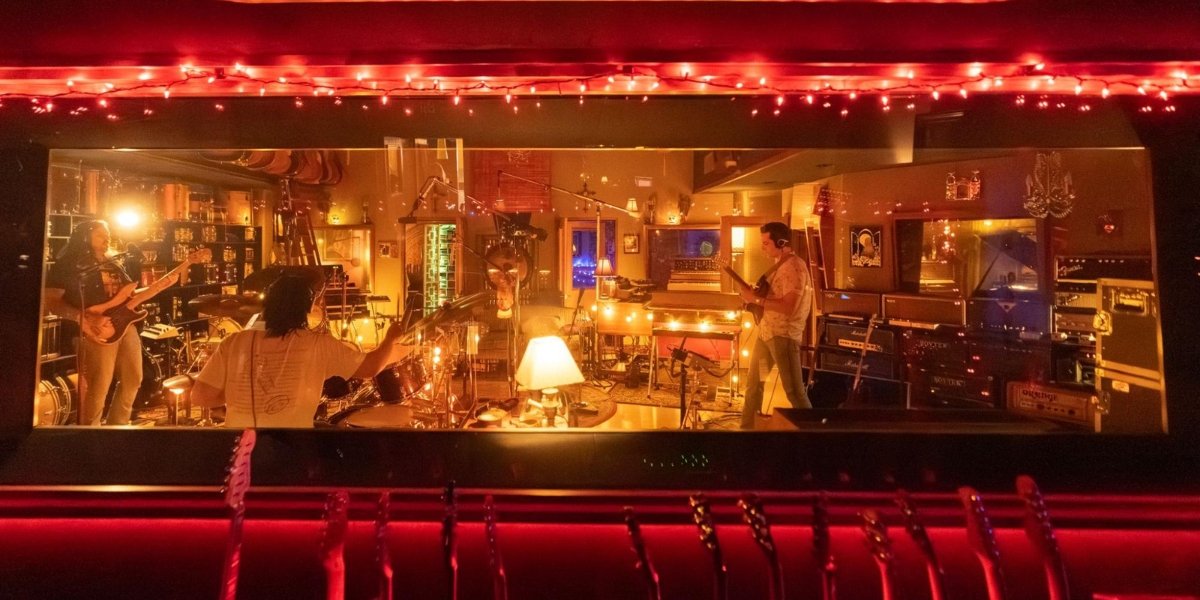
“Thank the Lord” was recorded at Audio Inn. That process sounds anything but easy.
Tyran Lee Ingram: It took a couple of months. I worked temp jobs just to pay for studio time. There were nights I slept outside. When the song finally hit the streaming platforms, I was living in West Valley. It was around Christmas. I prayed, and through personal revelation I moved again, and then again, until I ended up in Hollywood. I started right on the Walk of Fame with almost nothing. Cardboard sign. Tall white building. Standing in a doorway. People walked past. Sometimes they asked me to sing. I wasn’t the greatest singer, but I gave them what I had, usually just pieces of “Thank the Lord.” I made very little money. Fear talked to me constantly. But I kept reminding myself God was still able.
You’ve also stepped into film and faced athletic setbacks. How do those fit into the larger picture?
Tyran Lee Ingram: I’ve been with UnCut Casting on and off for the last couple of years. Since the pandemic started, I’ve basically lived on a dollar more times than I can count. Every single moment, whether it’s the wins or the losses, I had to walk past. I keep telling myself that the only thing that will last is the work and the faith behind it.
What do you want people to understand when they hear “Thank the Lord” now?
Tyran Lee Ingram: That it was never just a song. It was the sound of sleeping outside, of cardboard signs, of temp jobs and Spanish classes and moving on pure revelation. It is the sound of a kid who learned “When the Saints Go Marching In” alone in a camouflage room and refused to quit when the streets of Hollywood felt colder than the Utah winters. I still hope to stand on stages with the best. I submitted it to the Grammys. New questions keep coming, about the past, about other singers, about whether any of this is enough. All I know is I keep showing up. I keep singing the parts I remember. And I keep thanking the Lord, because He is the only reason any of this still has a pulse.
His voice is steady when he finishes. Outside, the Walk of Fame continues its endless parade of footsteps. Inside this quiet moment, Tyran Lee Ingram’s long march from South Bend to Hollywood feels less like a career strategy and more like a living testimony: sometimes the saints really do go marching in, one hard-won note at a time.