
Anyone who has scrolled past an awards show gallery knows the image: a wall of repeating logos, a line of arriving stars, and a hundred nearly identical photos taken in front of the exact same pattern. That’s a step and repeat. It has a specific job at those events: give press photographers a consistent, branded background no matter which celebrity steps into frame. Lately, though, that exact format, the same repeating pattern, has started turning up somewhere else entirely: at weddings, product launches, and milestone birthday parties that have nothing to do with a press line. The shift shows up first in the small choices: a couple’s names in place of a studio logo, a birthday date instead of a premiere title, the same disciplined grid doing an entirely different job. So what’s actually driving hosts to book a step and repeat backdrop for an event that has no red carpet at all?
What Actually Makes a Backdrop a Step-and-Repeat
The definition is more specific than “a backdrop with logos on it.” A true step and repeat relies on one pattern, a name, a logo, a single motif, repeated in a precise grid across the entire surface. The pattern has to be seamless enough that a photographer can crop tight on a face or pull back for a group shot and the branding still reads clearly either way. That repetition is the point. As one industry explainer on the format puts it, the repeating pattern of logos and branding on the banner creates a visually engaging and consistent backdrop in each picture, regardless of where in the frame a subject happens to stand. A solid color wall or a single printed image doesn’t offer that same built-in repetition, which is exactly why a repeating logo backdrop reads so differently in a photo. It’s built to repeat.
Why Hosts and Brands Are Borrowing the Format
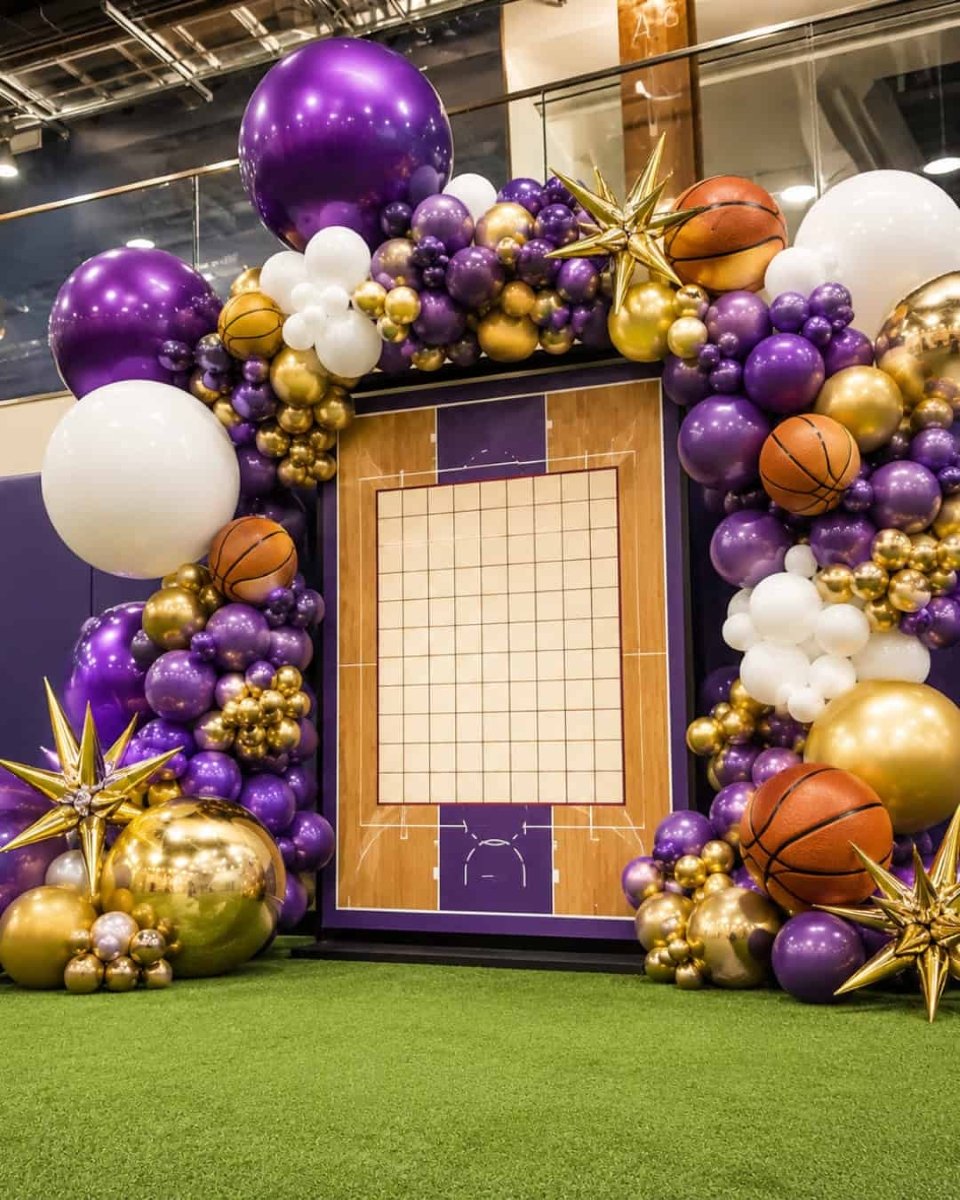
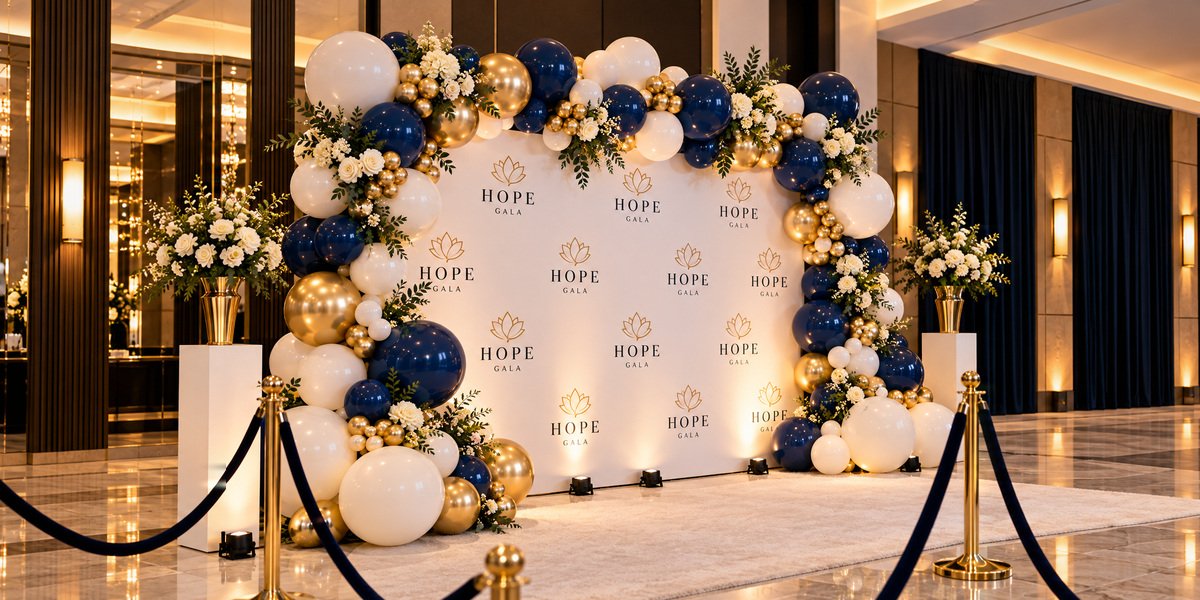
The appeal beyond red carpets comes down to something simple: a step and repeat backdrop means every photo taken in front of it carries the same message, no matter who’s in frame or how the shot is cropped. That’s a built-in branding win at a press event. That part is obvious. A step and repeat wedding setup runs on the same mechanic, just carrying a couple’s names or a date instead of a studio logo. As one event industry resource puts it, step and repeat signs and banners let you do just that, giving attendees an Instagrammable photo opportunity at any wedding. A company like The Balloon Guy LA builds that same repeating format in balloon form for hosts who want the effect without renting printed signage. “Once people see a step and repeat outside a press line, they realize it’s not exclusive to celebrities, it’s just a smart way to make every photo do double duty,” said Sean Edwards, Founder of The Balloon Guy. “It’s branding that doesn’t feel like branding, because guests are just having their picture taken.”
Getting the Repeat Right in Balloon Form
Printing a step and repeat is mechanical: a design file, a grid, a printer that reproduces the same logo at the same size every time. Building that same pattern out of balloons is not mechanical at all. Every cluster has to land at roughly the same size, the same spacing, and the same height as the one next to it, by hand, across an entire wall. Get the spacing wrong and the pattern reads as chaotic instead of intentional. One design resource on the format notes that this consistent spacing ensures a balanced, aesthetically pleasing pattern that looks manageable and sparse rather than crowded. Edwards describes the same challenge in balloon construction, where nothing is printed and nothing is automatically identical. “People think a repeating pattern is just about putting the same shape up over and over, but if the spacing drifts even a little, the eye catches it instantly,” Edwards says. “Getting it even takes more patience than most people expect, because there’s nowhere for a mistake to hide when the whole point is repetition.”
What This Trend Actually Signals
None of this means a step and repeat guarantees a great party, a viral moment, or a memorable event on its own. What it does is take a format built for controlled, repeatable branding and hand that same control to anyone hosting an event, not just a studio publicist. That’s the real shift. It’s not that weddings and product launches are suddenly imitating red carpets; it’s that hosts figured out the same repeating-pattern trick works just as well for them. So the practical test for anyone planning one is simple. Check whether the spacing and sizing actually stay consistent across the whole pattern, because that consistency, not the logo itself, is what separates a step and repeat that reads cleanly in photos from one that just looks like a cluttered wall. Edwards has spent more than fifteen years adapting formats like this one across weddings, corporate launches, and birthday parties, and that range is exactly what makes moving a red carpet staple into an ordinary backyard feel routine rather than experimental. That’s the actual signal. A step and repeat that holds up isn’t the one with the loudest logo, it’s the one where the pattern never breaks.