
By Zach Miller
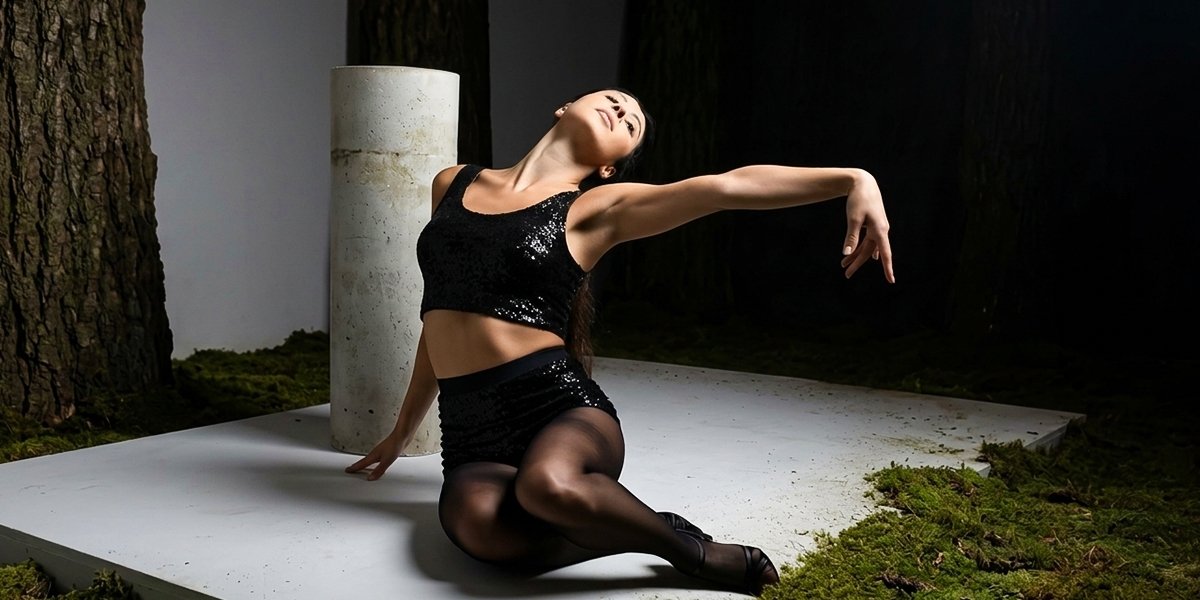
Deborah Paparella is a professional model, performer, and creative artist based in London. Her work combines fashion, dance, music, and storytelling to make each shoot emotional and alive. She has a background in modern jazz dance and years of experience in television, pageantry, editorials, and catwalks. Her creative identity stands out in the fashion world through her “Shoot in Motion” concept, which focuses on capturing real movement and natural emotion rather than stiff poses. Every image is designed to feel cinematic and full of energy.
Born in Italy, Deborah began her artistic journey at a young age through dance and television. Over time, she moved into international modeling and worked with fashion brands, photographers, and magazines across different countries. Her work has been featured in publications including Variety Sweden, Monaco Muse, The Hollywood Magazine, LA Uncoverd, NY Weekly Magazine and Vogue Daily. In this interview, Deborah shares the story behind her creative philosophy, her connection to movement and performance, and the experiences that shaped her career. She also opens up about fashion storytelling, artistic growth, and the future she hopes to create through her work.
Q1. Your “Shoot in Motion” philosophy has introduced a very different approach to fashion editorials, where movement, rhythm, and live performance become part of the storytelling process. Looking back at your journey from dance training in Italy to modeling and creative work in London, what personal experiences shaped this vision, and when did you first realize that still photography could carry the emotional energy of a live performance?
Deborah Paparella: Certainly, my participation in various fashion shows, especially during London Fashion Week, together with my previous experience in Miss Italia in my home country, and my appearances on Italian television programmes such as Domenica In and Veline, where I had the opportunity to dance, allowed me to truly cross-check and understand how essential movement is, even within photographic shoots.
Isn’t it far more compelling to see a fashion editorial inspired by a runway show where the models walk, move, and sometimes even dance on the catwalk, rather than just viewing a static photograph of the collection in the same setting?
To me, movement adds emotion, rhythm, and authenticity. It transforms a photograph from a simple visual record into a living moment capable of carrying the same emotional energy as a live performance. The answer, perhaps, speaks for itself.
Q2. Many fashion campaigns today still rely heavily on static perfection, yet your work seems more interested in emotion, spontaneity, and physical expression. How do you balance elegance with unpredictability during a shoot? Also, what does “beauty in motion” mean to you creatively?
Deborah Paparella: I believe elegance begins with spontaneity and with the positive emotions a person is able to transmit. Clothing can certainly contribute to this, but if you are not capable of moving people emotionally through a gesture, and this brings us back once again to the concept of movement, then the message simply does not reach the audience.
To me, beauty is synonymous with authenticity and transparency in being truly yourself. Gesture and movement make that authenticity more believable and alive; otherwise, we would all simply resemble mannequins. And that, in my opinion, is precisely the difference between a model and a mannequin: movement.
“Beauty in motion” means allowing personality, emotion, and individuality to emerge naturally through the body and its expression. Beauty itself is highly subjective. What is truly beautiful is what feels genuine: the emotions you carry within you and the uniqueness of your own style.
Q3. Your career includes pageantry, television appearances, editorial work, catwalks, and international magazine recognition. Across those experiences, how has your understanding of performance evolved, especially as you become someone who shapes the broader artistic atmosphere within a production?
Deborah Paparella: Throughout my career, from pageantry and television to editorial projects, catwalks, and international magazine features, my understanding of performance has evolved tremendously. In the beginning, performance was mainly about presenting myself well, understanding the camera, and communicating confidence. Over time, however, I realised that true performance is not simply about appearance; it is about creating an atmosphere, an emotion, and a connection with the audience.
Every experience contributed to this evolution. Television taught me rhythm and presence, pageantry taught me discipline and emotional control, while fashion shows and editorial work taught me how to communicate a story through movement, posture, and energy. Today, I see myself not only as a model within a production, but also as someone who contributes to the artistic direction and emotional identity of the entire project.
I believe energy on set is contagious. The way you move, interact, and express yourself can influence the photographer, the stylist, the creative team, and ultimately the final result. This is why I always try to bring authenticity, positivity, and expressive freedom into every production.
For me, performance has become something much deeper than simply “posing.” It is about transforming fashion into a living experience, something people can feel emotionally rather than observe visually.
Q4. Fashion photography is increasingly moving toward hybrid visual storytelling, where motion, cinematic direction, and social media culture are reshaping audience expectations. Since you are actively building a recognizable identity around immersive movement-based fashion imagery, where do you think the industry is heading next, and how do you want Deborah Paparella Model to evolve within that shift?
Deborah Paparella: I think fashion photography is moving towards something much more experiential and immersive, almost a hybrid between editorial, film, and performance. The still image is no longer isolated; it is part of a wider visual language that includes motion, sound, rhythm, and narrative continuity. Social media has accelerated this shift, because audiences no longer want to simply see fashion; they want to feel it, almost as if they are inside the moment.
For me, this evolution feels completely natural. I have always been drawn to movement as a form of storytelling, so I see this direction not as a trend, but as a return to something more human and expressive. Fashion is becoming less about perfection and more about presence, less about a frozen ideal, and more about energy that lives and breathes.
In this context, I see my work evolving even further into what I would describe as immersive fashion performance. My aim is to continue building a recognisable identity where movement is not an accessory to the image, but the core of it, where every shoot feels like a fragment of a larger cinematic world.
As for where the industry is heading, I believe we are only at the beginning of a much bigger transformation. The boundaries between model, performer, and storyteller are dissolving. The future will belong to those who can translate emotion across multiple formats (still, motion, and digital narrative) without losing authenticity.
Within that shift, I want Deborah Paparella Model to stand for one clear idea: that fashion is not static. It lives, it moves, and it speaks.
Q5. Has there ever been a shoot, campaign, or creative collaboration that challenged you emotionally or artistically and ultimately changed the way you approach storytelling through fashion?
Deborah Paparella: One of the most challenging yet defining shoots for me was a campaign for Cre8imagez, shot at St Paul’s Cathedral in London. The concept was to merge a gothic yet modern aesthetic, entirely driven by movement and performance.
Working on the cathedral steps in extremely high heels, running, and moving dynamically was far from easy. At the same time, we were dealing with very cold weather. It was almost snowing, and I was wearing a period-inspired outfit made of a structured bodice (without sleeves) and flowing veils. The combination of physical challenge, weather conditions, and the demand for constant fluid motion made it one of the most demanding shoots I have experienced, both physically and emotionally.
However, precisely because of those challenges, the atmosphere we created felt almost magical and dreamlike, almost princess-like, but reinterpreted in a contemporary, cinematic way. It pushed me to trust movement even more as a storytelling tool, regardless of discomfort or external conditions.
Since that campaign, I no longer feel intimidated by fast movement on stairs or complex environments, even in extremely high heels; I would say it completely changed my physical confidence on set. Provare per credere.
In fact, after that experience, it almost felt effortless, like drinking a glass of water, to step into a completely different character for LA Uncovered, where I embodied an angelic concept and had to manage large wings while moving on stairs. What once would have felt technically challenging had become instinctive: I understood how to adapt my body to costume, space, and movement without hesitation.
You can see both spots here and here.
Q6. You’ve built a career that crosses cultures, disciplines, and creative industries, from Italian television and dance to international fashion editorials and performance-driven concepts. Looking towards the future, what larger conversations do you hope your “Shoot in Motion” philosophy inspires in the next generation of creatives?
Deborah Paparella: I hope “Shoot in Motion” encourages a broader shift in how we define creativity within fashion and visual storytelling. For too long, the focus has been on perfection, stillness, and control, but I believe the future belongs to expression, energy, and truth in movement.
What I would love to inspire in the next generation of creatives is a willingness to break the boundaries between disciplines. Dance, performance, photography, and film are often treated as separate worlds, yet in reality, they speak the same language: emotion through the body. When those worlds merge, something far more powerful happens. The image is no longer just seen; it is felt.
I also hope it opens up a conversation about authenticity. Movement reveals something you cannot fake: your rhythm, your sensitivity, your presence in the moment. In that sense, imperfection becomes beautiful, because it is real. It is alive.
Ultimately, I want “Shoot in Motion” to challenge creatives to think less about capturing a pose and more about capturing a state of being. If even a few people start approaching fashion imagery as something living, breathing, and emotional rather than static and decorative, then the philosophy has already done its job.
Because for me, the real question is not how to create a perfect image, but how to create an image that still moves you after you’ve looked away.
The Future of Fashion in Motion
Deborah Paparella brings a fresh sense of emotion and movement into modern fashion storytelling. Through her “Shoot in Motion” philosophy, she creates expressive and lively visuals. Dance is at the center of her creative identity and influences the way she connects with the camera and the audience. This interview sheds light on the importance of authenticity, emotional connection, and staying true to your vision. Deborah remains focused on creating meaningful visual experiences. Her journey reflects passion, discipline, and artistic curiosity, and highlights how movement can change how people experience fashion and photography.