
By Jimmy Darrell
An independent country collective takes an old pop song, gives it a country-rock makeover, and reminds listeners that sometimes the simplest sentiments are the ones worth singing about.
Country music has developed a peculiar relationship with the working class over the last couple of decades. Nashville’s mainstream machinery has spent considerable time packaging blue-collar imagery into carefully manufactured lifestyle products, selling an idealized version of rural America back to the very people whose everyday experiences supposedly inspire the songs. There’s nothing inherently wrong with celebrating Friday nights, cold beverages, or the freedom that follows a long workweek. The trouble comes when those familiar themes become substitutes for authentic expression.
That’s the territory Phoenix-basedSee Your Shadow enters with its latest single, “Weekend (Can’t Get Here Soon Enough),” arriving October 30th. And while the song certainly isn’t attempting to reinvent country music, it makes a reasonably convincing argument that a familiar subject can still connect when approached with enthusiasm, self-awareness, and a little creative independence.
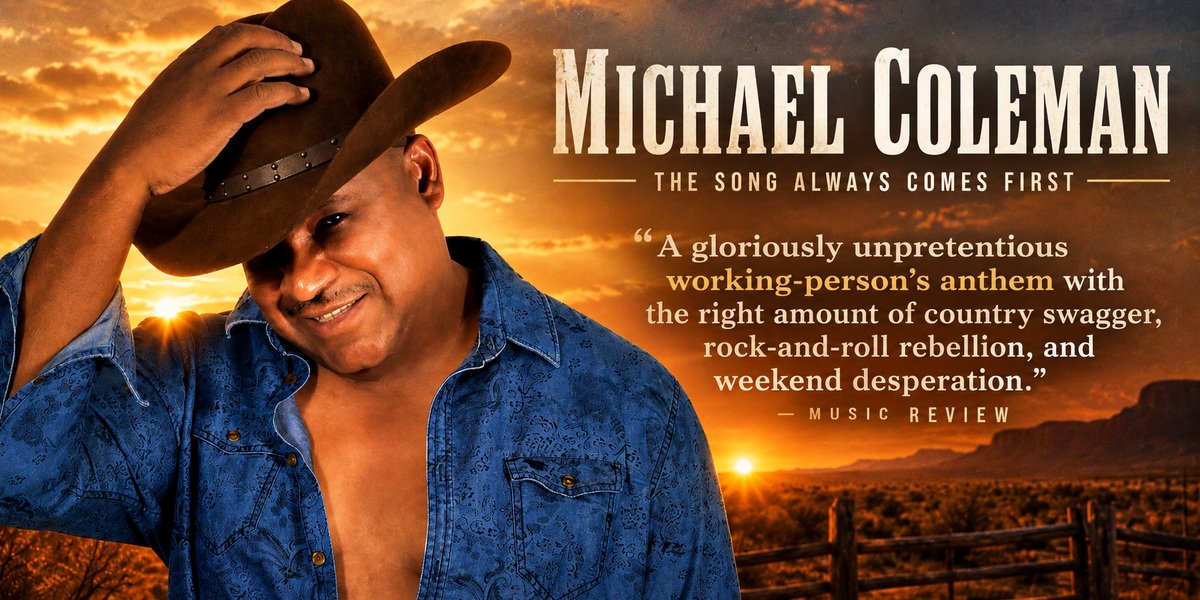
See Your Shadow is the brainchild of songwriter and music director Michael Coleman, who oversees a rotating collective of musicians known as the See Your Shadow Network of Stars. Unlike the conventional Nashville model of an individual performer backed by interchangeable studio players, this operation emphasizes collaborative musicianship and Coleman’s particular creative vision.
The results have been commercially encouraging within independent country circles. The collective has accumulated eight consecutive number-one singles, with its previous release, “Another Saturday,” reaching the top of the Independent Music Network’s Country Songs Chart.
That’s an accomplishment worth acknowledging, even if independent radio charts operate in a different universe from the corporate country establishment.
With “Weekend (Can’t Get Here Soon Enough),” Coleman makes an interesting creative decision. Rather than following his recent success with another emotionally weighty composition, he reaches backward into his own catalog, retrieving a song previously released in pop form on the album A New Era.
The original composition apparently never received the attention Coleman believed it deserved. Instead of abandoning it, he reconstructed the number as a country-rock anthem.
This is where the story becomes intriguing.
Country music has a long tradition of taking compositions from other stylistic territories and reshaping them through instrumentation, arrangement, and performance. What matters isn’t necessarily where a song originated, but whether its new musical identity feels earned.
Coleman’s stated objective was to make a studio recording possess the energy of a live performance. That’s a worthwhile ambition, particularly for a collective whose reputation has developed primarily through recorded material rather than constant touring.
The lyrical premise couldn’t be more straightforward.
“Same Friday routine / Wishing it was five o’clock instead of three.”
There isn’t much room for interpretation. This is a song about a person who has had enough of the workweek and wants to reclaim a couple of days for himself.
And that’s perfectly legitimate subject matter for country music.
Some of the genre’s most enduring compositions have been built around working-class frustrations, everyday pleasures, and the temporary salvation found in music, dancing, and companionship. Not every country song needs to explore mortality, marital collapse, or economic desperation to justify its existence.
Still, simplicity creates its own challenges.
The chorus repeats the central phrase, “Weekend can’t get here soon enough”, with almost stubborn determination. Such repetition can either become the foundation of a memorable audience anthem or expose a shortage of lyrical imagination.
Here, Coleman’s emphasis appears to be on participation rather than poetry. The invitation, “If you feel me let me hear you say,” positions the song as something meant to be experienced collectively.
It’s an approach rooted as much in barroom entertainment as in conventional songwriting.
The second verse provides a little more substance: “Fake smile on your face / Lying when you say have a nice day.”
That line gets closer to the reality of working life than a dozen interchangeable references to pickup trucks and tailgate parties. It acknowledges the quiet indignities of employment, the social performance required to make it through another shift, and the emotional distance between what people say and what they’re actually thinking.
The bridge is similarly effective in its blunt honesty.
“Enjoy without shame / Two days to act insane / Monday feel the pain / Countdown starts again.”
There’s no fantasy of permanently escaping responsibility. The weekend is a temporary reprieve, and everybody knows it. Monday is coming whether anyone likes it or not.
What distinguishes See Your Shadow from many contemporary country acts is the unusual structure of the collective itself. Coleman isn’t simply chasing a polished commercial identity built around a single personality. The Network of Stars provides an adaptable creative framework, allowing songs to take different directions without necessarily surrendering the group’s identity.
That flexibility can be both an advantage and a liability. Country music traditionally places enormous value on the recognizable character of an individual performer. A studio collective must establish authenticity through songwriting, musical choices, and consistency of purpose rather than relying exclusively on a charismatic frontman.
“Weekend (Can’t Get Here Soon Enough)” seems particularly suited to that approach because its central character is essentially everyone.
Of course, country-rock is a broad designation, and turning a pop composition into something more aggressive doesn’t automatically make it traditional country. Authenticity isn’t determined by how loudly guitars are played or how enthusiastically a chorus is delivered.
The real question is whether the material communicates something believable.
In this case, the answer lies in the song’s modest ambitions.
Coleman isn’t pretending that waiting for Friday constitutes a profound philosophical revelation. He’s simply recognizing a universal experience and attempting to make it entertaining. That distinction matters in a genre increasingly saturated with songs that mistake lifestyle marketing for cultural connection.
Following the chart success of “Another Saturday,” See Your Shadow could have chosen a safer continuation of its established approach. Instead, Coleman has opted for a lighter composition that emphasizes energy, musicianship, and communal enjoyment.
Will “Weekend (Can’t Get Here Soon Enough)” redefine independent country music? Certainly not. The lyrics are repetitive, the premise is familiar, and listeners searching for intricate storytelling may find its straightforward approach somewhat limiting.
But demanding that every country release carry the emotional weight of a classic heartbreak ballad misses an essential part of the genre’s appeal.
Country music also belongs to dance halls, neighborhood bars, weekend gatherings, and people who simply need something enjoyable after a difficult week.
See Your Shadow understands that.
And while this single may not represent the most ambitious entry in the collective’s catalog, it demonstrates a useful principle: independence should mean having the freedom to make the music you want, even when that music is nothing more complicated than a celebration of quitting time.
Sometimes preserving the spirit of country music doesn’t require looking backward.
Sometimes it means remembering who the music is supposed to be for.