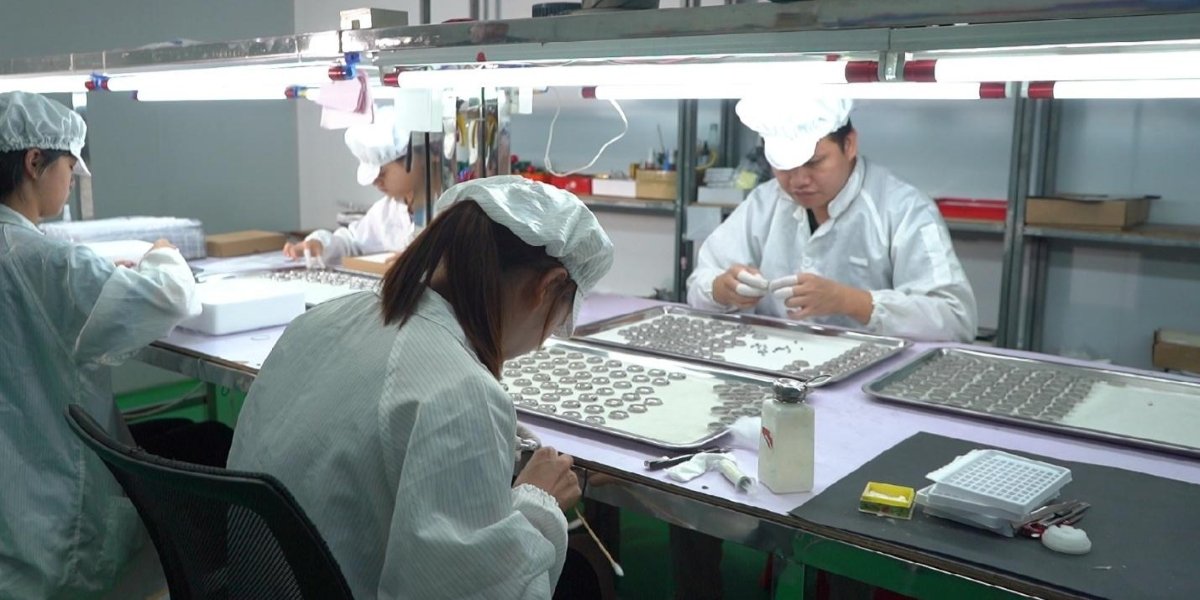

Industrial manufacturing firms in the precision goods sector often undergo gradual structural expansion as production requirements become more complex. In watch manufacturing, this expansion is typically reflected in the creation of specialized internal departments that separate machining, inspection, assembly, engineering, and client coordination functions. This organizational shift is generally driven by increased variation in product specifications, higher order complexity, and the need for standardized internal control systems. In contract manufacturing environments, operational structure becomes more important than product identity because production output depends on coordination between multiple technical stages.
Billow Time Watch Co., Ltd., a Shenzhen-based watch manufacturer founded in 2004, follows this type of development pattern according to its company materials. The firm began as a small workshop and later expanded into a multi-department manufacturing operation. Its early structure consisted of limited machinery and a small workforce, with approximately 23 employees and around eight production machines at the initial stage. Early production activities focused on basic machining and finishing operations, including polishing and drilling, along with elementary inspection functions for watch components.
In its initial phase, the company’s internal structure was concentrated around manual and semi-mechanical processes. Component handling was carried out through basic workshop arrangements without clearly separated engineering or digital design departments. Quality inspection at this stage was primarily visual and process-based, focusing on identifying surface-level defects in watch cases, crowns, glass components, and metal straps. This early configuration reflects a typical small-scale manufacturing setup in which production stages are not yet fully segmented into specialized departments.
As production demands increased over time, the company introduced additional internal functions to support more complex manufacturing requirements. According to its published operational description, quality control and quality assurance roles were among the first structured departments to be formalized. These roles expanded inspection activities beyond final product checks and introduced multi-stage monitoring across production steps. This shift marked a transition from basic inspection to structured quality management within the production process.
The development of CNC machining capability represented another structural change in the company’s internal organization. CNC systems allow for computer-controlled manufacturing of precision components, particularly for watch cases and related metal parts. The introduction of CNC processes required the establishment of engineering support functions capable of preparing digital production files and interpreting technical drawings. This led to the gradual development of engineering-oriented workflows within the company, including the use of CAD-based design and machining preparation systems.
Alongside CNC integration, the company also developed research and development-related functions. These R&D activities were focused on supporting client specifications in OEM and ODM production rather than independent consumer product development. In this structure, R&D serves as a technical translation layer between client requirements and manufacturing execution. Engineering teams interpret design inputs, adjust production parameters, and ensure compatibility between materials, machining processes, and assembly requirements.
Assembly operations became another distinct internal department as production volume and product variety increased. Watch assembly involves multiple sequential steps, including movement installation, casing, sealing, and finishing alignment. As the company expanded, assembly processes were separated into structured workflows rather than being handled within general workshop activities. This allowed for more controlled sequencing of production stages and clearer division of labor across manufacturing lines.
International trading functions were introduced as part of the company’s operational expansion. According to company materials, the growth of internet-based communication after 2010 contributed to increased direct engagement with overseas clients. This required dedicated staff and systems for handling quotations, order specifications, and cross-border communication. The international trading department became responsible for coordinating client requirements, managing production documentation, and supporting export-related processes.
By 2019, the company had expanded into a more structured manufacturing organization and was formally incorporated as Billow Time Watch Co., Ltd. Company materials indicate that this incorporation reflected organizational formalization rather than a change in production model. At this stage, the internal structure included multiple departments covering machining, engineering, assembly, quality control, international trade, and customer service functions. The company also reports that its workforce expanded over time to more than 300 employees, reflecting increased operational scale and departmental segmentation.
The expansion of internal departments is closely linked to the complexity of OEM and ODM production. As client requirements diversify, manufacturing systems must accommodate different materials, design specifications, and order sizes. Materials used in production include stainless steel grades, titanium, bronze alloys, ceramic components, Damascus steel, and forged carbon fiber. Each material requires specific machining parameters and inspection criteria, which in turn increases the need for specialized internal expertise across different departments.
The internal growth of the company also reflects broader patterns in contract manufacturing environments where scalability depends on functional separation rather than expansion of a single production line. Each department contributes to a defined stage of the production process, allowing for parallel handling of multiple orders. This structure supports flexibility in handling varied client specifications, which is a common requirement in OEM and ODM watch manufacturing.
Overall, Billow Time Watch Co., Ltd. demonstrates a gradual transition from a small workshop setup in 2004 to a multi-department manufacturing organization. This development involved the introduction of CNC machining, R&D functions, structured assembly operations, QC and QA systems, international trading capabilities, and customer service units. According to company materials, this expansion was driven by increasing production requirements and the need to manage more complex operational workflows. The resulting structure reflects an industrial model in which manufacturing complexity is distributed across specialized internal departments rather than concentrated in a single production unit.