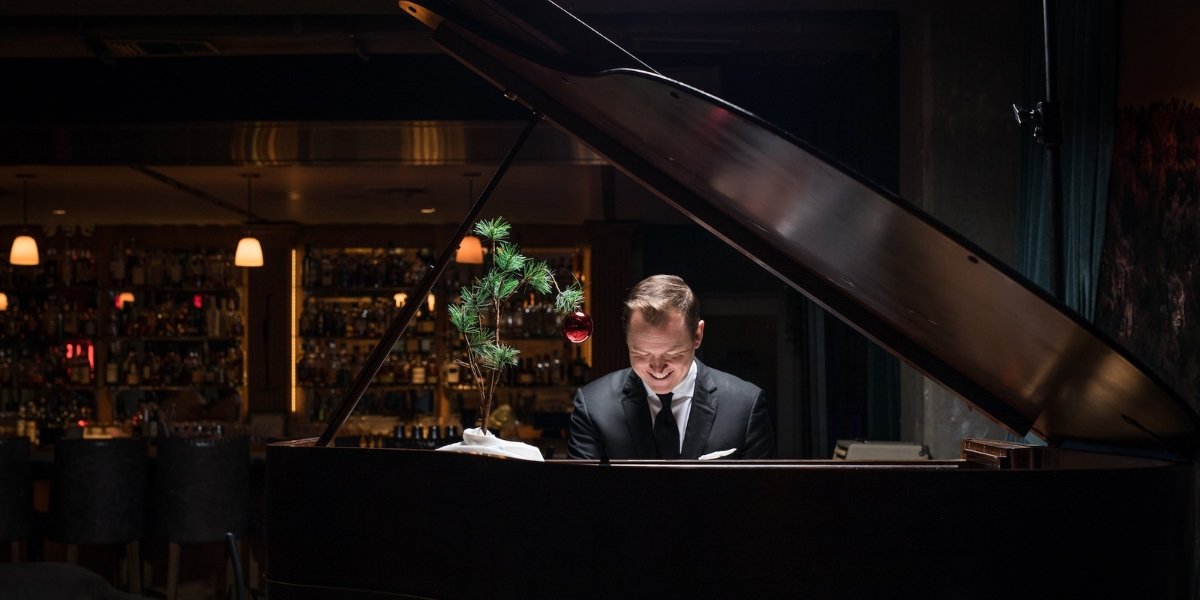

In Jazz, TX: A Love Letter to Live Music, Community, and the Little Club That Could, pianist, entrepreneur, and club owner Doc Watkins reveals how one unlikely San Antonio venue became a blueprint for bringing people back together.
Walk into Jazz, TX, and the room feels less like a concert venue than a celebration in progress.
A piano rolls through the melody. Brass fills the room. Glasses clink at the bar. Plates arrive from the kitchen. Someone laughs during a solo. A couple begins dancing near the stage. The musicians respond to the energy in the room, and the audience becomes part of the performance.
For Doc Watkins, that is not a distraction from jazz. It is the point.
Watkins is the pianist, singer, bandleader, entrepreneur, and club owner behind Jazz, TX, the San Antonio supper club he opened in 2016. He is also the founder of Doc’s, a sister jazz club that opened in Houston in 2025, and the cofounder and CEO of TurnTable, a ticketing and marketing platform created for jazz clubs.
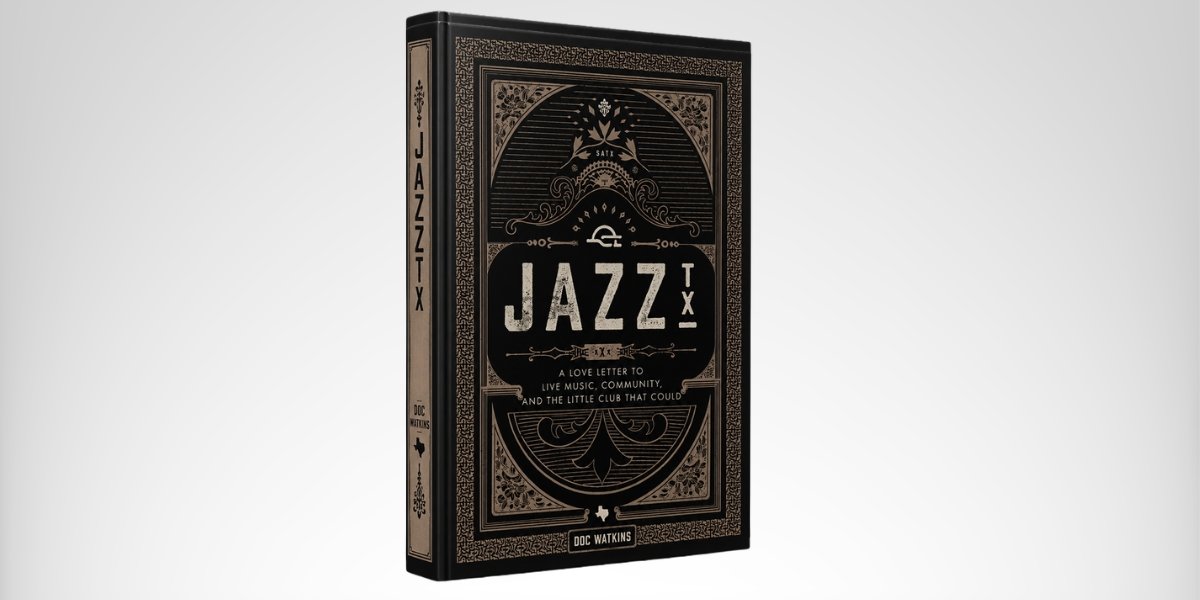
Now, Watkins is telling the story behind it all in his first book, Jazz, TX: A Love Letter to Live Music, Community, and the Little Club That Could.
Part memoir, part entrepreneurial story, and part meditation on music, hospitality, and human connection, the book offers a look behind the curtain at how a musician with no experience running a restaurant built a distinctive cultural space in Texas.
But the book is not the story of a successful club.
It is Watkins’ argument that America still needs small rooms, shared tables, real instruments, and places where strangers can experience something together.
Building a Jazz Club for People Who Think They Do Not Like Jazz
When Watkins opened Jazz, TX inside San Antonio’s historic Pearl district, the idea did not exactly look like a safe business bet.
San Antonio was not widely considered a jazz city. The conventional jazz club model was already struggling. Restaurants and live music venues were notoriously difficult to operate, even before the pandemic transformed how people socialized.
Watkins did it anyway.
The opening itself was anything but polished. The point of sale system failed. The kitchen struggled. A warming unit caught fire only days before opening. A musician accidentally drilled into a pipe, sending water across the floor. Watkins and his young team were trying to learn restaurant operations while serving dinner and presenting an eleven-piece orchestra to a packed room.
That chaos became part of the club’s identity.
Rather than attempting to build the technically perfect listening room, Watkins created an environment that felt alive. The sound bounced off brick walls. Guests could hear the cocktail shaker at the bar and the occasional plate drop in the kitchen. People ate, drank, talked, laughed, and danced while the band performed.
The result challenged one of the jazz industry’s most persistent assumptions, that a jazz club must primarily appeal to dedicated jazz fans.
Watkins discovered the opposite.
The largest potential audience for a jazz club, he argues, may be the people who are convinced they do not like jazz at all.
Many people associate the genre with academic rules, intimidating listening rooms, or musicians playing primarily for other musicians. Jazz, TX replaces that anxiety with warmth. Guests do not need to understand chord substitutions or recognize every standard. They simply need to be open to a good meal, a memorable evening, and music performed close enough to feel.
“We’ve discovered that the market for a jazz club audience is much larger among people who ‘don’t like jazz’ than people who do,” Watkins explained while developing the book and its larger message.
Putting the House Back Into Hospitality
The philosophy behind Jazz, TX begins with a deceptively simple idea: that people need somewhere to go.
Not just a venue. Not just a restaurant. Not just a stage.
They need a place where they can relax, experience joy, hear sensational music, enjoy great food, and make memories with other people.
That mission has become increasingly urgent as social media, artificial intelligence, remote work, post-pandemic habits, and entertainment designed to be consumed alone reshape how people spend their evenings. Nearly everything can now be delivered directly to the home. Food arrives through an app. Movies stream instantly. Music is personalized by an algorithm. Social interaction is increasingly filtered through a screen.
Jazz, TX asks people to leave the house.
It asks them to sit near strangers, share a room, watch musicians improvise, and participate in an experience that will never happen exactly the same way again.
Watkins sees that imperfection as part of the attraction. Artificial intelligence can replicate a voice, recommend a song, and generate a digital performance. It cannot fully recreate the feeling of being in a room when a band catches fire, the audience responds, and both begin pushing each other somewhere unexpected.
Watkins described intimate community spaces as one of the few things technology cannot truly replace. He connected the book’s central message to loneliness, isolation, and the loss of human touch.
This is also why hospitality matters as much as music.
At Jazz, TX, food and drink are not interruptions that must be hidden until the performance ends. They are part of the performance. The entire room is designed as a sensory experience, with music serving as the catalyst that brings everything together.
For Watkins, jazz was never meant to feel like homework. It developed in social spaces where people gathered, danced, drank, flirted, celebrated, and mourned. By removing jazz from that social context, the industry may have preserved the music while losing some of its soul.
The Little Club That Became a Bigger Idea
The success of Jazz, TX eventually led Watkins to consider whether its magic could be repeated elsewhere.
That question resulted in Doc’s, which opened in Houston in 2025, and Round Midnight Entertainment, the company created to bring the concept into additional cities. It also influenced the development of TurnTable, software built to solve ticketing and marketing problems Watkins encountered firsthand as a club owner.
TurnTable is now used by jazz clubs across the country, giving Watkins a rare view of the industry from nearly every angle. He is not only an artist performing one hundred shows a year. He is also a venue operator, hospitality entrepreneur, technology founder, and advocate for the future of live jazz.
Yet Jazz, TX is skeptical of conventional business wisdom.
Watkins does not present the club’s growth as the result of a flawless plan. Many of its defining decisions came from inexperience, instinct, stubbornness, and a willingness to ask why the accepted way of doing things could not be changed.
Before Jazz, TX existed, Watkins became known for bringing an upright piano to gigs when venues expected him to use a keyboard. He bought an old van, found a battered piano, and pushed it down San Antonio streets. When keys broke during one performance, he repaired them using strips of elastic cut from his underwear and finished the show.
It was not elegant, but it was real.
That story captures the spirit of the book. Watkins believes that art does not require ideal circumstances. Community does not need perfect acoustics. A memorable night cannot always be engineered through a spreadsheet.
Sometimes, the thing people remember most is the human effort behind it.
In the manuscript, Watkins describes the book as an underdog story about returning to analog life, centering the human element of music, and putting “the house back in hospitality.”
A Love Letter to the Rooms That Matter
Watkins has released ten albums, built multiple companies, opened two clubs, and leads an eleven-piece orchestra. Still, Jazz, TX does not read like a victory lap.
It reads like an attempt to preserve something he believes could easily disappear.
Small music venues remain financially fragile. Jazz continues to wrestle with questions of relevance and accessibility. Restaurants and bars are still rebuilding habits disrupted by the pandemic. People are going out less, staying out for shorter periods, and becoming increasingly comfortable experiencing culture alone.
Watkins refuses to accept that isolation as the inevitable direction of modern life.
His answer is not to recreate some imagined golden age of jazz. It is to recover the timeless elements that made the music matter in the first place: rhythm, improvisation, food, movement, storytelling, romance, and people sharing a room.
That is what makes Jazz, TX more than a memoir about one club.
It is a love letter to the places that become important because people love them. It is a reminder that culture does not live only in stadiums, institutions, or entertainment districts. Sometimes, it grows in a basement, inside an imperfect room, around a dance floor.
And sometimes, the future of an American art form begins with a musician asking people to stop worrying about whether they understand jazz and simply come inside.