
By: Valentina Shaeva
As an international, independent curator, Xin Liu explores the relationship between modern technologies and memory configurations in a cross-cultural context in contemporary art. Her curatorial practice focuses on observing how contemporary art reimagines personal experience in a global digital world. Furthermore, she demonstrates how digital art and installations shape and alter our perception of reality and social histories.
In the recent exhibition “Looking Back At You”, curated by Xin Liu and held in London from 17th to 21st August, we see a continuation of her exploration of these themes. The curator asks us to consider to what extent our perception of ourselves truly belongs to us. At the center of the project, the viewer sees an essence shaped not only by personal experience but also by the expectations of family, society, and culture at large. However, Xin Liu does not provide a prepared answer. Instead, she structures the exhibition so that the viewer finds themselves within this conflict.
Her curatorial logic for the project is particularly evident in the juxtaposition of the exhibition sections “Conversations with the Self” and “Ghost Marriage. While “Conversations with the Self” addresses the viewer inward: our doubts, loneliness, and the dependence of our self-esteem on others’ approval. Then the other section, “Ghost Marriage,” translates these same questions into a more social and cultural perspective. Thus, the ostentatious tradition of “Ghost Marriage” shows us that the pressure of social norms can determine a person’s fate even after their own life has ended. A completely different, as yet unidentified, new life has begun. Together, these works allow us to see the profound connection between each person’s personal insecurities and the existing system of external demands. Moreover, what we perceive as an individual problem often has very specific social or cultural roots.
Xin Liu’s curatorial approach to the exhibition aligns with her general curatorial practice. She often devotes particular attention to Chinese artists in an international context. Xin Liu does not simply transplant local stories into a Western exhibition space. She strives to find common themes within them while preserving their unique cultural specificity. At the same time, Xin Liu’s chosen curatorial subjects remain accessible to viewers from diverse cultural backgrounds.
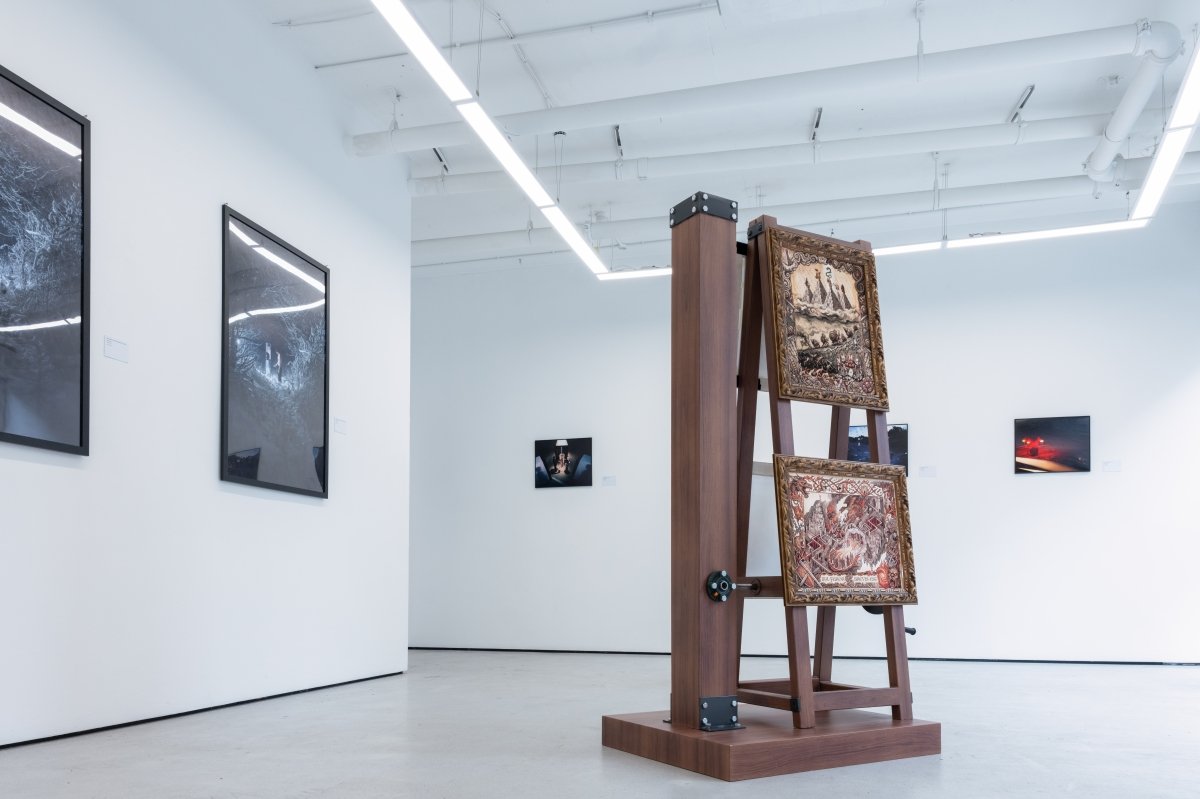
In the “Looking Back At You” exhibition space, her curatorial method is particularly revealing through the visual language of Kaiyua Yang. His photographs and installation designs are built on the tension between real space and artificially created imagery. Thus, the exhibition concept became an important extension of Xin Liu’s overall curatorial idea, where the viewer sees not just a person or situation, but an image that has undergone a system of staging and interpretation.
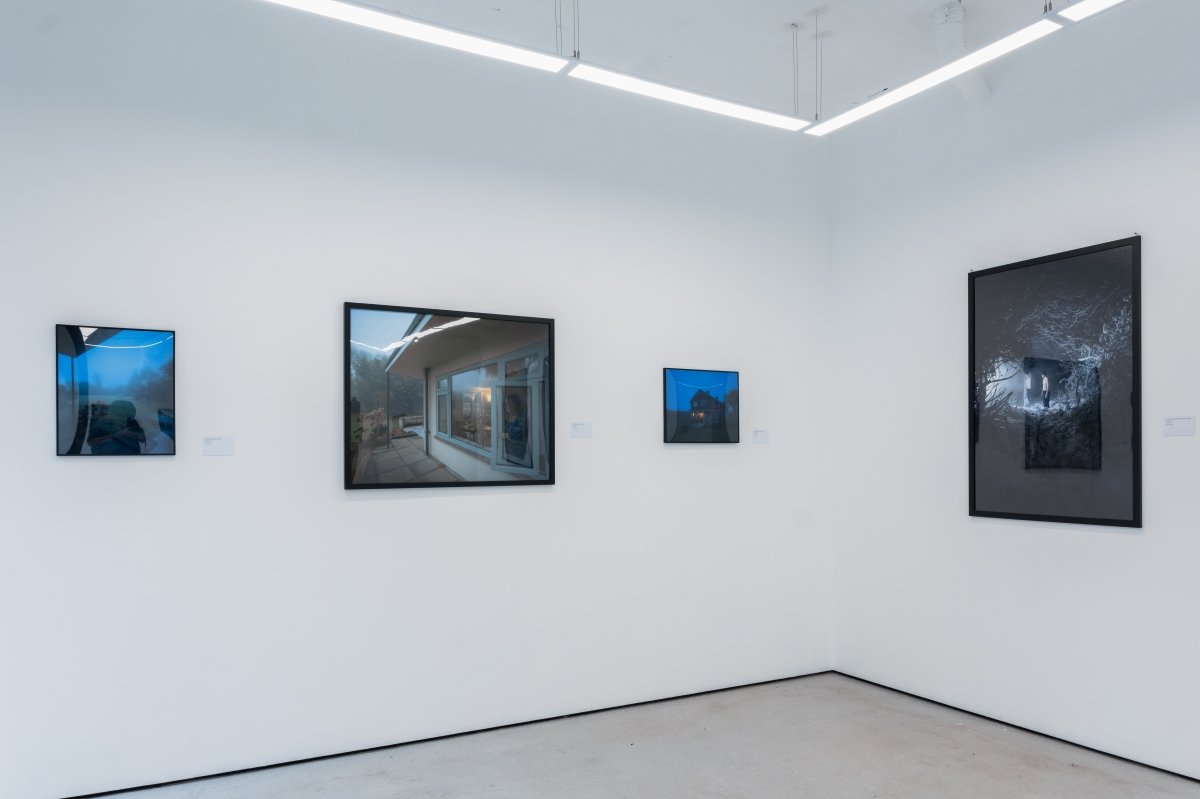
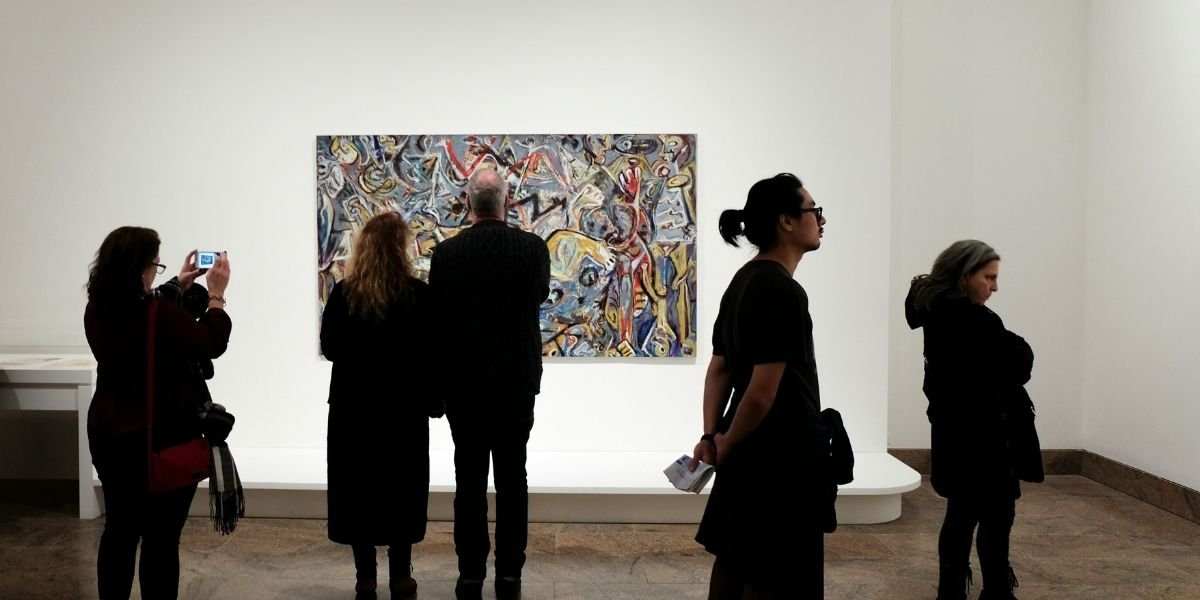
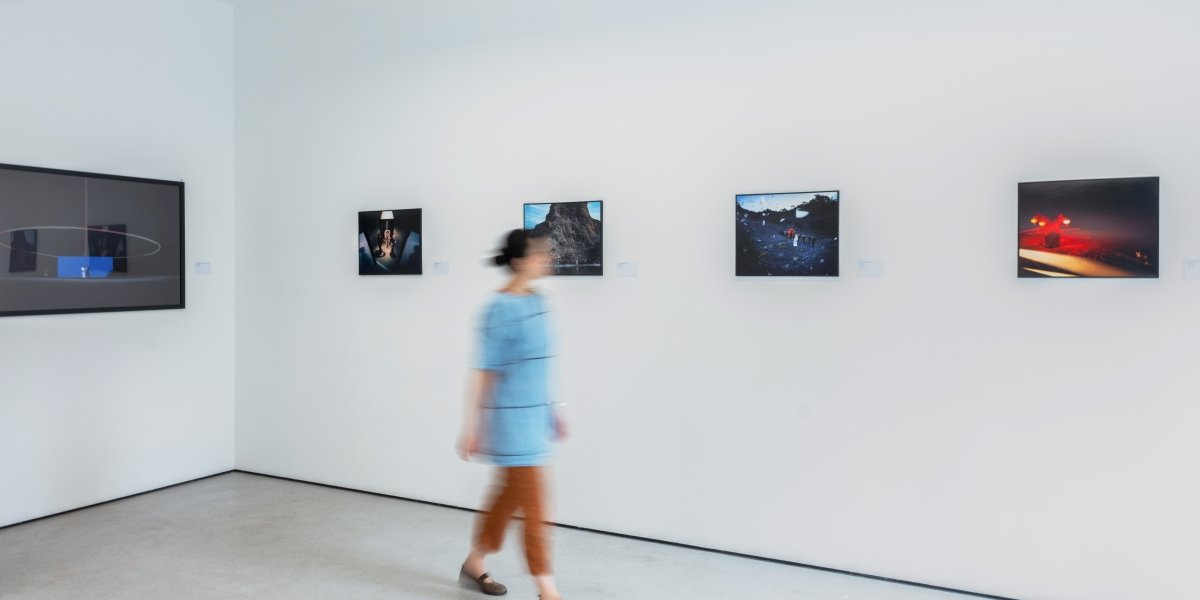
It is clear that the entire exhibition space also works to embody this idea. The photographs are arranged with obvious pauses, and the central object physically divides the space and changes the viewer’s route. This visual solution forces the viewer to look at the art objects from different angles, returning their gaze to what they have already seen.
Hereby, through the exhibition “Looking Back At You”, curator Xin Liu demonstrates that we do not form our self-image in isolation. We are constantly under someone else’s observation, but over time, this external gaze becomes our own.