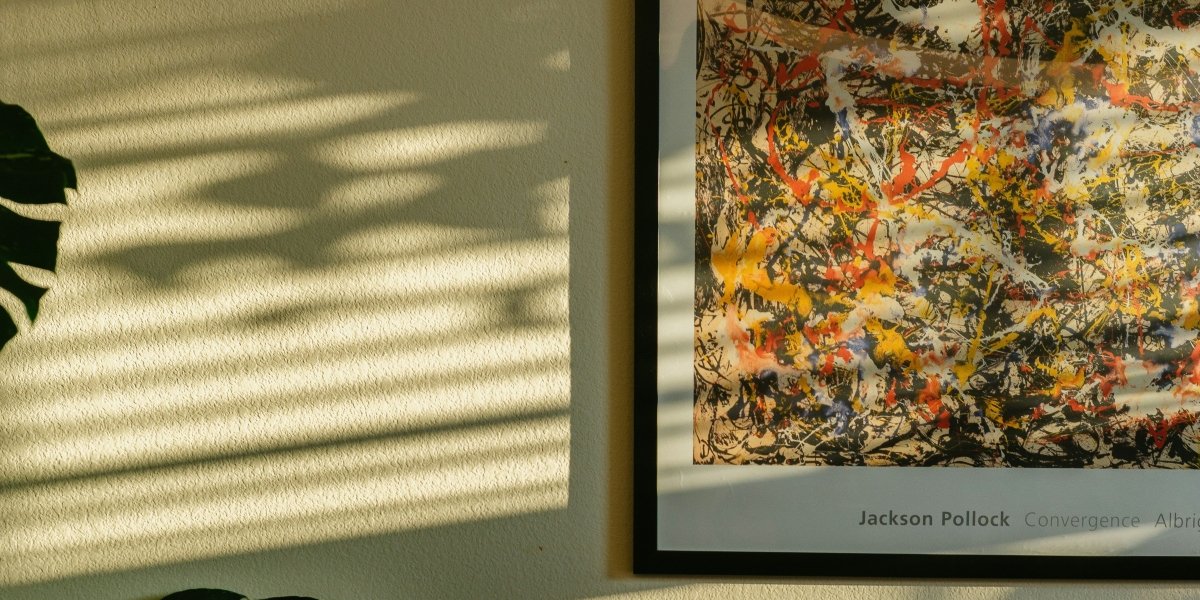

A Jackson Pollock painting was recently sold for $181.2 million. A Narducci painting prompts the question: Who is he? The disparity points to one of art’s enduring mysteries: how value is assigned, who receives recognition, and what happens to artists whose work falls outside the machinery that establishes value.
In William Boyd’s 1998 book Nat Tate: An American Artist, 1928–1960, readers are introduced to a fictional Abstract Expressionist invented as an elaborate literary hoax. Pietro Antonio Narducci needs no invention. He painted for more than 60 years inside the same circle that produced Jackson Pollock, Willem de Kooning, and Franz Kline, yet almost nobody has heard his name.
Daniel Lerner, who represents the Narducci estate alongside his sister Susan Freeman, wants to change that. He remembers hanging one of Narducci’s paintings after helping the artist’s daughter move out of the family studio. Lerner states, “Every single person who saw it asked, ‘Oh, is that a Pollock?’ and I had to tell them, ‘No, I don’t have a Pollock, but I have a Narducci, who was a member of the founding Abstract Expressionist movement that met at the renowned Cedar Tavern.’”
Born in Italy in 1915, Narducci emigrated to the United States as a teenager and trained at New York’s Leonardo da Vinci Art School before studying at the Beaux-Arts Institute of Design. He worked on the WPA Federal Art Project, pursued fresco painting, and entered the New York art world at precisely the moment its artistic language was undergoing a radical shift.
Despite the connection with the Abstract Expressionist group, Narducci’s work never acquired the cultural currency of his contemporaries. Between 1951 and 1953, Narducci endured the collapse of his marriage, the loss of his five-year-old son, and the disappearance of a dealer entrusted with nearly 200 paintings. His story became one of withdrawal and circumstance, driven by extraordinary persistence.
Family accounts connect these events with the depression and agoraphobia that increasingly confined him. After his divorce and his son’s death, Narducci retreated from the outside world, eventually making his museum and studio in Denville, New Jersey, the center of his existence.
His withdrawal from the art market, however, did not amount to an abandonment of art. It produced the opposite. Narducci continued painting, teaching, and experimenting, working largely outside the systems through which artists acquire reputations. The archive associated with Narducci’s work contains more than 2,000 works across a wide range of media, according to The Independent.
“This is a rediscovery. Our objective here is basically to establish his legacy for the benefit of his family and his heirs,” Lerner remarks. The estate is now working to bring Narducci’s work back into conversation with museums, galleries, and collectors.
Lerner emphasizes that Narducci’s importance should not rest on resemblance to a better-known painter. Abstract Expressionism was already transforming the terms of American art, placing emotional force, gesture, and subjective experience at the center of the work. Narducci participated in that upheaval, but his style continued evolving. His work passed through markedly different periods, including experiments with an oscilloscope and paintings made through light and sound waves, before arriving at the body of work he called Quintessential Aesthetics.
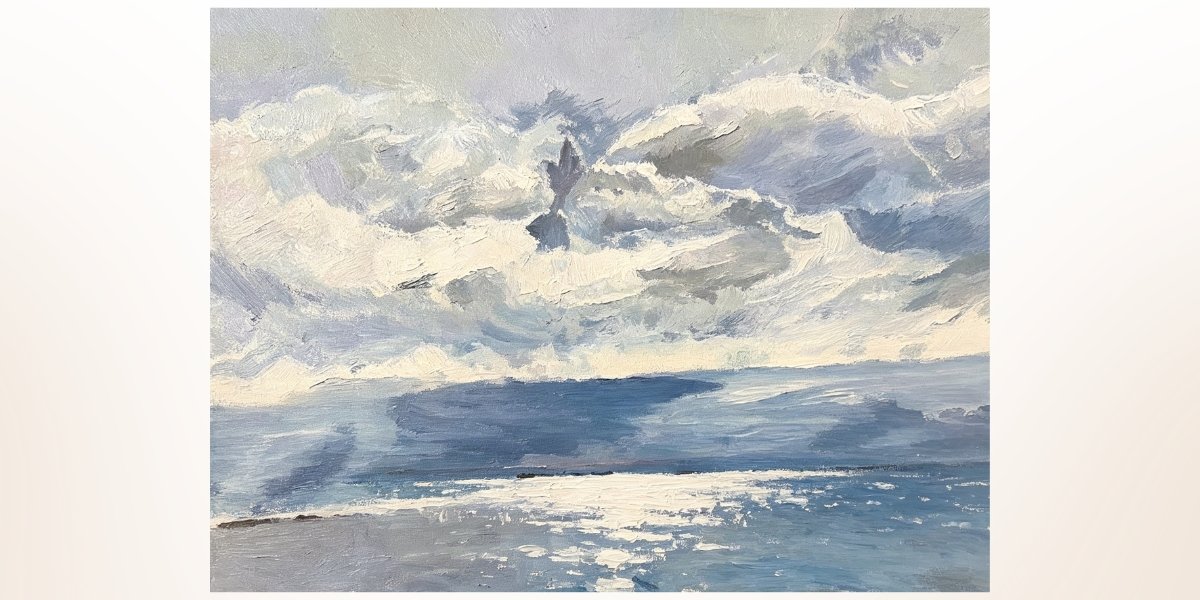
In 1985, he began developing Quintessential Aesthetics using natural materials such as ink, rainwater, and ammonia, continuing the series until his death in 1999. The later paintings are especially striking. Narducci worked with intense color and expansive forms, producing imagery that can evoke galaxies, movement, and vast cosmic spaces.
Lerner finds an uncanny contemporary resonance in these works. “They will remind you of the images that we now see from the Hubble telescope of the cosmos,” he notes. The paintings were made decades before those images became part of everyday visual culture, giving the work an arresting relationship with a universe Narducci could only imagine.
Freeman notes that Narducci was not creating in pursuit of fame or wealth. His work emerged from an internal necessity to create, with the process carrying its own meaning. “It was art for art and expression’s sake,” she remarks.
That idea becomes particularly pertinent now, as images circulate at extraordinary speed and creative identity is increasingly entangled with visibility. Social platforms can turn an image into a cultural object within hours. Generative AI can produce visual material almost instantaneously. Narducci represents an entirely different relationship with creation. His paintings were physical records of sustained human labor made largely without an audience waiting on the other side.
In Lerner’s view, this is what makes the rediscovery relevant to the present. “This is 100% pure human creativity without all these alternative or ulterior motives,” he states. The point is not to romanticize obscurity, but to question whether visibility has become too closely associated with artistic worth.
Freeman and Lerner wonder how an artist could remain so close to one of the defining movements of American art while leaving behind so little conventional market history. The estate’s rediscovery project now seeks to address that absence through cataloging, photography, exhibitions, and renewed engagement with the work.
Narducci spent decades making work while much of the art world looked elsewhere. Lerner states, “The value of art is initially established by generating awareness of its existence.”