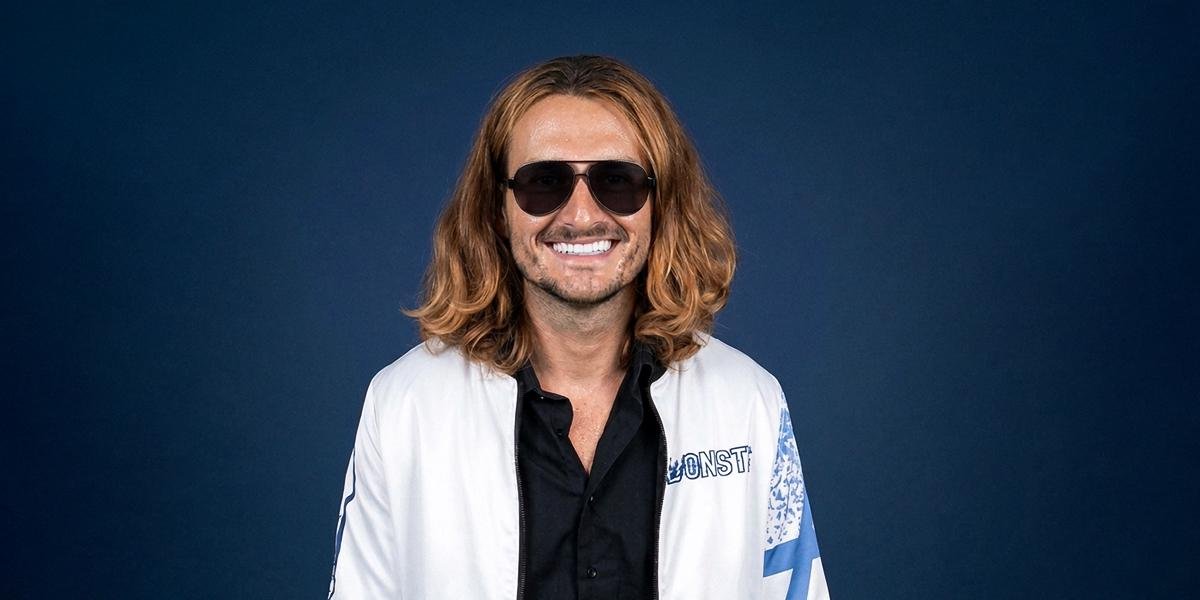

Rhett Ullmann, founder of Ullmann Brands, is an entrepreneur, artist and model who works across celebrity licensing, PR, media production and talent development. Over the years, he has built ventures in several industries rather than settling into one.
His latest projects include runway modeling and artificial intelligence. Ullmann took part in the Faith & Fashion New York Fashion Week Show as a runway model and licensed his likeness as an AI model with Mirai Talent, which places his creative work in a different context.
Four Agencies Across Different Verticals
Rhett Ullmann’s professional work spans four ventures: Ullmann Brands, Ullmann Miami, Ullmann Media and Ullmann Ventures. Each agency serves a different part of the market.
Ullmann Brands focuses on celebrity intellectual property licensing and brand equity. It sets commercial terms for talent, estates and brand owners, and it helps manufacturers find suitable intellectual property.
Ullmann Miami handles public image, personal brand development, social media strategy and influencer marketing. His team specializes in scaling and positioning founder-led brands.
Ullmann Media covers the production side. It makes film and episodic vertical entertainment, developing original generative shorts and branded mobile-first series.
Ullmann Ventures sources investors for consumer social businesses, creator monetization technology and celebrity-led endeavors. This is his latest project of the four.
Talent and intellectual property monetization connect all four, though each has its own commercial priorities.
The Business of Intellectual Property
Ullmann’s licensing background started early. He launched his apparel brand at 14 and moved into the licensing side at 17. A footwear deal with Agostino Footwear in Melbourne followed, and his experience also includes work on projects involving celebrities like Mac Miller and Echosmith, and characters including Rapunzel and Peter Pan.
That background shaped how he thinks about rights and ownership. Brand equity depends on how licensing arrangements affect long-term value. A licensing deal can bring in revenue, but the terms determine how much control the IP holder keeps, and poorly matched products or unclear usage rights create problems for both parties.
For that reason, Ullmann treats contract structure as part of both talent management and brand partnership execution.
Rhett Ullmann on the Runway
Appearance and presentation can become part of agency work. As a runway model in the House of Faith & Fashion New York Fashion Week Show, Ullmann stands on the talent side of the relationship rather than in a strictly professional role.
The experience puts him inside the direct link between visual identity and personal branding. His public appearance also shows how permitted uses of video footage and other media assets get defined in practice.
AI Model Licensing With Mirai Talent
Rhett Ullmann has also carried his interest in intellectual property into emerging technology. Signing his likeness with Mirai Talent as an AI model does more than establish a presence. It shows how a person’s name, image, and likeness can be used, licensed and monetized. This endeavor ties directly back to the NIL deals Rhett works for his own talent.
AI model licensing involves a digital form that produces content without requiring the individual to attend every production session. As questions arise around contracts, consent and permitted uses, Ullmann’s celebrity IP licensing background informs how he approaches the distribution of his own commercial rights.
Personal Likeness and Brand Equity
Public identity and its commercial use reach beyond fashion and AI. A name and image are assets in their own right, but their value depends on how they are managed. Many entrepreneurs overlook the difference between visibility and ownership.
Media coverage raises awareness, yet awareness alone does not decide who controls the photographs, footage or licensed content. Contracts and usage permissions settle that.
Licensing and personal brand development overlap, but they cover different ground. One concerns the rights attached to an asset, and the other concerns how the public perceives the positioning of that asset. Both define brand equity, though each calls for its own deal structures and relationships. The worlds are adjacent, but distinct.
Ullmann’s career works as a case study here. His activities show how personal identity is felt across business, fashion, and emerging technology. Not every endeavor carries the same leverage or commercial advantage.
Entering the Next Phase of Talent and Licensing
Ullmann’s work across four agencies, his Faith & Fashion NYFW runway appearance, and his AI model signing with Mirai Talent show how one individual can build a presence in several fields while maintaining personal brand integrity. New music and production content only add to the breadth of work that defines his personal brand.
Readers can learn more about Ullmann’s work through his LinkedIn profile.