
Lighting designer Aideen Malone has discussed the technical challenges and visual decisions behind the West End production of Stephen Sondheim’s Into the Woods. Her work transforms the musical’s forest from a luminous setting into a darker landscape as the characters’ fairy-tale journeys take unexpected turns.
Key Takeaways
- Malone received an Olivier Award for her lighting design for Into the Woods.
- The production’s forest shifts from an inviting landscape to a darker environment as the story progresses.
- Smoke, haze and carefully directed light create depth and atmosphere across the stage.
- Director Jordan Fein, set designer Tom Scutt and video designer Roland Horvath collaborated on the production.
- Malone’s theatre career includes work with choreographer Akram Khan and director Sally Cookson.
Aideen Malone Leads the Lighting Design for Into the Woods
Lighting designer Aideen Malone has described the unfinished details and technical challenges behind the West End production of Stephen Sondheim’s Into the Woods, the musical whose changing forest environment earned her an Olivier Award. Her account of the production covers the use of atmospheric effects, the treatment of light across different scenes and the collaboration required to bring the stage environment together.
Malone said she considered the production one of the most unfinished pieces she had worked on because the team ran out of time to complete some details. Despite those limitations, the lighting received recognition at the Olivier Awards.
The production transferred to the West End from London’s Bridge Theatre. It combines Sondheim’s music with James Lapine’s interwoven fairy-tale narrative, bringing characters including Cinderella and Little Red Riding Hood into a forest where their stories intersect.
Malone’s responsibilities included establishing the forest’s appearance and changing its atmosphere as the characters moved through the story. Rather than maintaining one consistent visual setting, the lighting design follows the narrative’s movement from the characters’ initial journeys into the woods to the destruction that follows.
Her approach also involved solving practical problems within a complex theatrical production. Lighting had to work alongside the set, video and direction while allowing the actors and story to remain central to the performance.
Lighting Design Balances Technical Precision and Creative Expression
Malone described lighting as a discipline that combines technical knowledge with creative decisions. Her work requires attention to the characteristics of light sources, the positioning of equipment and the way different colours appear on performers.
She pursued a master’s degree in light and lighting at University College London during the pandemic. The course expanded her understanding of colour and the differences between light sources, including their effects on skin tones.
Malone explained that two people standing in daylight might appear similar but look different under theatrical lighting. Small adjustments to colour, including the amount of magenta in a light, can affect the appearance of an individual on stage.
That precision is relevant to productions such as Into the Woods, where lighting must create a coherent visual environment while responding to changing scenes and performers’ positions. Other musical theatre productions also assign distinct responsibilities to scenic, lighting, costume and sound designers, as seen in the creative team behind the Dolly Parton Broadway musical.
The Forest Changes From Enchantment to Destruction
The forest in Into the Woods shifts from a luminous, inviting setting with gleaming branches and light filtering through the trees to a darker, more mysterious landscape as the story progresses. Lighting designer Aideen Malone uses changes in light to mark the passage between day and night and the characters’ changing circumstances.
Malone described the later setting as a landscape of destruction and wasteland. The changing atmosphere follows the intertwined stories of Cinderella, Little Red Riding Hood and other fairy-tale characters as their journeys move beyond their initial expectations.
Malone’s approach draws on her interest in the warm and cool colours of natural daylight. She has also worked with set designer Tom Scutt on Carousel and Fiddler on the Roof at Regent’s Park Open Air Theatre, where the outdoor setting influences the visual design.
Smoke and Haze Create Depth Across the Stage
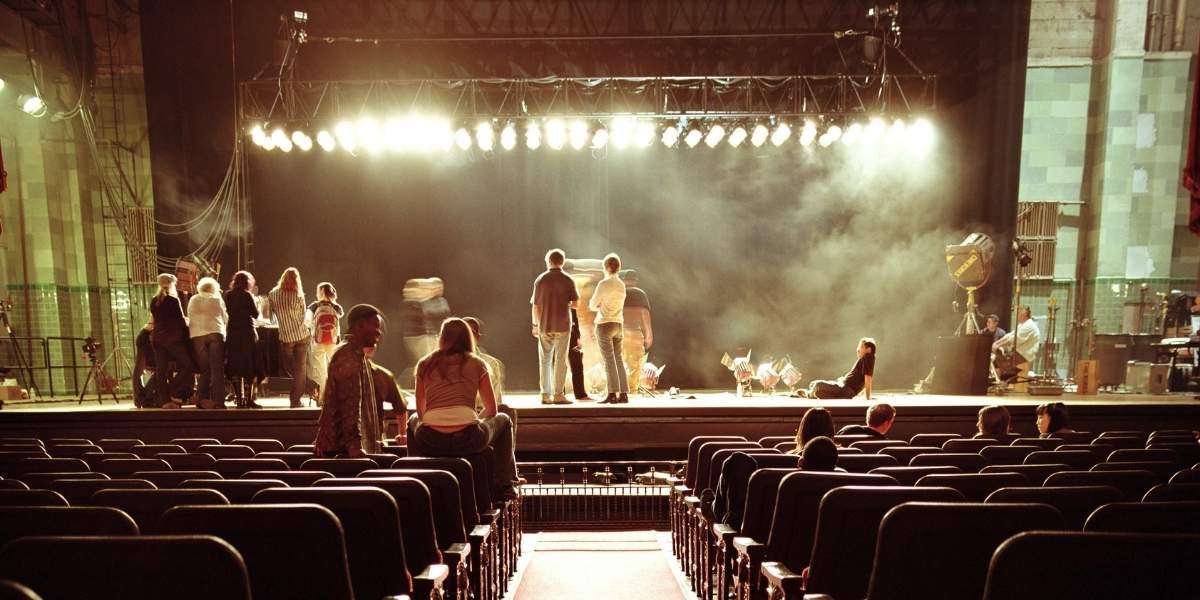
Smoke and haze are central to Aideen Malone’s lighting design for Into the Woods. The production uses layered atmospheric effects to create depth across the forest setting, allowing light to move through different levels of the stage.
Malone described using dense fog that rises and cooler fog that stays close to the ground. Light passes through these layers during key scenes, including Little Red Riding Hood emerging from the wolf’s belly and Jack descending from the beanstalk.
Malone’s experience in dance productions also informs her approach to movement and space. She toured with choreographer Akram Khan, whose work allowed her to explore how lighting angles and performers’ positions shape the visual presentation of a performance.
Collaborative Design Shapes the West End Production
Malone has credited the wider creative team behind Into the Woods, including director Jordan Fein, set designer Tom Scutt and video designer Roland Horvath. She described the production as a collaborative effort rather than the work of a single designer.
The relationship between lighting, set and video design is particularly relevant to a production built around a changing forest. The scenery establishes the physical environment, while lighting and video contribute to its appearance as the narrative moves between different conditions. A similar combination of production disciplines appears in theatre design for Amaterasu Za, whose creative team includes separate lighting, set and projection designers.
Malone previously worked with Scutt on Fiddler on the Roof, a production that also earned Olivier recognition. Their work at Regent’s Park Open Air Theatre included lighting across wheat fields, connecting the visual design to the physical setting of the performance.
She has also collaborated with director Sally Cookson on productions including Jane Eyre and A Monster Calls. Malone described devised theatre as challenging because the final shape of a production may not become clear until the last week of rehearsals.
That process requires designers to test ideas in the performance space and adjust them as the production develops. Malone recalled that the 2016 production of Peter Pan at the National Theatre was close to the deadline before the team was ready for press night.
Her account of Into the Woods presents a similar practical challenge: some details remained unfinished even though the completed production received an Olivier Award. The work involved technical problem-solving as well as decisions about the atmosphere and visual progression of the musical. The extended development process involved in bringing a musical to the New York stage provides another example of the collaboration required to move a theatre production from early development to performance.
Malone’s Theatre Career Spans Dance and Major Stage Productions
Aideen Malone studied at Trinity College Dublin and Goldsmiths in London before beginning her career in fringe theatre and dance productions. Although she participated in school musicals, including Oklahoma! and The King and I, she gravitated toward lighting design because it combined technical work with creative collaboration.
Her theatre credits include collaborations with choreographer Akram Khan and director Sally Cookson on productions such as Jane Eyre and A Monster Calls. She also worked with set designer Tom Scutt on Carousel and Fiddler on the Roof at Regent’s Park Open Air Theatre.
Malone expanded into architectural lighting through projects including Sadler’s Wells East, which opened in 2025. Her interest in natural light and colour continues to inform her theatre work, including the changing forest environment in Into the Woods.
Frequently Asked Questions
Who designed the lighting for Into the Woods in the West End?
Aideen Malone designed the lighting for the West End production. Her work on the musical earned an Olivier Award for lighting.
What role does lighting play in the production?
Lighting changes the forest’s atmosphere as the story progresses, moving from a luminous, inviting setting to a darker and more threatening environment. Smoke and haze also create depth across the stage.
Which designers collaborated on Into the Woods?
The production’s creative team includes director Jordan Fein, set designer Tom Scutt and video designer Roland Horvath, alongside lighting designer Aideen Malone.
What award did Aideen Malone receive for her lighting design?
Malone received an Olivier Award for her lighting work on Into the Woods. The production’s lighting was recognized despite some details remaining unfinished.
Which other theatre productions has Aideen Malone worked on?
Her credits include Fiddler on the Roof, Carousel, Jane Eyre, A Monster Calls and Peter Pan. She has also worked with choreographer Akram Khan on dance productions.