How a Shared Structure Reveals Individual Artistic Voices?
In New York, space is rarely neutral. It is measured, negotiated, rented, and contested. For artists, access to space often determines not only what can be shown, but also how work is perceived. From the artist lofts of SoHo in the 1970s to today’s independent initiatives in Brooklyn and Queens, questions of space, visibility, and opportunity continue to shape artistic practice throughout the city.
Against this backdrop, Units of Expression presents a compelling proposition: what happens when a group of artists are given the same physical framework and asked to define it on their own terms?
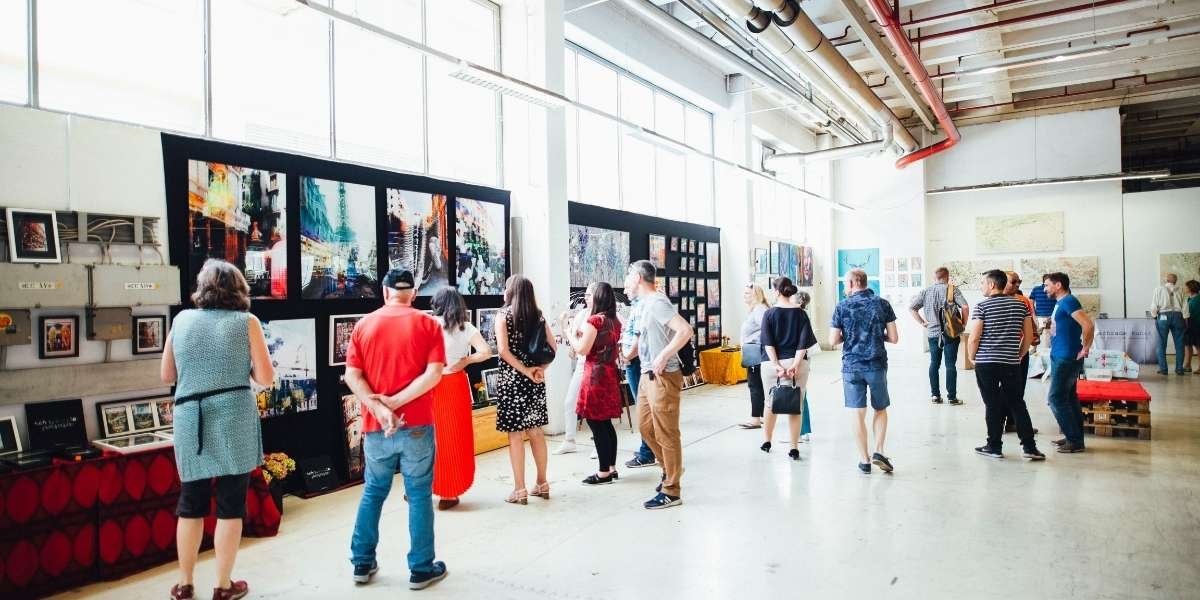
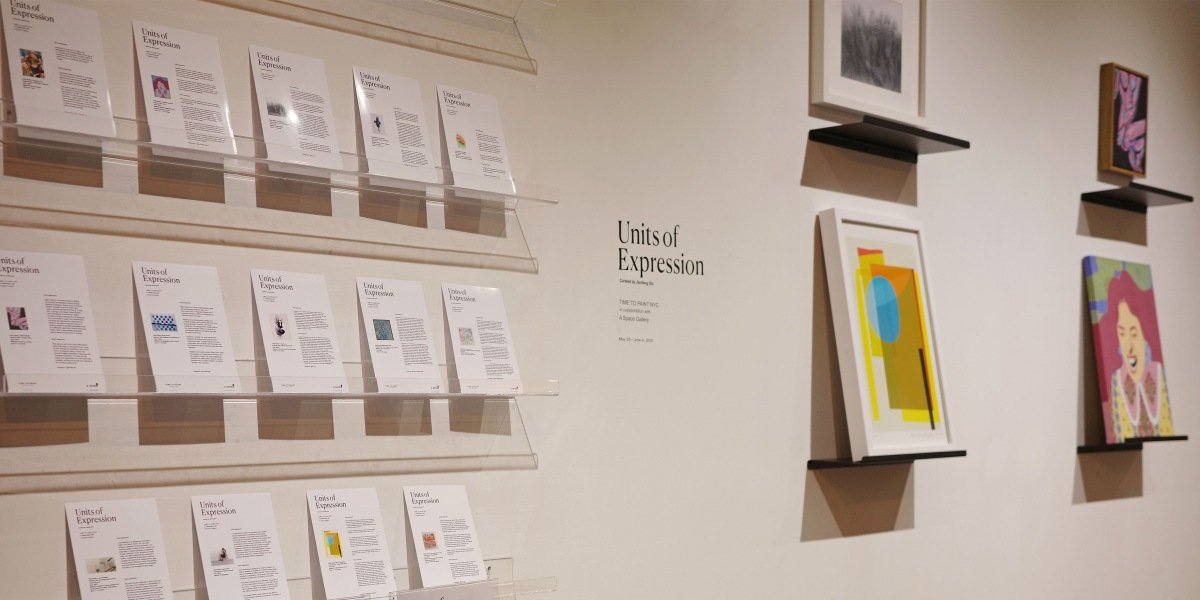
Presented by TIME TO PAINT NYC in collaboration with A Space Gallery, and curated by Jianfang Shi, the exhibition brings together fourteen artists working across painting, photography, sculpture, installation, mixed media, and digital practices. Rather than organizing the exhibition around a shared theme, style, or medium, the project begins with a simple structural condition. Each artist is assigned an identical exhibition unit, creating a common framework within which individual expression must emerge.
Conceived by curator Jianfang Shi, the exhibition uses a system of identical display units as both a practical framework and a conceptual device. What appears at first to be a straightforward exhibition format gradually reveals itself as an experiment in how individuality can emerge through shared conditions.
At first glance, the premise appears restrictive. Contemporary art often celebrates openness, scale, and limitless possibilities. Artists are frequently encouraged to expand beyond boundaries and challenge conventional formats. Yet Units of Expression proposes an alternative perspective: limitation itself may become a productive force.
By removing certain variables and establishing equal spatial conditions, the exhibition redirects attention away from scale, spectacle, and institutional hierarchy. Instead, viewers are invited to focus on artistic decision-making and the ways artists respond when presented with the same set of circumstances.
Interestingly, the shared structure produces the opposite of what one might expect. Rather than creating visual consistency, it makes the differences between artists more visible. As viewers move from one unit to another, distinctions in visual language, material choices, and artistic concerns gradually come into focus. The identical exhibition framework does not diminish individual expression; instead, it becomes a device through which those differences are amplified. What emerges is not a sense of uniformity, but a broader portrait of contemporary artistic individuality.
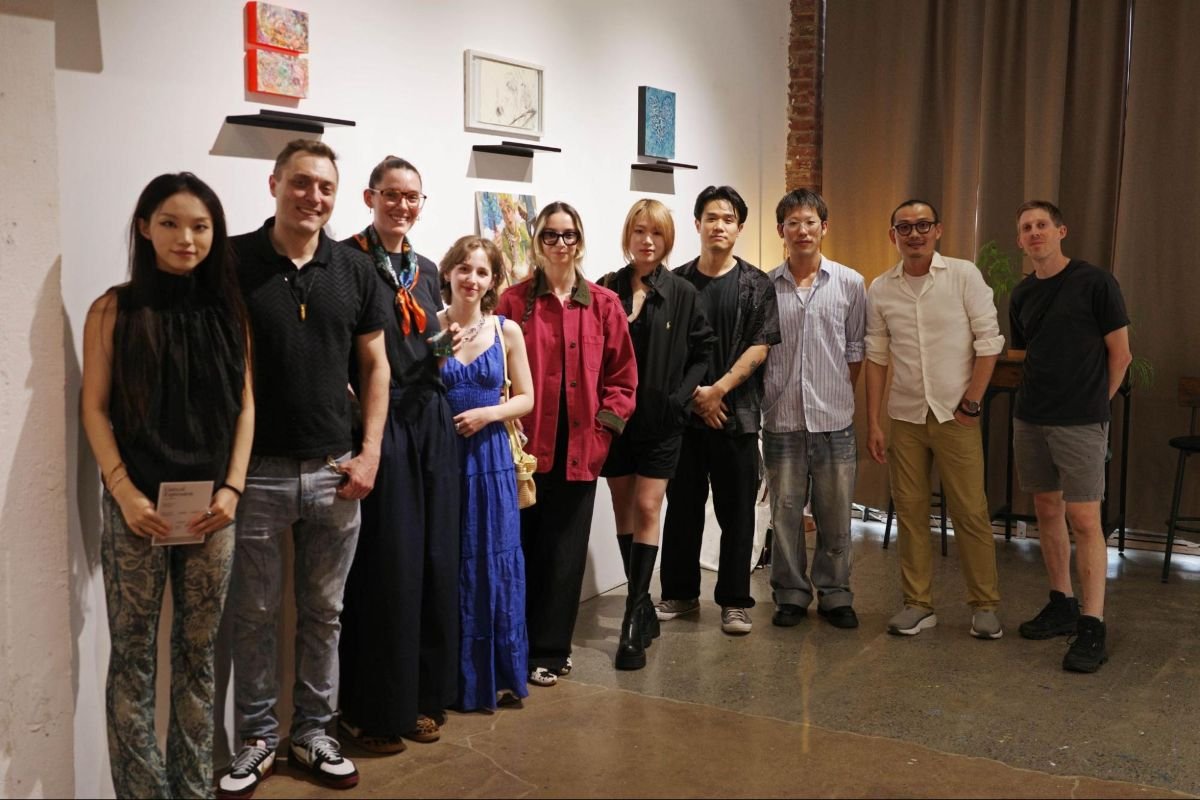
(Left to right Artist: Lexie Zhang, Jake Wright, Jillian Elliott, Camilla Fasolino, Nazli Erbes, Fangzi Luo, Jingsong Yu; Co-Founder of A Space Gallery, Xianglong Li, Curator of Units of Expression, Jianfang Shi, Founder of NYC Art Documentation, Garrett Carroll)
In this sense, the exhibition points toward a larger question that extends beyond the gallery itself: how does individuality survive within systems that inevitably shape it?
Artists rarely create in complete freedom. Their practices are influenced by social structures, economic realities, architectural environments, institutional frameworks, and cultural expectations. The ideal of unrestricted expression often exists alongside practical limitations. Units of Expression reflects this reality in a concise and tangible form. The identical units function not only as display devices but also as metaphors for the conditions under which creative practices develop.
What makes the exhibition particularly engaging is that its framework never disappears from view. Visitors remain constantly aware of the structure that connects the works together. The exhibition invites comparisons not only between artworks, but also between approaches, strategies, and interpretations. In doing so, it transforms a practical display system into a platform for dialogue.
The project feels particularly relevant in New York, where conversations around space continue to influence artistic production. Whether in artist-run initiatives, temporary exhibitions, or shared studios, questions of access, visibility, and spatial agency remain central to contemporary practice. Within this context, Units of Expression offers a thoughtful response. Rather than treating limitation solely as an obstacle, it considers how structure can generate new forms of engagement and creative possibility.
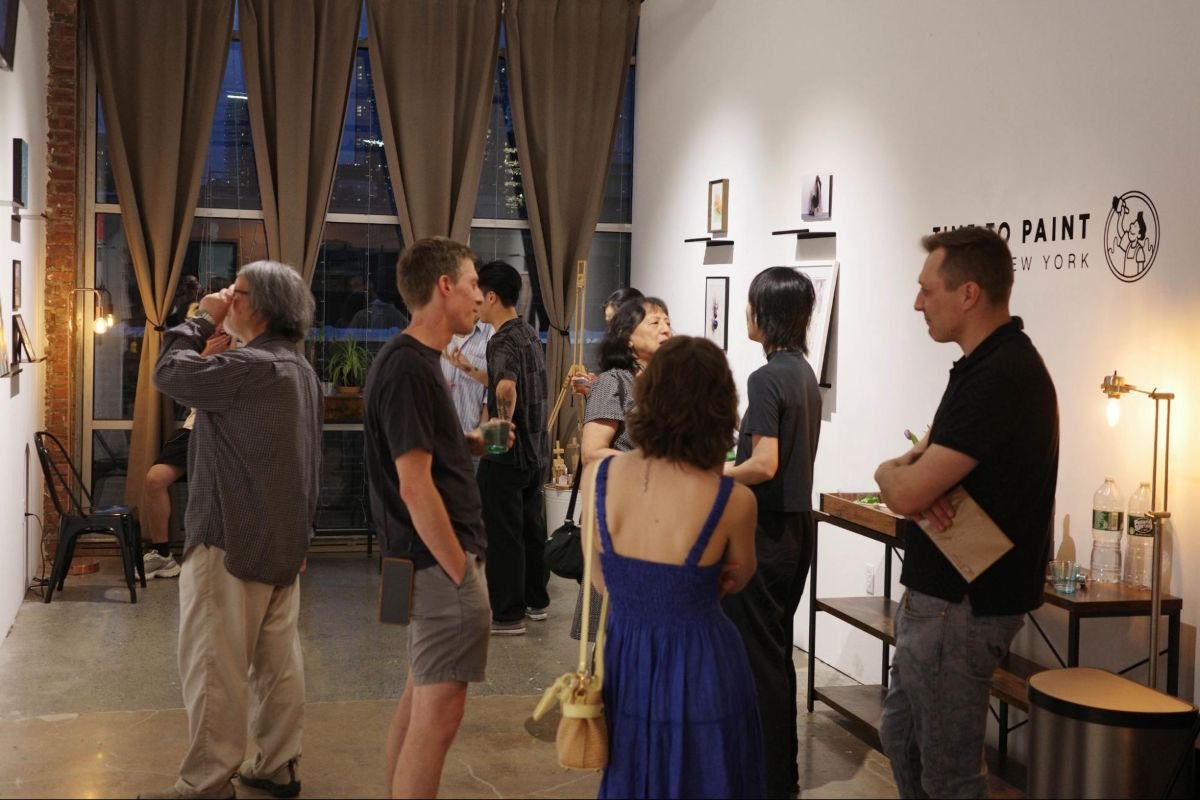
In many ways, the exhibition challenges a long-standing assumption within contemporary culture: that freedom is defined by the absence of constraints. Instead, it suggests that limitations can sharpen focus, encourage invention, and reveal differences that might otherwise remain unnoticed. By establishing equal conditions, the project creates an environment in which individuality becomes more visible rather than less.
Perhaps this is where the exhibition succeeds most. The identical units never force a sense of sameness. Instead, they create a situation in which differences become impossible to ignore. What begins as a shared structure gradually turns into a portrait of individual approaches, decisions, and sensibilities. The framework provides cohesion, while the artists provide diversity. Together, they demonstrate that constraint and freedom are not necessarily opposing forces, but can exist in productive relationship with one another.
Ultimately, Units of Expression proposes an alternative model for the group exhibition. Rather than seeking unity through a shared theme, it creates coherence through a shared condition. The project asks a deceptively simple question: if every artist begins from the same point, what remains uniquely their own?
The exhibition does not attempt to provide a definitive answer. Instead, it leaves viewers with an open question: if every artist begins from the same space, where does individuality truly reside? In Units of Expression, the answer seems to lie not in the structure itself, but in the countless decisions made within it.
Exhibition Information
Title: Units of Expression
Dates: May 29 to June 4, 2026
Venue: TIME TO PAINT NYC, 43-22 36th St #213, Long Island City, NY 11101
Curator: Jianfang Shi
Presented By: A Space Gallery and TIME TO PAINT NYC
Artists: Ada Carter, Ais Huiyi Yin, Camilla Fasolino, Fernando Lara, Fangzi Luo, Jillian Elliott, Jingsong Yu, Jake Wright, Lexie Zhang, Lucia Bautista, Marcel Ceuppens, Muhammad Jamil, Nazli Erbes, Eunyoung Cho