
By: Bobby Chrisman
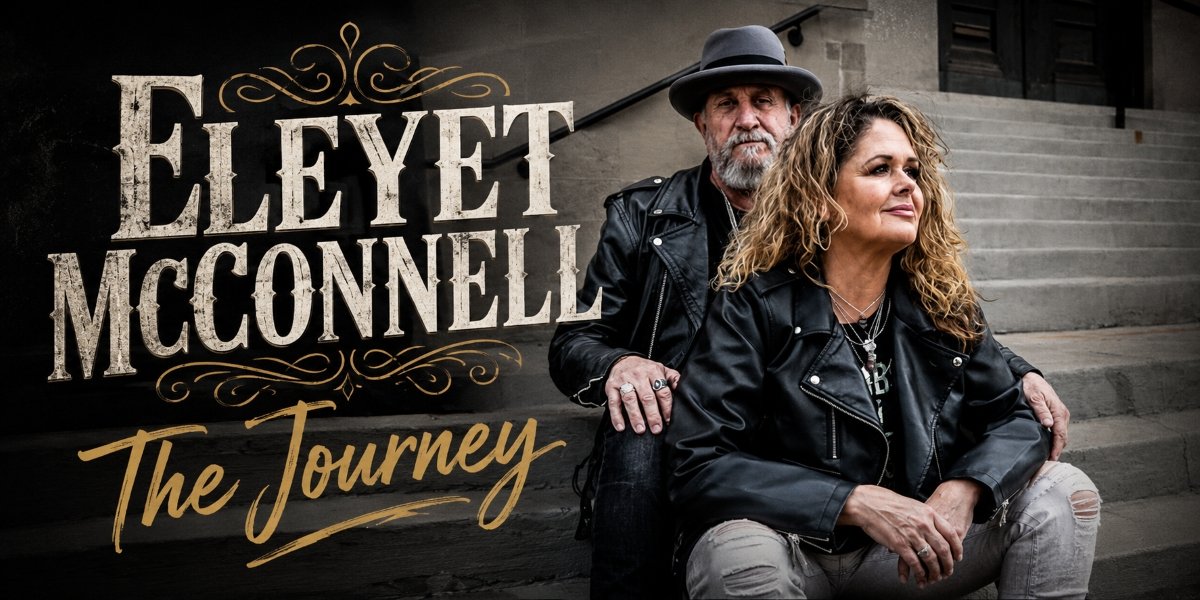
The first thing to understand about The Journey is that Eleyet McConnell has absolutely no interest in being fashionable. This is both their greatest strength and, depending on your tolerance for classic-rock values, their greatest liability. In an era where rock often arrives wrapped in irony, electronics, or self-conscious reinvention, husband-and-wife duo Angie and Chris McConnell are still making records that believe in guitars, choruses, emotional confrontation, and the radical notion that sincerity might actually be enough.
Most of the time, it is.
The Ohio-based duo’s sophomore album is rooted firmly in the traditions of seventies rock, drawing from a musical family tree that includes Heart, Bad Company, Jefferson Airplane, and occasionally the moodier side of Pink Floyd. Those references aren’t merely decorative. They’re structural. The band builds songs the old-fashioned way: verses that establish conflict, choruses that provide release, and arrangements that understand the value of dynamics rather than perpetual volume.
Fortunately, they also understand something equally important: songs matter.
Angie McConnell emerges as the album’s defining presence. Her voice isn’t perfect, which is precisely why it works. Rock and roll has never required perfection; it requires conviction. Whether she’s confronting betrayal, self-doubt, resilience, or redemption, she sings as though the material carries actual consequences. Too many contemporary vocalists sound like they’re performing emotions they researched online. McConnell sounds like she’s lived them.
That quality elevates much of The Journey.
“The Horizon” opens the record’s emotional landscape with determination rather than despair. It’s a song about moving forward despite uncertainty, a theme that surfaces repeatedly throughout the album. Unlike many contemporary empowerment anthems, however, it avoids reducing complexity to motivational slogans. The struggle remains visible.
The album’s centerpiece may well be “The Ledge,” which finds McConnell addressing manipulation and emotional exhaustion with unusual directness. The song’s central refrain, “Standing on the edge of the ledge / I need to break free from here,” isn’t particularly subtle. Then again, subtlety isn’t always the point. Rock’s greatest moments often derive their power from clarity rather than ambiguity.
Musically, “The Ledge” succeeds because the band understands tension. Chris McConnell’s bass anchors the song while the guitars steadily increase pressure until the chorus finally breaks open. It’s a familiar structure executed with enough commitment to feel fresh.
Elsewhere, “King of Glass” explores self-deception and accountability with one of the album’s stronger lyrical concepts. “Without You” provides emotional vulnerability without descending into melodrama. “Dreamy” offers a softer contrast to the record’s heavier moments and demonstrates that Eleyet McConnell knows when restraint can be more effective than force.
Producer Patrick Himes deserves considerable credit for avoiding the two most common traps facing contemporary rock records. He neither sterilizes the performances through excessive polish nor buries them beneath faux-vintage affectations. The album sounds organic without becoming nostalgic. That’s a difficult balance to achieve.
What distinguishes The Journey from many independent rock releases is its consistency of purpose. The album isn’t trying to be everything at once. It isn’t chasing trends, genres, or algorithms. It knows exactly what it wants to accomplish and proceeds accordingly.
Of course, that focus also means listeners seeking innovation won’t find much here. Eleyet McConnell isn’t reinventing rock music. They’re preserving a tradition. Whether that’s a virtue depends largely on what you expect from contemporary rock.
For my money, authenticity still counts for something.
The record’s emotional center lies in its recurring themes of perseverance and self-discovery. These songs recognize that life frequently involves disappointment, betrayal, and uncertainty. Yet they resist cynicism. That’s a harder achievement than it sounds. Optimism often comes cheaply in popular music; hope earned through struggle is much rarer.
By the time The Journey reaches its conclusion, what remains isn’t a collection of riffs or hooks, though there are enough of both. What remains is the sense of having spent time with artists genuinely invested in communicating something meaningful.
No revolution here. No grand reinvention.
Just a solid rock album made by people who still believe rock music can tell the truth.