
By: Sean Fitzgerald
Bedtime has always had a secret relationship with fear. The lights go out. The room changes shape. A coat becomes a figure. A shadow becomes a question. Children understand this better than anyone, which may be why Necronomicon Nursery Rhymes feels so oddly natural. S. F. Craftlove has taken the language of cosmic terror and tucked it into the rituals of childhood, where fear has always lived anyway.
The book’s title promises an impossible combination, and it delivers exactly that: nursery-style rhymes inspired by the figures, atmosphere, and lore of the Mythos. Yet the poems are not simple jokes pasted over famous names. They are built around a consistent imaginative reversal. The beings traditionally associated with dread are recast as companions, helpers, hosts, playmates, and eccentric presences in daily life.
This reversal is established in the letter that opens the book. The narrator tells readers that the creatures may not be as malevolent as legend suggests. Some may even be kind. That framing gives the collection a sturdy emotional spine. Every poem then becomes a small test of perception. Are we seeing a monster, or someone we have been taught to fear?
Craftlove’s best instinct is to let the joke remain slightly dangerous. The book does not turn its figures into harmless plush mascots. The language still contains hints of summoning, ancient knowledge, strange worlds, and cosmic imbalance. The art still shows tentacles, staring eyes, impossible bodies, and looming shapes. But the threat is constantly being rerouted into play. A frightening presence becomes a caretaker. A godlike figure becomes a class visitor. A creature of the deep becomes a swim instructor. The ordinary world bends just enough to admit the bizarre.
That tension keeps the pages lively. If the book were only cute, it would grow thin quickly. If it were only dark, it would lose the nursery-rhyme charm. Instead, it hovers in a delicious middle space. Readers are invited to smile and shiver at the same time.
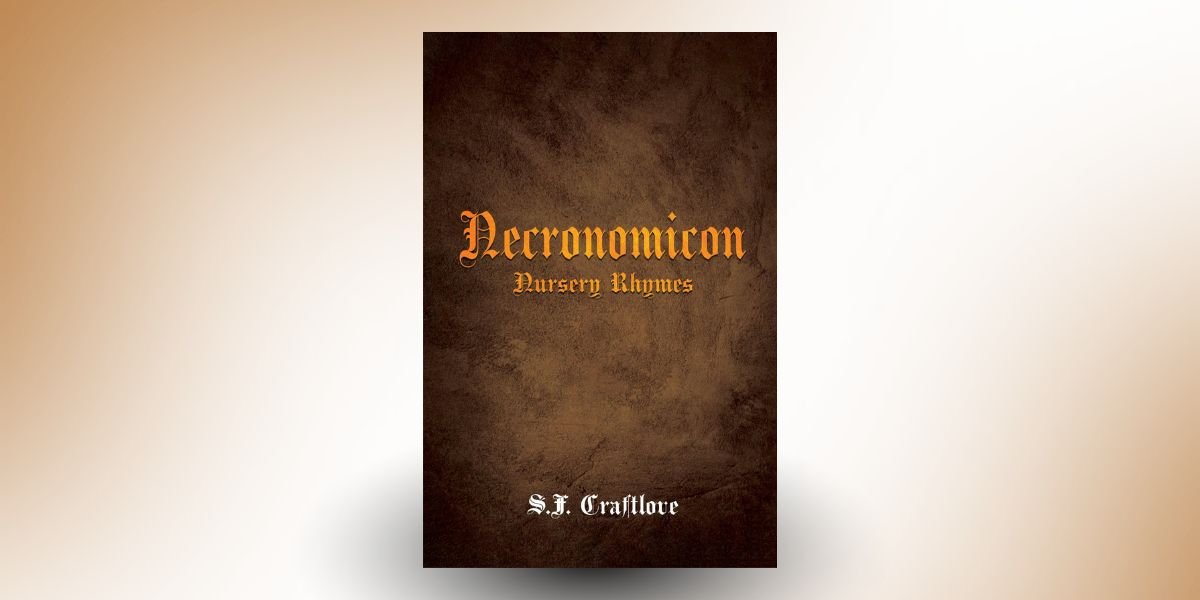
The visual design reinforces this balance. The parchment-like background gives the book an antique, grimoire-like feel. The gothic title treatment suggests forbidden scholarship. The cartoons, however, are open, bright, and expressive. It is as if a cursed manuscript were discovered and then illustrated by someone with a fondness for Saturday morning cartoons. That mismatch becomes the book’s signature.
The book also has a strong sense of audience layering. Children can enjoy the rhymes, repetition, and pictures without needing to understand every reference. Adults will enjoy the transformations, the in-jokes, and the mock-academic framing. The author biography, which presents S. F. Craftlove as a Miskatonic University figure associated with disputed scholarship and failed rituals, is especially amusing. It turns the book into part of its own myth.
The deeper appeal of Necronomicon Nursery Rhymes lies in its kindness toward the strange. Many children’s books teach acceptance, but few do so by inviting ancient cosmic entities into the living room. Craftlove’s book suggests that fear may be less reliable than curiosity, and that even the most alarming figure might have a role beyond terror.
It is a bedtime book for readers who like shadows. It is a horror joke with a soft heart. And it is proof that even the abyss might enjoy a good rhyme before sleep.
Give young monster-lovers and grown-up horror fans a book they will actually want to read twice.
Necronomicon Nursery Rhymes is available online now for curious readers everywhere.
Give young monster-lovers and grown-up horror fans a book they will actually want to read twice.