By: Elena Mart
Translational Anxiety in the Third Space: Cyborgs, Postmodernism, and the Fear of the Mechanical | Liang Jing
“The oldest and strongest emotion of mankind is fear, and the oldest and strongest kind of fear is fear of the unknown.”
—— H. P. Lovecraft
Tellingly, in her essay Twenty Theses on Translation, translation theorist Emily Apter sought to articulate the dynamics of translation within the spectrum of comparative literary studies. She provocatively asserted that “Global translation is another name for comparative literature” (2006, xi), a claim that ushered in a critical recalibration of existing theoretical paradigms, notably encapsulated in the dictum: “Everything is translatable” (2006, xii).
Yet seven years later, Apter would voice a starkly contrasting concern, lamenting that “At its very core,” she complains, “World Literature seemed oblivious to the Untranslatable” (Apter 2013, 8–9). This shift marked a significant intervention in the discourse of comparative literature and global cultural translation. While it not only reflects the evolution of “translation” as a mode of cultural transmission in postmodernity but also allegorizes the combinatorial conditions of the global capitalist marketplace and the emergence of cosmopolitanism as a millennial term of innovation—set in sharp opposition to parochialism and nationalism as forms of cultural insularity.
However, this evolution raises an essential question: in our persistent invocation of “world literature/art,” do artists risk falling into a unilaterally cognitive pitfall and a logical fallacy—namely, a simplistic binary between the global and the national?
The reason Apter ultimately retreats from her earlier assertion that “everything is translatable” lies in the inherent limitations of the concept of “world literature” or “world art,” which tends to obscure the untranslatability of cultural specificity and the irreplaceability of national traditions.
Stated otherwise, embedded within this discursive economy are numerous unresolved issues surrounding colonial and imperial structures of cultural inequality and asymmetrical power.
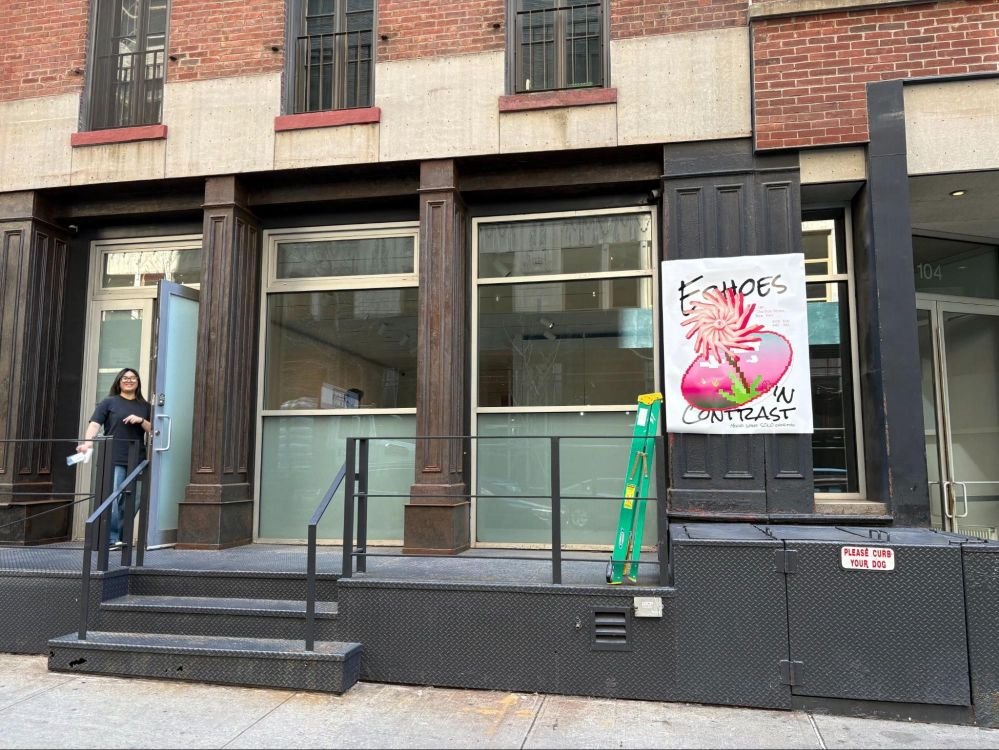
Photo Courtesy: BluBlu, Between Ghosts and Machines: Postmodern Horror and the Liminal Art of Cornelia Wang
As a cultural derivative of equal epistemological value to literature, art, too, cannot escape complicity in the tensions of translation and representation. Cornelia Wang, a New York–based immigrant/diasporic artist, explores the intersections of technology, human identity, and freedom through her graphic design works.
As previously noted, the mechanisms and economies of cultural translation are often marked by cognitive dissonance and structural disarray between the local and the global. When immigrant or diasporic artists attempt to articulate selfhood through the expression of their native cultures, they inevitably become enmeshed in the process of cultural translation.
As the artist herself reflects in an interview: “After moving to the United States and entering art school, my creative practice underwent a major transformation. I was liberated from traditional constraints and began to explore modern technologies, such as digital tools that facilitate assisted artmaking.”
However, rather than merely performing a secondary mimicry of either a “native” cultural subject or a fluent English speaker, Cornelia Wang resists such binary identities per se.
In the present exhibition, her work Little Flower interrogates the subtle yet persistent influences of traditional Asian art on contemporary techno-art practices. Her signature lies in the synthesis of narrative depth with digital precision, grounded in the specificity of Asian aesthetics—a synthesis that remains central to the evolution of her distinctive style. This resonance with cybernetic futurism is particularly evident in works such as Metropolis and Y2K Nostalgia, where the artist articulates a clear aesthetic and conceptual alignment with cyber-formatted visions of the future.
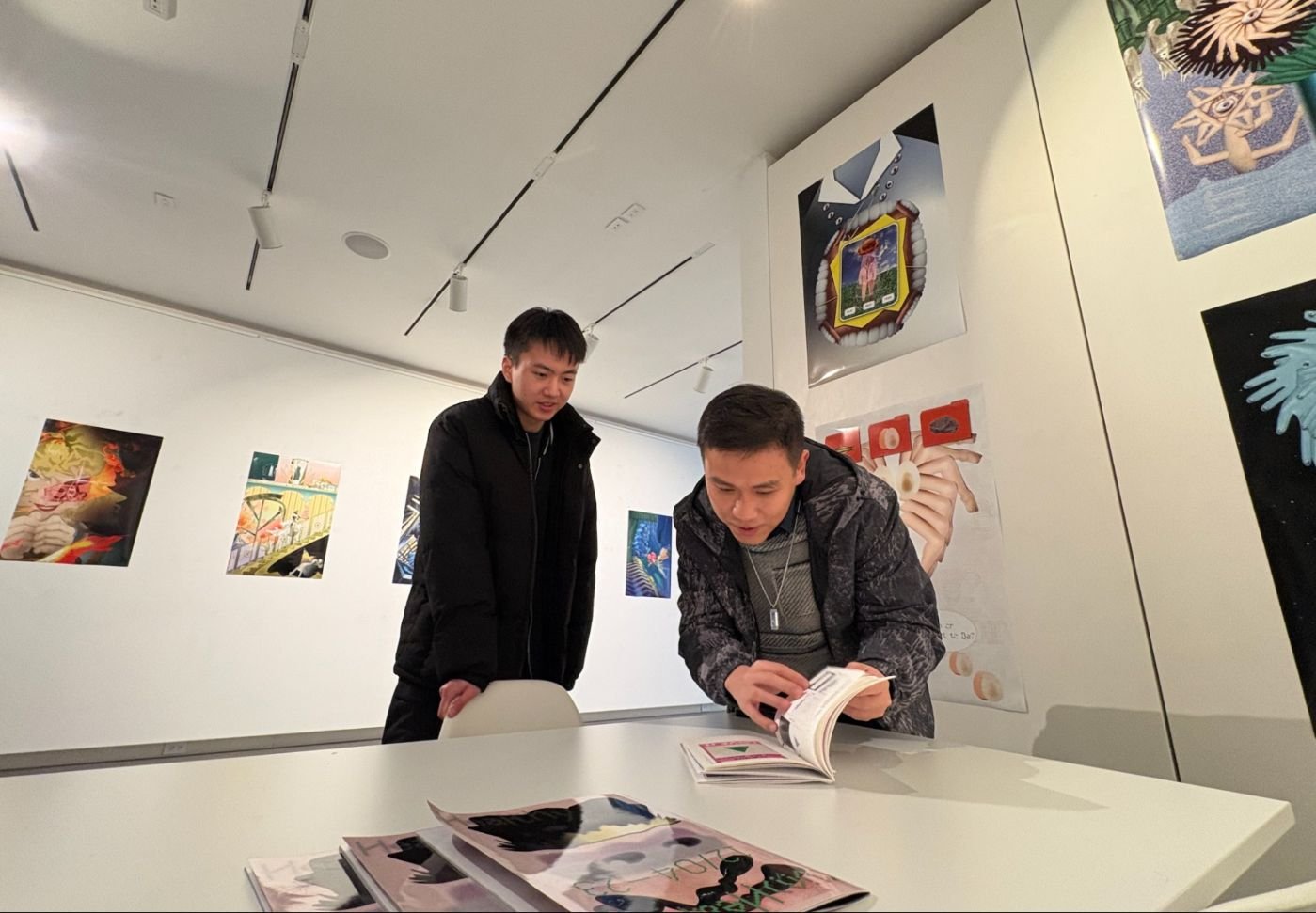
Photo Courtesy: BluBlu, Between Ghosts and Machines: Postmodern Horror and the Liminal Art of Cornelia Wang
In The Location of Culture, postcolonial theorist Homi Bhabha introduces the concept of the “third space,” a metaphorical stairwell that emerges through cultural hybridity, where two seemingly oppositional cultures enter a state of mutual entanglement— “you are in me, and I am in you.” While such hybridity acknowledges the absorptive capacity of monolingual cultural systems over the Other, it nevertheless harbors an enduring anxiety rooted in the asymmetries of power.
As both a receiver and experiencer of dual cultural formations, artist Cornelia Wang occupies this liminal threshold. Her sustained incorporation of local cultural elements in her work can be seen as a form of resistance against cultural fundamentalism. At the same time, even in subtle forms, her series on “horror aesthetics” evokes a gothic uncanny—a disturbance produced by the friction of colliding cultural forces.
In her independently produced horror-themed zine Health: Unhealthy, Wang delves into the eerie and often disquieting impact of technology on human psychology and social norms, synthesizing horror aesthetics with probing philosophical inquiries. Echoing H. P. Lovecraft’s assertion that “the oldest and strongest emotion of mankind is fear, and the oldest and strongest kind of fear is fear of the unknown,” Wang’s work renders visible the struggle between cultural paradigms through a gothic narrative structure imbued with existential unease.
The visual architecture of her work is marked by stark contrasts in color and tone, strategically employed to deepen affective resonance and to highlight the relational positionalities embedded within the narrative. Her attention to composition and lighting draws inspiration from early gothic cinema, particularly in its use of chiaroscuro and staged mise-en-scène to evoke visceral viewer responses.
In her portrayal of human figures, Wang places particular emphasis on facial expression, believing that the minutiae of emotional cues can interact subtly yet powerfully with the thematic content of the work. Through a cybernetic, surreal futurism, her work expresses a kind of animistic emotion—suggesting that, once humanity becomes part of its environment, it is no longer simply a subject but also an object within the environment. Her artistic vision, then, navigates the affective tension between technological alienation and ontological re-enchantment.
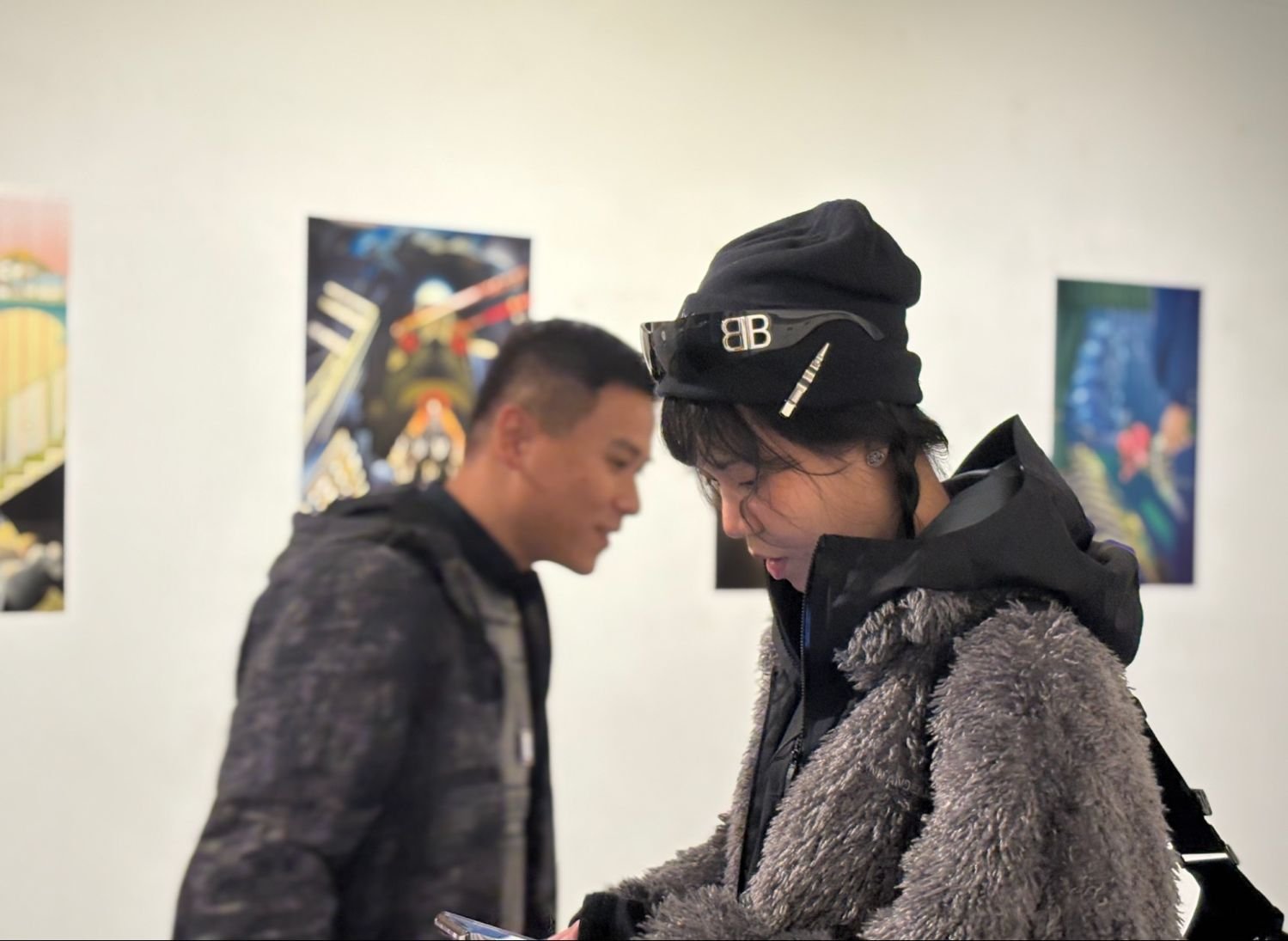
Photo Courtesy: BluBlu, Between Ghosts and Machines: Postmodern Horror and the Liminal Art of Cornelia Wang
The artist’s affinity for abstract concepts is also vividly expressed in her creative process. In works such as Little Flower – Frame by Frame Animation and Delicate, Cornelia Wang integrates visual design with animistic aesthetics to enhance her depiction of nature through an ecocentric lens.
These pieces suggest a departure from culturally specific representation toward a more universal exploration of shared human experience. At this juncture, the anxiety of cultural translation no longer constitutes a “problematic” in the conventional sense.
As scholar Michelle Yeh once critiqued Stephen Owen’s assertion that contemporary Chinese literature is insufficiently “Chinese,” she posed the incisive question: “In a modern world where global information flows rapidly, how can we draw a clear and fixed line between ‘national’ and ‘international’ poetry? More importantly: must such a line be drawn at all?”
Cornelia Wang’s work offers a compelling response. In her pursuit of the universally human—of individual experience transcending cultural binaries—the dichotomy between national and international is rendered increasingly irrelevant. What emerges instead is the artist’s introspective engagement with contemporary existence: a set of questions and aesthetic investigations grounded not in identity politics alone, but in the experiential uncertainties of the present moment.
Published by Liz SD.