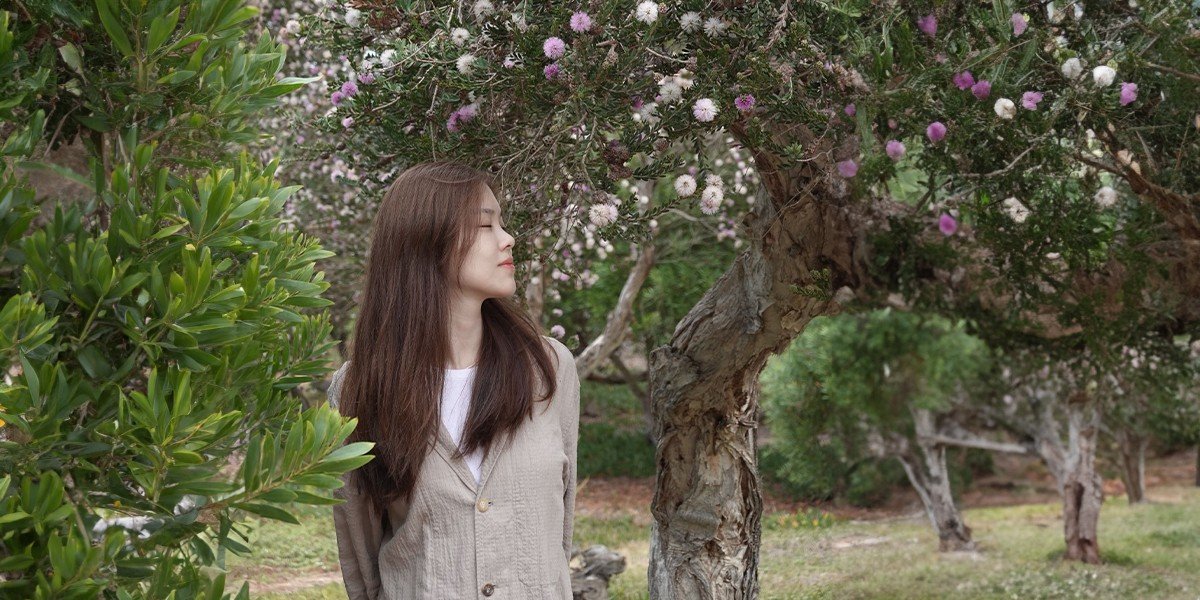

Landscape architecture is more than an aesthetic pursuit—it is a discipline that bridges ecology, urban life, and cultural narratives. Yuan Tian, a landscape designer at RIOS in Los Angeles, embodies this holistic approach, blending ecological awareness with artistic vision. With a background in both architecture and landscape architecture, she brings a multidisciplinary perspective to her work, shaping urban spaces that are not only visually compelling but also environmentally resilient and culturally significant.
A Design Philosophy Rooted in Nature and Culture
Tian’s design philosophy is grounded in the integration of natural systems and cultural identity. She views landscapes as dynamic systems that should reflect ecological processes such as rainwater management, biodiversity enhancement, and habitat restoration. Equally, she believes landscapes serve as spatial narratives—records of collective memory and social evolution.
Drawing inspiration from the layered logic of Gödel, Escher, Bach, Tian describes landscapes as recursive, interwoven systems where environment, culture, and urban dynamics intersect. Her work prioritizes climate-adaptive strategies, incorporating flood-resilient infrastructure, drought-tolerant plantings, and sustainable material use. The goal is to create spaces that not only adapt to environmental stresses but also support long-term recovery and transformation.
Advancing Climate Resilience Through Public Waterfront Design
While working with a multidisciplinary team on a major public waterfront project in Manhattan, Tian contributed to the schematic design of an adaptive open space that integrates resilient ecological systems with community priorities. Her role involved conducting iterative design studies to explore spatial and ecological performance, develop design strategies, and coordinate with architects and engineers to advance the project.
She also participated in community engagement initiatives, facilitating dialogue with local stakeholders to inform design decisions and ensure cultural relevance. The project emphasized layered resilience—balancing ecological restoration, public access, and heritage sensitivity—and received positive feedback from the community.
The Role of Landscape in Urban and Social Systems
Tian sees landscape architecture as a catalyst for ecological regeneration, climate mitigation, and social equity. Well-designed landscapes, she notes, can serve as infrastructure, public space, and cultural touchstone—simultaneously restoring ecological balance and enhancing community well-being.
“Good landscape design doesn’t just respond to its site, it anticipates change and guides it in a meaningful direction. A successful landscape should invite use, foster learning, and adapt over time.”
She emphasizes the importance of public access and inclusive design, viewing open spaces as critical to urban resilience and civic engagement.
A Personal Framework: Observation, Pattern, and Process
Tian’s interest in environmental systems began early, shaped by her father’s background in environmental engineering and childhood experiments involving water cycles and stormwater observation. Her architectural education in China provided a foundation in spatial reasoning and form-making, while her Master’s training in landscape architecture at the University of Pennsylvania deepened her understanding of ecological process and systems thinking.
Her design approach reflects a synthesis of these experiences: a systems-oriented mindset that respects history, embraces iteration, and seeks design solutions that balance vision with feasibility. She believes that design must evolve alongside its ecological and social context, and her work reflects a commitment to adaptive transformation.
Process as Practice: From Research to Realization
For Tian, each project begins with rigorous site analysis and research. She seeks to understand a site’s ecological structure, cultural context, and spatial logic before introducing new interventions. Design, in her view, is a collaborative and iterative process, driven by dialogue between concept and constraint.
Rather than seeking a single ideal solution, she emphasizes adaptive iteration—a continuous refinement of ideas shaped by feedback, feasibility, and ecological intent. Once conceptual clarity is achieved, she transitions to implementation strategies, focusing on technical execution, stakeholder collaboration, and post-occupancy resilience.
Future Trajectories: Climate, Technology, and Equity
As climate events grow in intensity and frequency, Tian believes that landscape architecture will play an increasingly critical role in adaptive planning and post-disaster recovery. She cites recent wildfire events in Los Angeles as a reminder of the need for long-term ecological strategies that integrate prevention, restoration, and education.
She is also optimistic about the integration of technology in design practice—from data-driven planning tools to ecological modeling and material innovation. These tools, she notes, can enhance decision-making and expand the possibilities for sustainable, climate-resilient landscapes.
Guidance for Emerging Designers
Tian encourages young designers to embrace the breadth of the profession. Landscape architecture, she says, requires not only creative thinking but also systems literacy, coordination skills, and design management. Multidisciplinary collaboration is essential, as is a willingness to evolve.
“Be patient, stay curious, and keep learning, great landscapes emerge over time. Our role is to guide that evolution with intention and care.”
To learn more about Yuan Tian’s work, connect with her on LinkedIn.
Published by Joseph T.