
By: Tabish Khan
What does the future look like with AI getting smarter with each passing day, social media algorithms steering us toward our base instincts, and robots becoming more present through delivery bots, drones, and driverless cars? For some, it’s a world of opportunity, with new innovations that will meet our labor needs. For others, it’s a dystopian future where wealth will concentrate even more in the hands of the 1% and everyone else will have to scrabble even harder to get by.
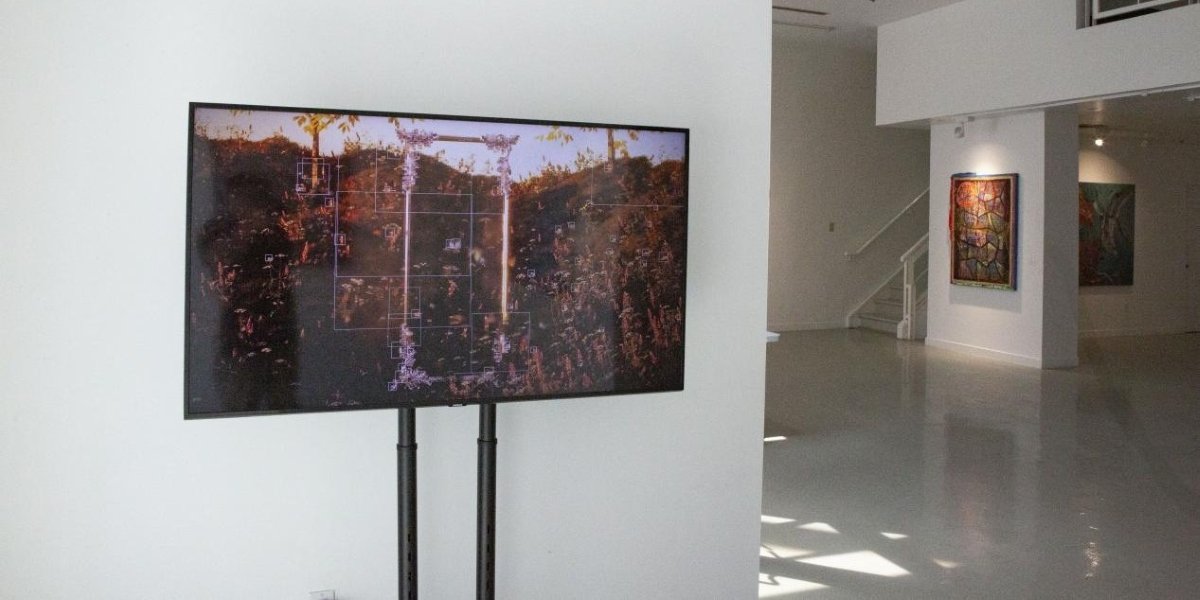
These thoughts all ran through my head while watching Engin Demir’s short film, where clones of the same female form are reproduced en masse to meet the demand. What are they being made for? Are these female bots being made for entertainment or companionship, and is that the destined future? What will this mean for the future of human connection, intimacy, and gender divides?

It feels like the future we’re heading towards, and one that’s been covered extensively in science fiction, by Philip K Dick in ‘Do Androids Dream of Electric Sheep’, and most recently in Sierra Greer’s novel ‘Annie Bot’, which asks the question, what does a relationship look like when one party owns the other? Given how close we are to the reality of human-like androids walking among us, it’s important that visual artists tackle this question as well.
The work also touches on the rise of AI slop, where social media algorithms feed us content they think we want to see, with no regard for the truth. People now watch videos, and their first question is whether it’s AI-generated.

The impact of social media and internet culture has been explored by artists such as Hito Steyerl and Jon Rafman, who, in their playful yet powerful works, ‘How Not to be seen’ and ‘The Nine Eyes of Google Street View’, respectively, commented on a world where we’re always surveilled. Amalia Ulman’s ‘Excellences & Perfections’ created a false Instagram avatar that had followers empathizing with her journey, before realizing they had been duped.
Yet it now feels as if social media and surveillance capitalism are so ingrained in life that many artists creating today can’t recall a world without them. It means the newest works, like Demir’s, take on a new lens, as critiquing a system from within it requires acknowledging its pervasiveness, whereas earlier artists entered the world with some ability to avoid it altogether.
Engin Demir’s work speaks of an inevitability of the future we’re heading towards; we can fight it, but we may have to embrace it anyhow. If we have reached the point of no return, it’s important that contemporary art reflects this. The AI equivalent of Pandora’s Box feels like it has been opened, and there’s no way to return to the past world.