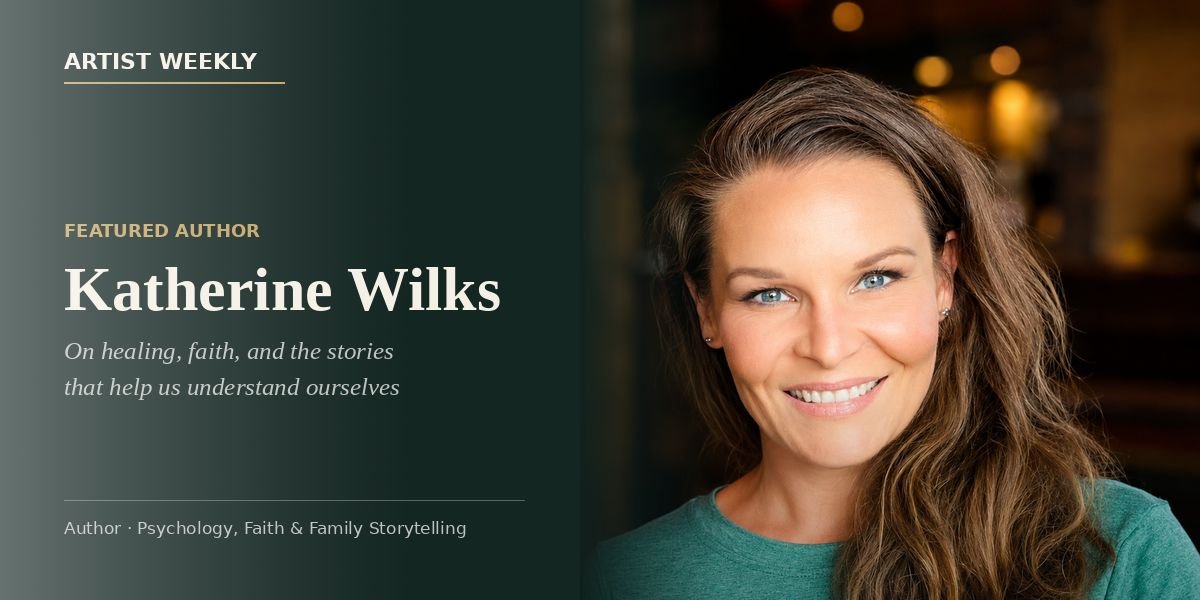

There are authors who write stories, and then there are authors who write from the deepest chambers of lived experience. A place from where emotion, healing, faith, grief, identity, and resilience all converge into something greatly human belongs unmistakably to the latter category.
Writing under a voice that feels at once compassionate, intellectually grounded, and emotionally fearless, Katherine Wilks has quietly built a body of work that refuses to remain confined to a single genre. Her books move fluidly between psychological insight, spiritual reflection, children’s storytelling, trauma recovery, family healing, and deeply personal change. Yet despite the breadth of her catalog, there is a remarkable consistency to her work. Every page is rooted in empathy, truth, and the strong belief that people can rebuild themselves, even after life has broken them open.
What makes her particularly compelling in today’s literary landscape is her refusal to romanticize pain while still honoring it. In books such as After the Fire: Rebuilding Identity, Purpose, and a Life That Fits and Soft Healing: A Gentle Guide for When You’re Tired of Being Strong, she shows the quiet devastation of burnout, emotional exhaustion, identity loss, and survival with extraordinary emotional intelligence. Rather than offering hollow optimism, she writes with the kind of wisdom that feels earned. Her prose acknowledges suffering honestly while still extending hope with grace and dignity.
That emotional precision is perhaps most powerfully displayed in Relearning Safety: How to Feel Secure in Your Own Body, a deeply relatable work that explores nervous system healing, trauma recovery, and embodied safety. In an era increasingly aware of mental health yet often lacking compassionate nuance, she approaches the subject with clarity and humanity. She bridges neuroscience, psychology, and emotional restoration without ever losing the warmth of personal connection. The result is not merely informative. It is life-changing.
Equally striking is her ambitious The Narcissist’s Web series, a psychologically astute exploration of narcissistic abuse and emotional manipulation. Beginning with Meeting the Narcissist: Love at First Lie and continuing through the devastating realities of marriage, survival, divorce, and eventual recovery, the series reads less like conventional self-help and more like emotional documentation of a hidden war many endure in silence. Wilks does not sensationalize trauma. She validates it. Her writing gives language to experiences that are often dismissed, misunderstood, or painfully invisible. That alone makes her work deeply important.
Yet what truly distinguishes Katherine as an author is her extraordinary versatility. One moment, she is unpacking complex emotional realities with surgical insight. Next, she is writing tender, imaginative children’s stories filled with warmth and wonder. Books like Grandpa’s Invisible Powers, The Cloud That Wouldn’t Rain, and I Don’t Want to Be a Unicorn reveal a softer but equally meaningful dimension of her voice. These stories celebrate identity, love, imagination, and emotional safety with gentleness that feels deeply intentional. Rather than talking down to children, she writes toward their emotional worlds with respect and sincerity.
Her faith-centered works carry similar depth. In Daughters of Promise: Women of the Bible Who Lived by Faith and Changed History and The Ultimate Girl Dad: How God Loves, Defends, and Delights in His Daughters, she approaches spirituality not as performance, but as a relationship. Her reflections are thoughtful, compassionate, and rooted in emotional truth, offering readers both theological insight and personal comfort. There is an unmistakable pastoral quality to her writing. One that comforts without preaching and empowers without force.
Perhaps the most remarkable thing about Katherine Wilks is that her books never feel manufactured for trends. They feel lived in. Every title carries the unmistakable sense that the author has sat with difficult questions herself, questions about grief, survival, healing, womanhood, belonging, family, faith, and identity. That authenticity is increasingly rare, and readers recognize it immediately.
In a literary world often driven by noise, she writes with something far more enduring. She offers emotional clarity. Her work does not simply entertain or inform. It accompanies. It sits beside readers in moments of heartbreak, confusion, rebuilding, and rediscovery, offering not easy answers, but understanding. And perhaps that is her greatest gift as a writer.
Katherine Wilks reminds readers that healing is possible, softness is strength. Faith can coexist with struggle, and even after a big loss, a meaningful life can still be rebuilt, beautifully and entirely on one’s own terms. Readers who are searching for books that do more than tell stories, for readers seeking understanding, restoration, courage, and emotional truth, Katherine Wilks’ growing body of work offers an experience that lingers long after the final page.
Whether through her deeply healing nonfiction, emotionally relevant relationship series, faith-centered reflections, or heartfelt children’s books, she continues to establish herself as one of the most emotionally authentic literary voices writing today.