By Maria Hill
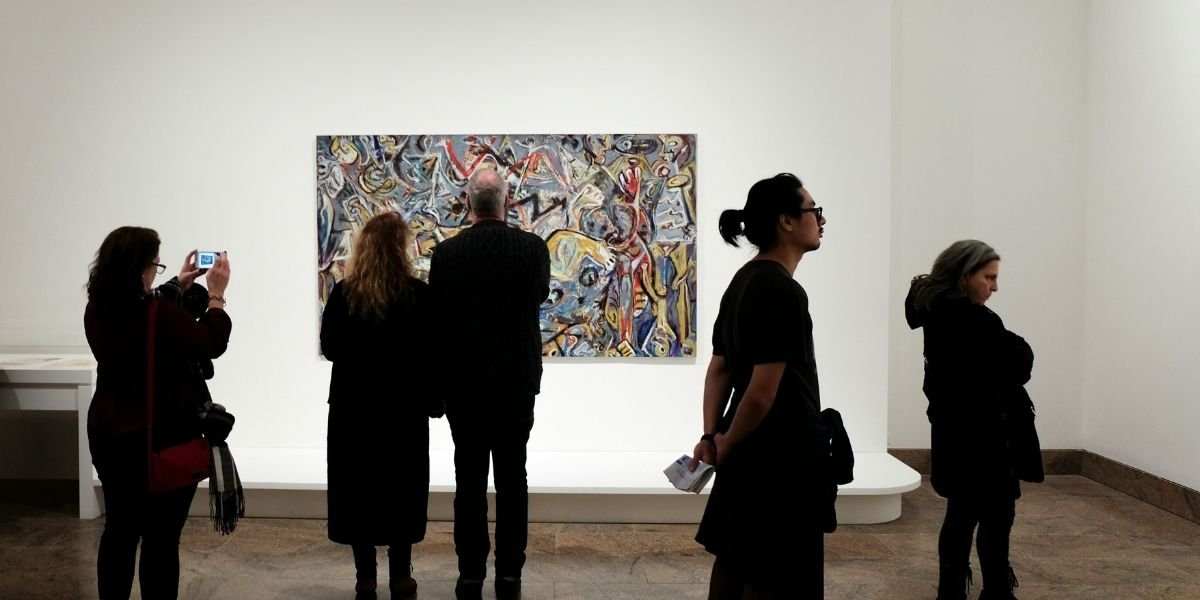
Many things are fading away in a slow and persistent manner: the body’s capacity for perception, the relationship between people and space, the traces left by nature, emotional experiences within the city, and even the stability of memory itself. The exhibition Forms Before Dissolving focuses on the structures and states that cling fleetingly to our perception just before they vanish. Through various media, including photography, moving image, painting, sound, sculpture, and installation, the artists in the exhibition recrystallize experiences that are in a state of flux, disintegration, and recomposition into visible ‘forms’.
The group exhibition Forms Before Dissolving, initiated and organized by ArtOrb and co-organized by Apsara Studio, took place in London from 23 to 25 May 2026. Curated by Ciro Wang, with Xiaoying Guo as co-curator, the exhibition brings together twenty-one artists from diverse cultural backgrounds to explore the evolving relationships between time, the body, space, and memory.
In the exhibition, many works regard the ‘body’ as a medium of perception that is constantly shaped by the environment. Qishan Li’s REMEMBERING A TREE transforms natural materials into a corporeal archive of memory and perception through the long-term documentation of bark textures and the traces of time. In parallel, Selene’s Breath Held converts emotion into a spatial structure characterized by volume and pressure. Different materials within transparent balloons constantly press upon and envelop the body, turning ‘breathing’ into a metaphor for psychological resilience. Shavonne Yang’s ceramic work Wrong Vessels – C2025-37 further explores the relationship between the body and social structures. Their deconstruction of traditional vessel forms causes the ‘container’ to lose its inherent stability, using the research frameworks of queer theory and the cyborg body to re-examine the complex interplay between gender, the body, and social discipline.
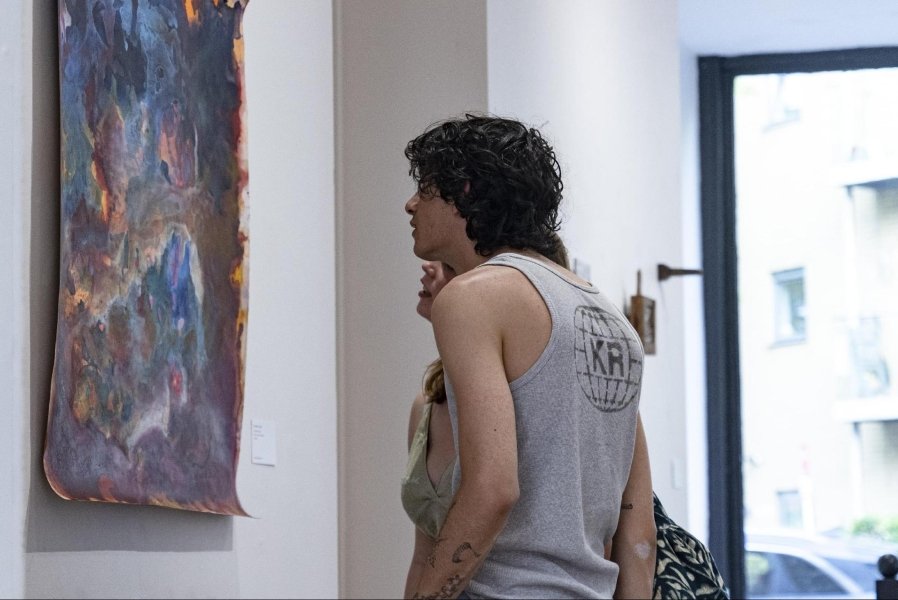
Another section of the exhibition turns its attention to the ever-shifting emotional relationship between people and space. Kaiyuan Yang’s Conversations with the Reflection revolves around the ‘people-pleaser’ personality, portraying the constant tug-of-war between social expectations and self-perception. The ‘self’ in the mirror is both the observer and the observed, with the empty, cold space further intensifying a sense of psychological isolation. Echoing this is Oli James’s sculptural work The Closer You Are to Me. The artist uses the physical differences between wood, ceramics, and bronze to explore the shifting psychological distance between people. Concurrently, Qintong Yu’s The Silent Germination constructs an extremely slow process of internal transformation through the symbiotic relationship between plants, birds, and the human body.
The exhibition also features a number of works that interpret ‘dissipation’ as a process of accumulation concerning time and memory. Bichen Liu’s What Lies Beneath brings the root system, normally concealed beneath the ground, back into view. These roots, exposed by soil erosion, are both natural structures and traces of memory that have emerged after long suppression. In contrast, Chun Wang’s Breakfast Residuals focuses on the minutest remnants of daily life: stains left after breakfast, and marks on tableware and tabletops. These ostensibly insignificant leftovers are transformed by the artist into physical evidence of the passage of time. Through an intensely quiet act of observation, the work allows ‘what remains after disappearance’ to reveal itself step by step. Willem Keys’ Accidents of Bread takes the concept of ‘traces’ a step further by making the traces themselves the subject of the work. During his time working in a bakery, the artist used baking paper in the production of bread over a long period. The marks left naturally by the processes of high heat, fermentation and burning formed a visual structure that is almost akin to abstract painting.
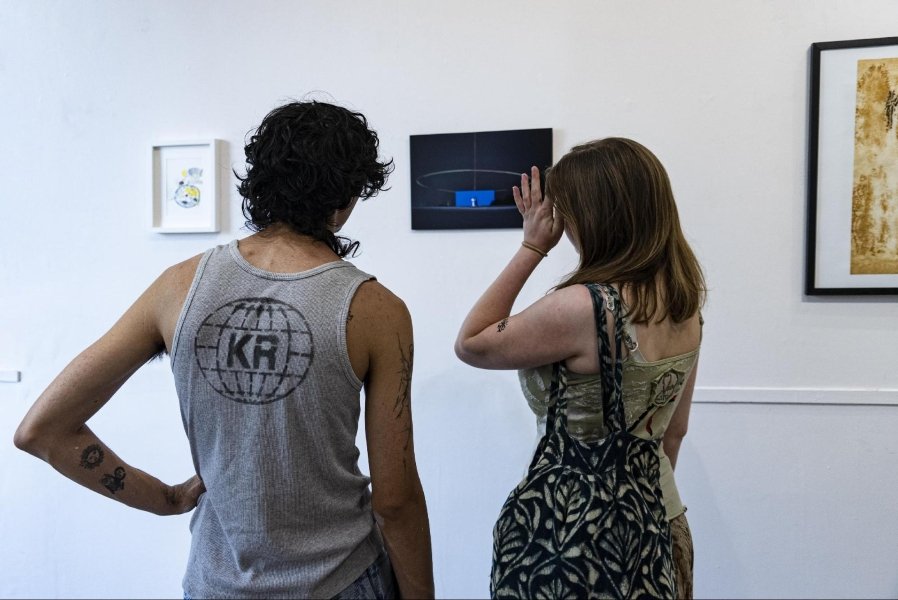
Compared to stable structures, many of the artists in this exhibition are more concerned with ‘change’ itself. Jingchao Yang’s moving image work Fragments of a Landscape establishes a landscape system that constantly drifts between reality and the virtual, through the sampling of real topography and digital reconstruction. Yining Liu’s Blooming Wings presents a state that lies somewhere between plant growth and systemic mutation. These ever-expanding, overlapping organic forms resemble both natural growth and some kind of unknown system in the process of evolution.
The exhibition Forms Before Dissolving poses the question: when everything is in a state of flux and dissolution, can we still perceive the traces that have never fully vanished? These works form a temporary structure concerning time, the body and perception, and those fleeting moments on the verge of vanishing may well be the most authentic way of existing today.
Forms Before Dissolving Curator: Ciro Wang Co-curator: Xiaoying Guo
Organized by: ArtOrb In collaboration with: Apsara Studio Gallery
Participating artists: Bichen Liu, Chun Wang, Jingchao Yang, Kaiyuan Yang, Kit Hope & Matteo Terre, Lynette Boting Liang, Oli James, Qintong Yu, Qishan Li, Renwei Liu, Roseline (Jingyuan) Zhang, Selene, Shavonne Yang, Sherry Bright, Tianyi Xiao, Varsamuelsen, Willem Keys, Xin Zhang, Xusheng Yue, Yihao Zhang, Yining Liu.
Exhibition dates: 23 May 2026 – 25 May 2026
Venue: Apsara Studio Gallery, London, UK