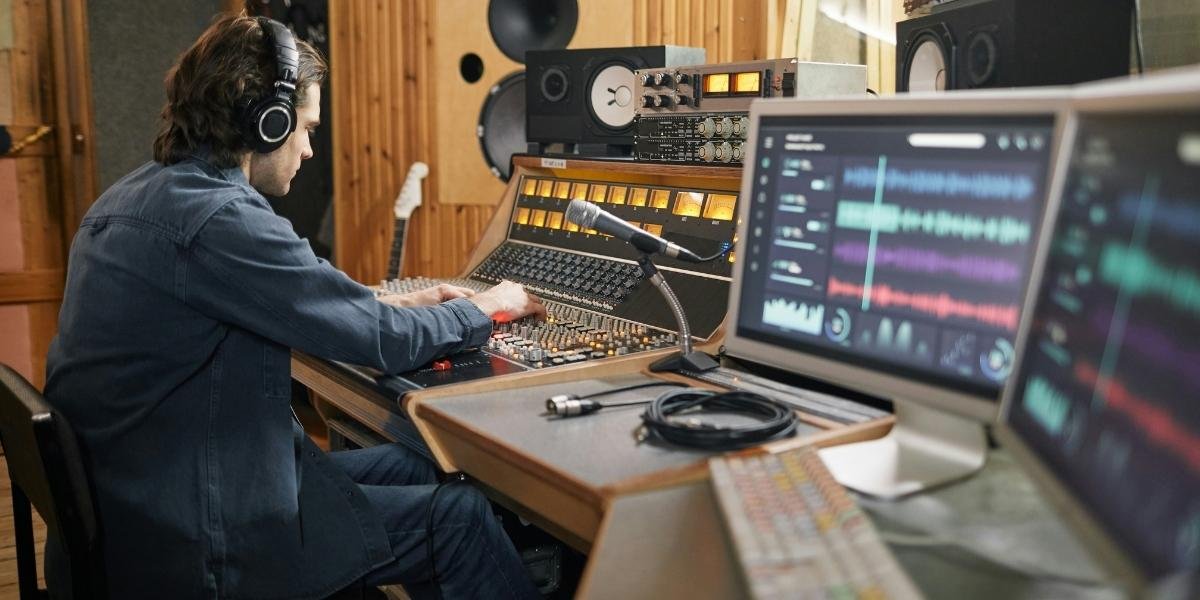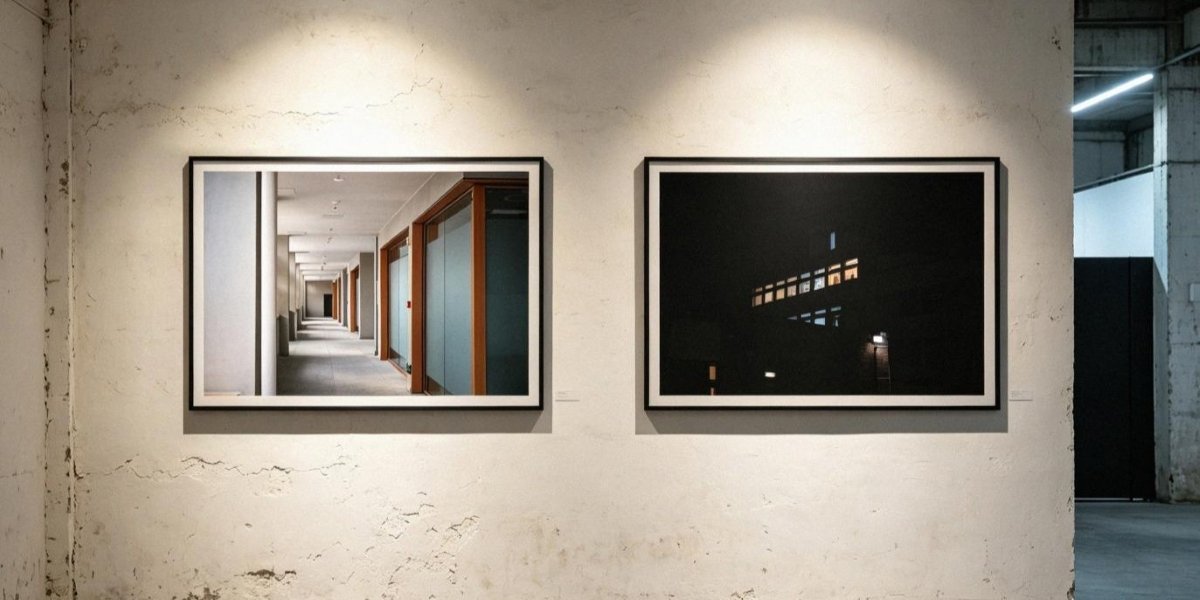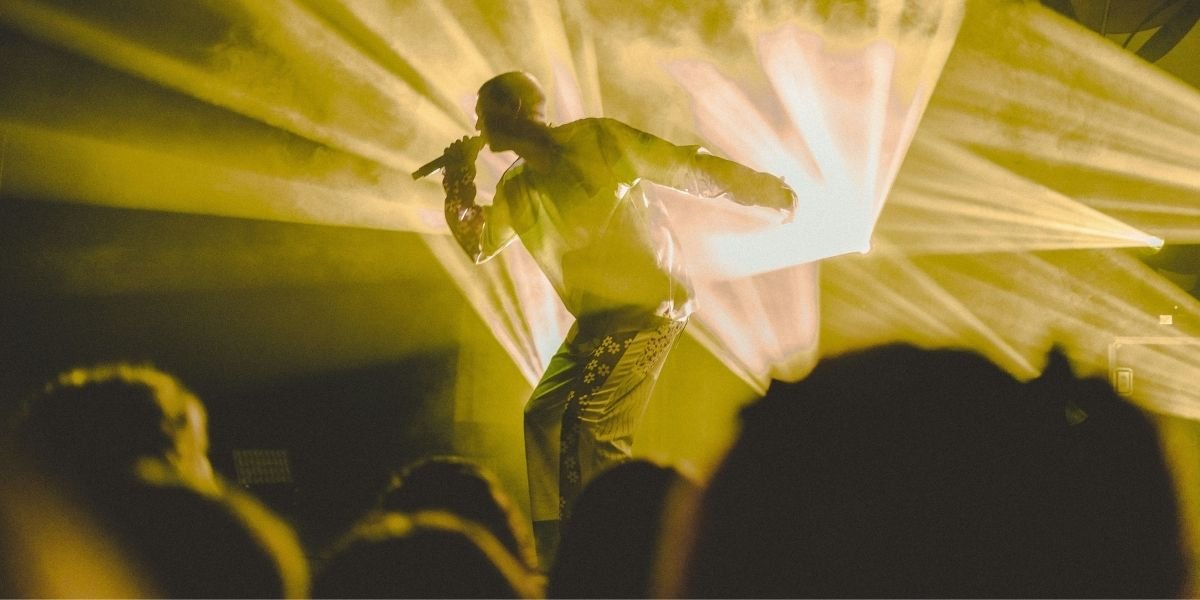
In an era where technology increasingly intersects with the arts, Jane (Xinjian) Huang’s performances represent a thought-provoking exploration of how digital innovation might enhance the expressive power of performance art. With a background in music and sound, the multidisciplinary artist, whose work spans dance, live performance, and interactive media, has crafted a unique artistic stage where experimentation and technology potentially converge.
Her early attempt at blending art and technology began with dance. Created in collaboration with the dancer and motion graphic artist during college, her graduate piece TAT featured green-screen compositing and post-production visual effects—techniques commonly used in the performing arts. By alternating between live dance and digital imagery in sync with rhythmic music, the piece intended to create an illusory, novel experience for the audience. The combination of digital and physical elements was meant to evoke a sense of surrealism, where reality and virtuality coexisted harmoniously. Although there was no real-time interaction involved, this work sparked her ongoing interest in the technology of kinetic performance art.
Her exploration continued in Yu, an interactive dance-music performance in collaboration with the Chinese dancer Rui Yao, who specializes in water-sleeve dance. In Chinese opera, water sleeves refer to white silk extensions to the cuffs of garment sleeves. The dance is so named because the performer can use the sleeves to produce movements like water ripples. The interaction between the dancer’s movements and the technology allows for a sense of organic collaboration, wherein the audience feels the seamless merging of tradition and modernity.
From Motion to Vision: Jane (Xinjian) Huang’s Multi-Dimensional Performances
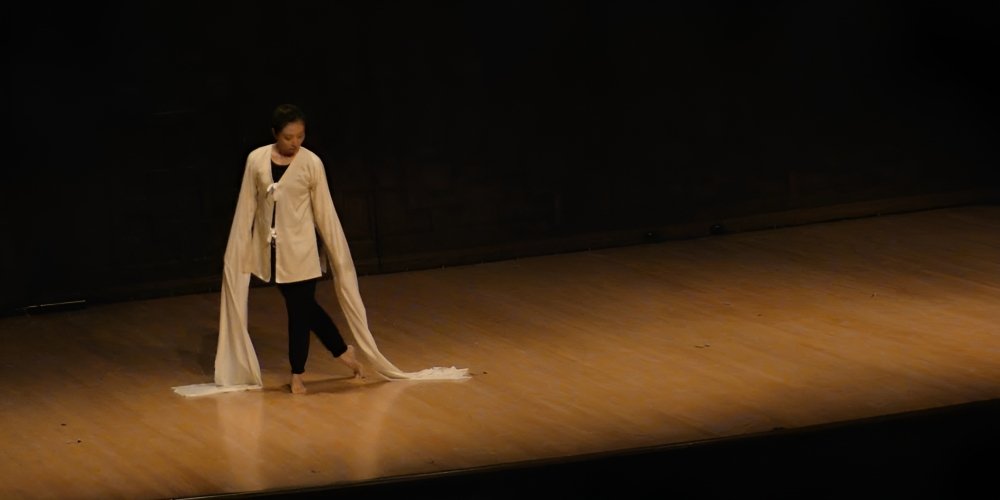
Photo Courtesy: Michele Seippel / Erica Lee
This time, Jane extended her practice to physical computing and creative programming. The data stream from the dancer’s movements, analyzed by the wearable sensors attached to her sleeves, is wirelessly sent to the computer for sound processing, which then generates the music in real time. The result is an evolving performance that gradually adapts in real time, pushing the boundaries of the interaction and mutual manipulation between human motion and music. The dancer’s improvised movements influence the flow of the music, which, in turn, is shaped by the music it generates through the dancer’s hearing, creating a feedback loop that blurs the line between the body and machine. This forms a dynamic dialogue between the body’s spontaneous, unpredictable actions and the machine’s calculated responses. Ultimately, this work represents a fusion of art and technology, offering both the artist and the audience a transformative experience that challenges the boundaries of traditional performance.
In addition to working behind the scenes, Jane also asserts her presence on stage, expanding her artistic expression to engage with themes such as identity and history. Her latest work, Ci, an audiovisual interactive performance video created and performed by herself, was selected and presented at the 2025 CONTEMPORARY VENICE 17th Edition, held at the historic Palazzo Albrizzi-Capello in Venice. Using sensors and software once again, she employs her own gestures as inputs, generating not only music but also visuals. The piece revolves around the recurring image of an oriental vase, which undergoes exaggerated transformations until entering a new state—a reflection of the echoes of bygone histories. The piece allows her to explore how technology can influence cultural perceptions and reimagine historical narratives, offering a unique way to interact with the past.
At the core of Jane’s work lies the idea that technology is not merely a tool for innovation, but an extension of human expression. For her, technology offers a new kind of freedom—an opportunity to explore traditional forms of art-making and experiment with new dimensions of storytelling, emotion, and connection. Through this lens, she envisions a future where the boundaries between the human body and technological mediums are increasingly blurred, creating richer, more immersive experiences.