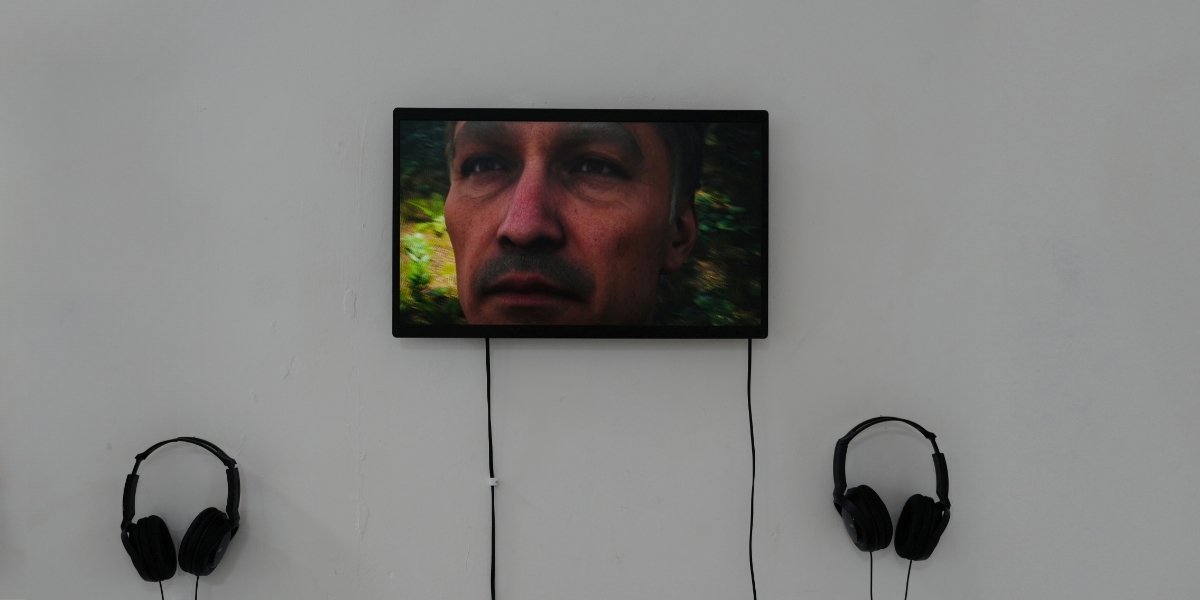

By: Valentina Shaeva
Through media art practices, Haibo Jia continues to explore the issues of how language influences personality and how an individual’s attitude towards their own cultural memory is shaped through their native language amidst rapid globalization. For the artist, it is particularly important to demonstrate through his art that speech is not just an exchange of information, but a complex, constantly changing, and evolving living, independent structure that influences the entire cultural system of a nation. However, now, in the era of universal migration, language is rapidly losing its connection with established traditions and is transforming more into a coded system than a carrier of canons. Thus, Haibo Jia’s visual practices’ purpose is to present language, on the one hand, as a conditional mediator between a person and their cultural heritage, and, on the other hand, as an independent living organism that is permanently reinterpreted.
In the new artwork, “The Accent Frontier”, the artist addresses the accent as one of the markers of cultural and social belonging. At first glance, an accent may be perceived as a minor feature of speech, but at the same time, it reflects a person’s essence: their upbringing, education, and the environment in which they grew up. That is why an accent is a complex and multifaceted phenomenon that concerns the media author.
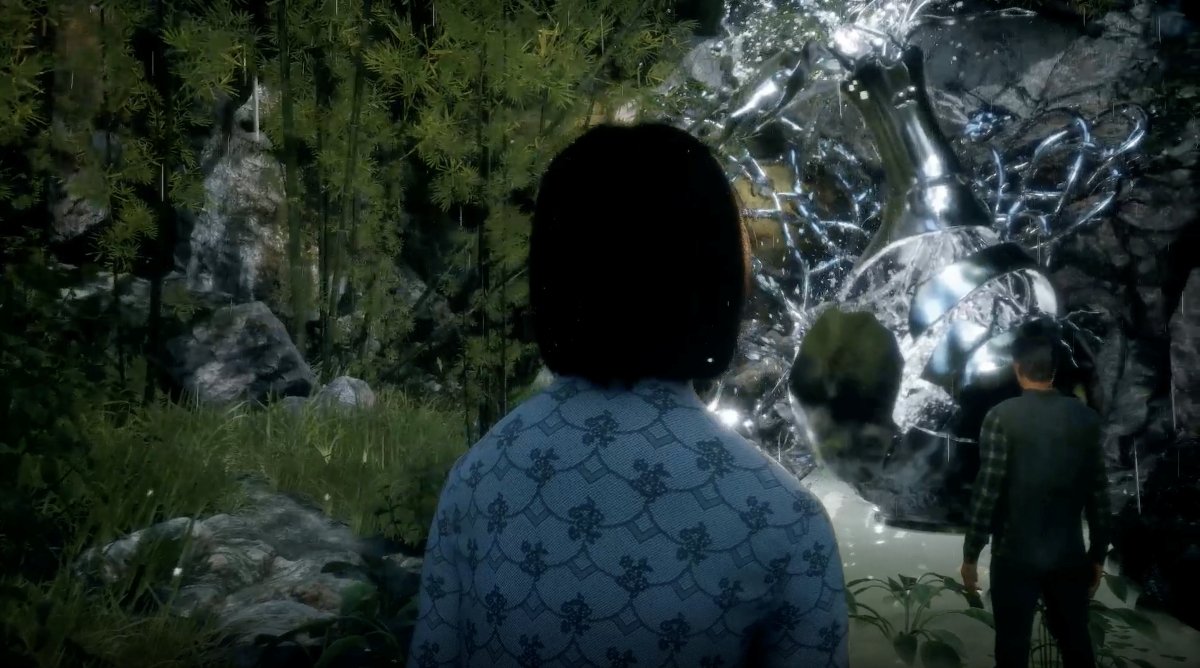
“The Accent Frontier” reveals this problem through the individual path of the heroes. The entire video is filled with symbols and narrative accompanied by a meditative melody and dynamically changing colours, logically supporting the meaning of the practice. The video begins with a demonstration of intergenerational discourse and holds this line until the end of the narration. Furthermore, the ever-emerging shapes of ancient idols amid the shattered walls of old civilization reinforce the sense of a generation gap between past, present, and future. Yet, the presence of these ancient idols reminds us that no generation exists without a connection with the previous one. Undoubtedly, representatives of different generations perceive their native language in distinct ways: for the older generation, this is a connection with cultural memory and traditions; for frequently migrating young people, the attitude towards their mother tongue changes irreversibly, as does the general attitude towards their identity. Haibo Jia exhibits this process not as a sharp break, but as a gradual and imperceptible adjustment of its identity to the requirements of the environment.

This conceptual idea is characteristic of Haibo Jia’s entire artistic practice. The distinctive trait of his artistic method is the use of visual images, texts, sounds, and narratives to connect family stories with broader cultural processes. In “The Accent Frontier”, the personal experiences of the characters become a way for the artist to refer to global mobility and the cost of cultural adaptation.
Based on the above, the main concept of “The Accent Frontier” lies precisely in this contradiction. Clearly, language helps a person enter a new cultural environment, but simultaneously it can distance them from their ancestral cultural traditions. Haibo Jia, through his media practices, repeatedly demonstrates that the boundary between cultures runs not only between countries but also within each individual.