
By: Elena Mart
For about half a month, Alex Zhu’s days followed the same routine. Based alone in a Boston hotel, he headed to a studio building he had found, walked its five floors, and knocked on artists’ doors. Many were not there. Others said no. Zhu returned the next day, and sometimes the day after that.
The repetition, though, paid off. During one recent month, he recorded roughly 60 interviews. By the time he was done, ArtArcs, the project he began as a freshman with a goal of interviewing 30 artists, had grown into a collection of conversations with 100. Its YouTube channel has since attracted more than 2,000 subscribers.
ArtArcs was not an easy endeavor. Zhu had to learn to manage nearly every part of the process himself, including filming, editing, and lighting. He had initially considered making ArtArcs a podcast, but the format quickly felt wrong for a subject built around images.
“If I don’t show their work, then there’s really no point to it,” Zhu said.
So the podcast idea became video. Over time, the videos became closer to mini-documentaries, and Zhu learned to handle the process himself. When an artist agrees to speak, Zhu can set up two Sony cameras, two tripods, a wireless microphone, and a stabilizer in a matter of minutes. These days, he generally does not arrive with a list of scripted questions. He looks at the work first, paying attention to its materials, appearance, and what he senses the artist is trying to express, then builds the conversation from there.
That level of comfort and confidence didn’t come quickly. Zhu remembers that in his earliest interviews, an artist would finish a long answer and he would respond with little more than, “Oh, cool, cool.” After dozens of conversations, he became more comfortable listening, following an answer and changing direction in real time.
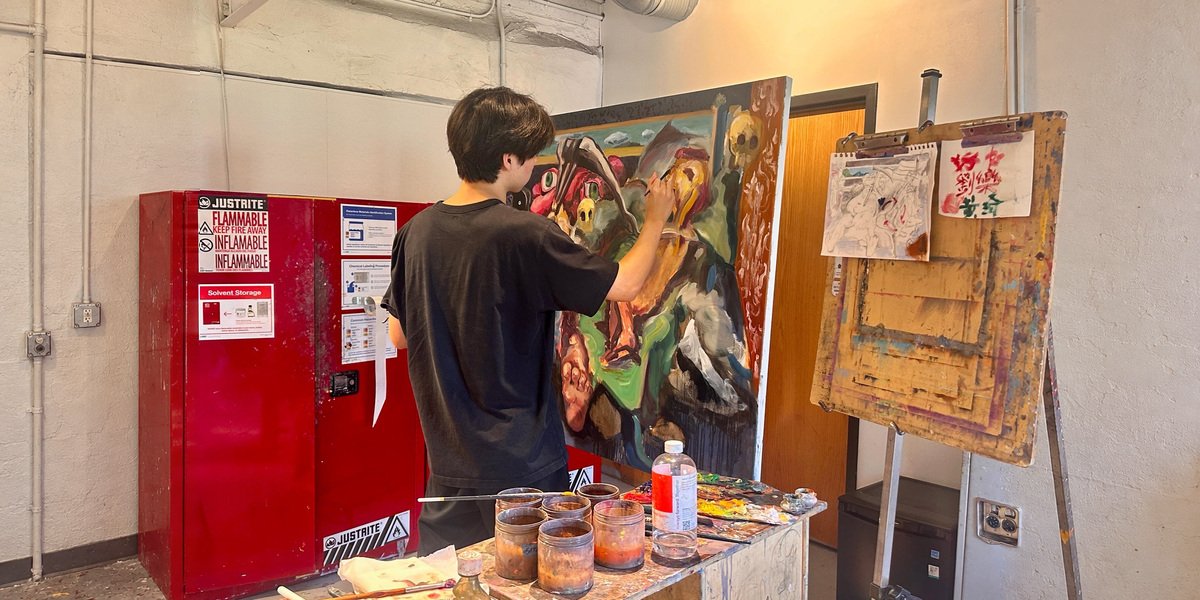
That learning curve unfolded alongside his own development as an artist. Zhu began making art around the age of five. One of his earliest memories is covering a long hallway wall at home with fish drawings. Over more than 12 years of sustained practice, Zhu has created more than 1,000 works across various mediums including oil, acrylic, and mixed media.
Zhu’s background shapes ArtArcs, but the archive is not limited to artists Zhu considers successful by conventional measures. He has spoken with established artists whose work has entered major museum collections and with others with little online presence who make art largely for themselves. To Zhu, putting both on the same platform matters because recognition alone does not settle the question of artistic value.
“You cannot say the artist who got collected by the Met is better just because they got collected,” Zhu said. “This is why art is so beautiful, because it’s one of the only fields where you cannot measure success by any conventional standards.”
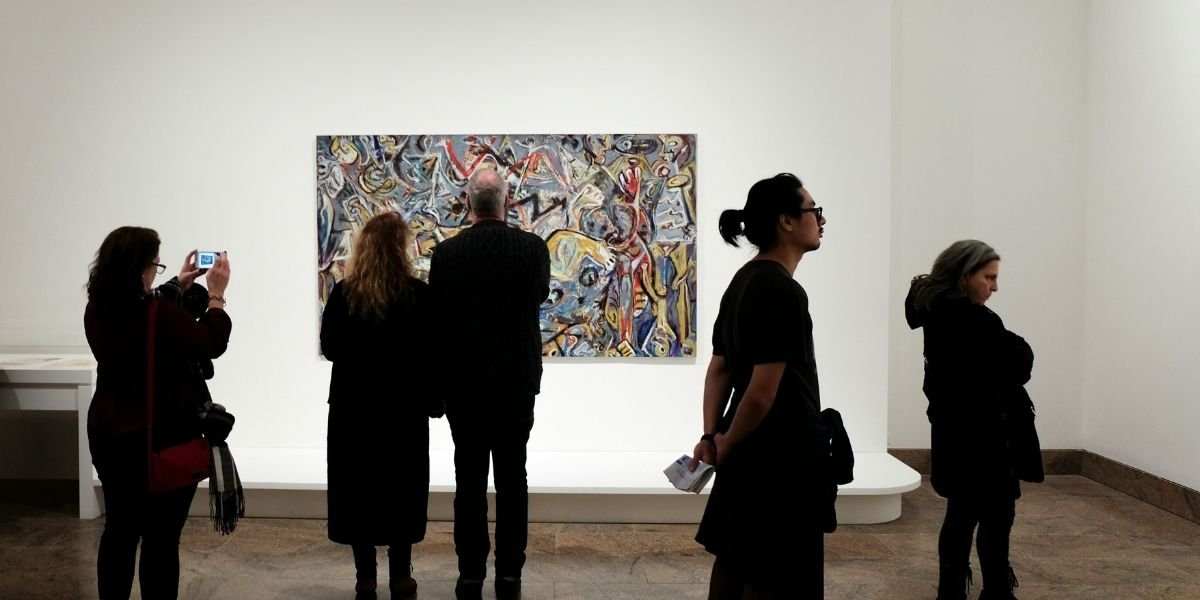
The interview exchanges have complicated rather than simplified his understanding of art. A museum, he said, shows experimentation that has already passed through some form of public or institutional acceptance. In artists’ studios, he encounters work that may never reach that stage.
“You see people who make art that haven’t yet been accepted,” Zhu said. For him, those encounters offer another kind of education, exposing him and his viewers to possibilities that museums, markets, or audiences may not yet have endorsed.
The project has also begun to travel beyond Zhu’s own channel. Hatch Street Studios featured ArtArcs on its website, while participating artists have shared his interviews through their own social media pages and websites. After one interview, impressed by Zhu’s work, an artist who also taught at Union City High School invited Zhu to speak there. He addressed roughly 500 students across four sessions in a single day and later received letters filled with appreciation for his talk. He has also begun receiving requests from artists to produce commissioned documentary work.
For now, Zhu wants to use the first 100 interviews to approach artists who once felt beyond his reach, including American painter Dana Schutz, whom he names as one he most hopes to interview.
He also sees possibilities beyond the channel itself. As he continues building relationships with artists, Zhu can imagine ArtArcs developing into a broader ecosystem that not only documents artists but helps represent and connect them. His long-term vision is for ArtArcs to collaborate with a gallery.
He is careful, however, not to predict exactly what ArtArcs will become. The project has already taught him that reaching 100 interviews does not necessarily bring 100 answers.
“My goal is to find what the purpose of art is,” he said. “The more I’ve seen, the more unclear it becomes.”