We wake to alarms. We move through subway tunnels. We answer emails. We count down hours. The modern work cycle, once marketed as secure and productive, has become a ritual of depletion. Jing Zhou knows this world well. For years, she moved through it, days marked by deadlines, precision, performance, and the constant drone of a city that never slows down.
But something inside her began to break. Her art did not begin as rebellion, but as therapy. A quiet act of self-rescue. What started with small gestures, lines, and patterns began to form synchronous repetitions. More importantly, her art became a form of healing. Repetition, once imposed, became something she chose.
In What Remains to Be Seen, a group exhibition at Montreal’s 1215 Gallery, Zhou’s work offers a profound counterpoint to the urgency of contemporary life. Her contribution doesn’t raise its voice. It doesn’t posture or compete. It stands still and lets you come closer.
What remains to be seen (July – August 2025), inside the exhibition of 1215 Gallery, Montreal, Canada
Zhou’s painting on display appears minimal at first. A warm pink circle, carefully patterned, floats inside a soft white field. Behind it, a deeper band interrupts the space. It could be tension, a scar, or memory. The palette is restrained and the geometry precise. But what radiates from the surface is something much more human: the sensation of breathing again.
Zhou’s practice draws on the formal logic of textile design and the spiritual geometry of Buddhist mandalas. But it is grounded in lived experience. After years in the fashion and design industries, she stepped away from productivity as identity. Her process became an act of slowing down, of reclaiming time and reshaping space. Each canvas is made through layering, calibration, and the quiet insistence of return. There is thought and care in every mark. Precision remains, but it is no longer cold. It is intimate.
Her influences are present but never overpowering. There are echoes of Yayoi Kusama’s process-based repetition, but without spectacle. There are references to meditative traditions but filtered through personal necessity. Zhou has built her language, one shaped by emotional cadence rather than theory. The recurring circle becomes more than form. It becomes a vessel for grief, for repair, and self-recognition.
At 1215 Gallery, her work finds space to breathe. Located in Montreal’s Westmount district, the gallery supports artists who bring depth and interiority to their work. Within this context, Zhou’s contribution doesn’t fade into the background. It lingers. It endures.
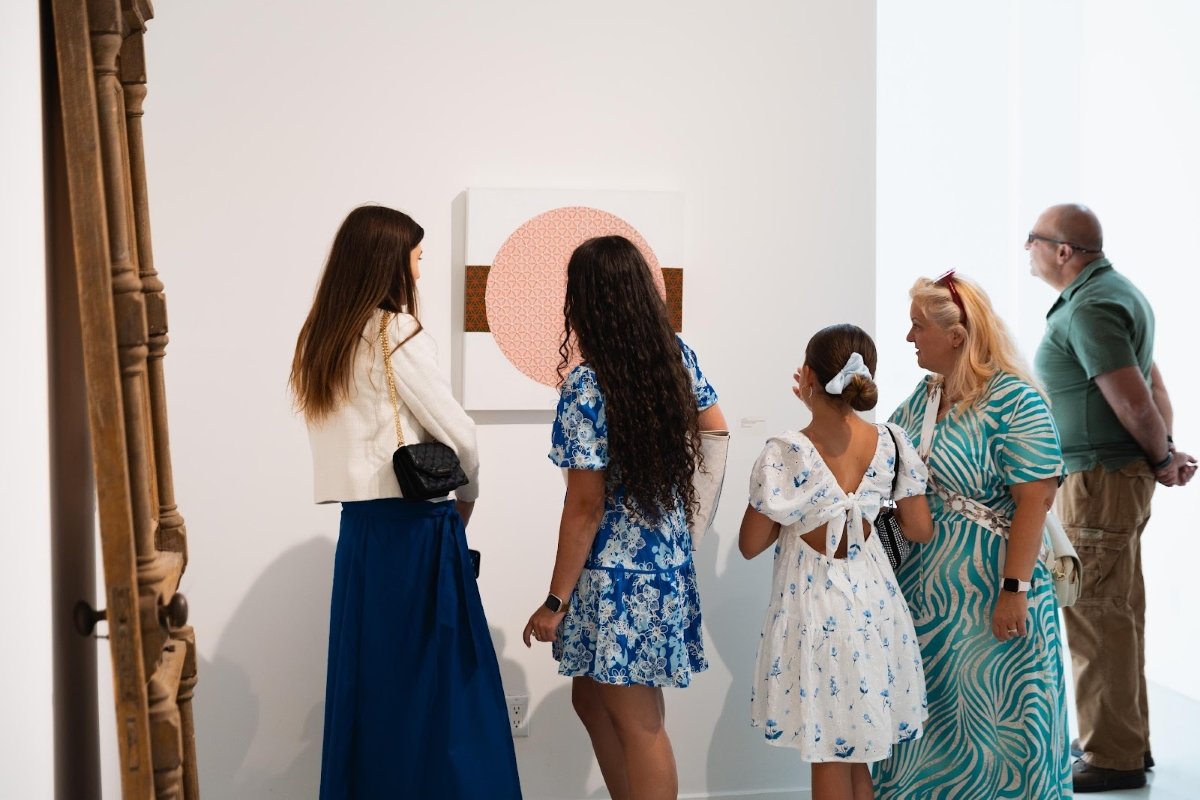
Photo Courtesy: Jing Zhou (Exhibition photo from What remains to be seen of 1215 Gallery, Montreal, Canada)
Her painting does not tell a story. It creates a condition. It reminds us that beneath the noise of obligation and performance, we each carry an inner voice. Often it is quiet, neglected, or buried. Her work asks us not to interpret, but to be present. To witness what patience can create. To see repetition not as imprisonment, but as an opening.
This is not a protest in its loudest form. It is endurance turned into art. Her painting reclaims the rituals that once drained her and reshapes them into a kind of gentle defiance. Routine becomes grace. Repetition becomes refuge.
In a world defined by acceleration and external demand, Jing Zhou offers something else. Let the drone of the city fall away. Let the weight of deadlines and performance soften. In the space between colour and form, let yourself breathe. Let yourself listen. And perhaps, in the quiet, remember the rhythm that has always been yours.
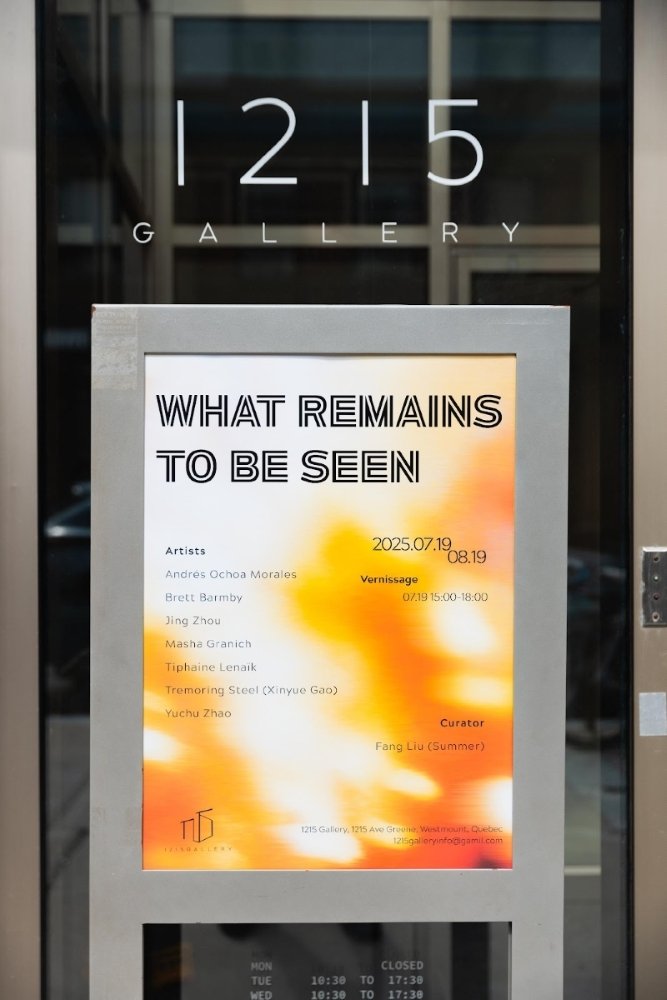
Photo Courtesy: Jing Zhou (Exhibition photo from What remains to be seen of 1215 Gallery, Montreal, Canada)
Exhibition info:
1215 Gallery, Montreal
Exhibition: What Remains to Be Seen Venue: 1215 Gallery, 1215 Ave Greene, Westmount, Montreal Dates: Ongoing