
Jim Foltz’s inspirational quote collection explores perseverance, perspective, and the life lessons people choose to pass from one generation to the next.
Some advice stays with us long after the conversation ends. A sentence from a grandparent, a passage in a book, or an observation heard during a difficult period can return years later with new meaning. Preserving those words gives others an opportunity to consider them in their own lives.
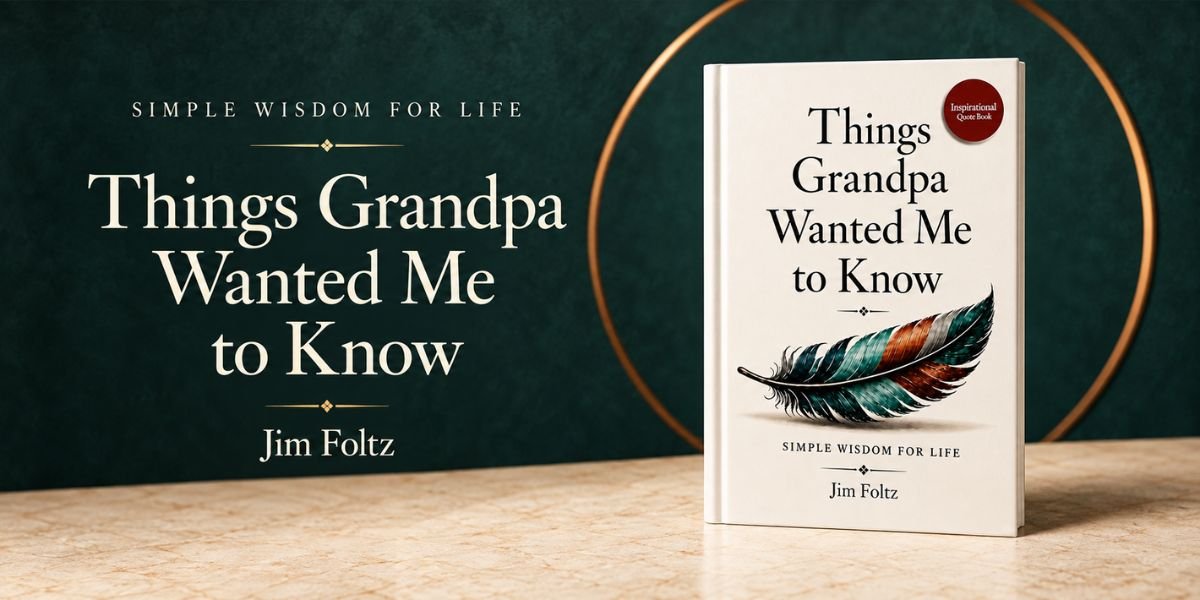
That idea shapes Things Grandpa Wanted Me to Know: Simple Wisdom for Life by Jim Foltz. Presented as a grandfather’s collection for the people he loves, the book brings together quotations, proverbs, and observations about facing challenges, maintaining perspective, and remembering what matters.
Its personal character comes through the act of selection. Foltz gathers words from different sources and places them within a family setting. The result invites readers to consider both the advice itself and the values reflected in choosing to preserve it.
Resilience and Strength in Everyday Life
The manuscript’s “Resilience & Strength” section offers short, numbered entries addressing patience, courage, disappointment, forgiveness, and change. Each thought stands independently, allowing readers to pause over an idea without following a continuous narrative.
“Learn from the past but don’t live there,” reads one entry, credited in the collection to an anonymous source. Its meaning remains open to personal experience. One reader might connect it with a missed opportunity, another with a relationship, and another with a decision that still occupies their thoughts.
Across the selection, resilience involves several possible responses. Some entries encourage persistence. Others suggest changing direction, reconsidering an attitude, or allowing time to do its work.
Together, these perspectives leave room for judgment. Continuing through difficulty can require courage, but recognizing an unhelpful path can demand courage, too. The collection gives readers different ways to examine the choices available to them.
An Inspirational Quote Book With Many Voices
Things Grandpa Wanted Me to Know draws on named writers, proverbs, anonymous sayings, and observations credited to sources such as radio, television, and sermons. That variety reflects how meaningful words can be encountered throughout everyday life.
Foltz’s contribution lies in collecting and arranging these ideas. Recognizing that role distinguishes the book from a collection consisting entirely of the compiler’s original statements.
There is something familiar about this practice. People underline passages, save letters, and write down remarks because a thought expresses something they want to remember. Over time, those choices reveal their concerns, interests, and priorities.
The numbered format makes Foltz’s collection suitable for reading in short intervals. A reader can consider one entry, set the book aside, and return later. The same words may take on a different significance as circumstances change.
Patience, Perspective, and Beginning Again
Patience appears throughout the resilience selection alongside effort and determination. References to nature, time, and changing seasons suggest that progress does not always become visible immediately.
Other entries acknowledge mistakes and disappointment as parts of learning. These observations invite readers to consider how an experience might inform their next decision without allowing it to define every decision afterward.
An illustrated page reinforces this theme. A figure kneels on a rocky path beneath a steep mountain staircase, while light breaks through clouds above. The journey remains unfinished, with further steps still ahead.
The image offers a visual pause among the quotations. Its composition gives readers another way to consider perseverance, including the uncertainty and fatigue that can accompany it.
Family Wisdom Across Generations
The title places a relationship at the center of the book. It asks what a grandfather wants others to know and, more broadly, what one generation hopes another will carry forward.
Families preserve photographs, possessions, and stories. Advice can be less tangible, often surviving through repeated remarks or remembered examples. Gathering it into a book gives those ideas a form that can be revisited.
The closing descriptive page identifies resilience, gratitude, faith, family, and joy among the collection’s themes. These subjects connect everyday decisions with larger questions about priorities and meaning.
For families, the book can provide a starting point for conversation. Which lessons have remained useful? Which sayings make more sense with age? What would younger and older readers express differently?
Such discussions can accommodate disagreement. Sharing wisdom creates an opportunity to examine a perspective, consider its context, and decide how it applies.
A Book to Revisit
The collection’s structure supports its invitation to open the book at different points and return often. Readers can engage with an individual thought and bring their own experience to its interpretation.
Through the words he has gathered, Foltz draws attention to a personal question with relevance beyond his family: when there is much we could pass on, what do we most want others to remember?
Things Grandpa Wanted Me to Know: Simple Wisdom for Life by Jim Foltz is available on Amazon and through the book’s official website.
For Media Inquiries
Jim Foltz
Email: author@thingsgrandpawantedmetoknow.com
Website: thingsgrandpawantedmetoknow.com
Book: Available on Amazon