
By: Karen Lappon
Ziyi Wang is a remarkable multidisciplinary artist whose practice blends elements of digital art, fashion, experimental music, and cultural studies with exceptional balance. Her work reflects the richness and complexity of her creative vision, conveyed with beauty, elegance, and a deep cultural sensitivity.
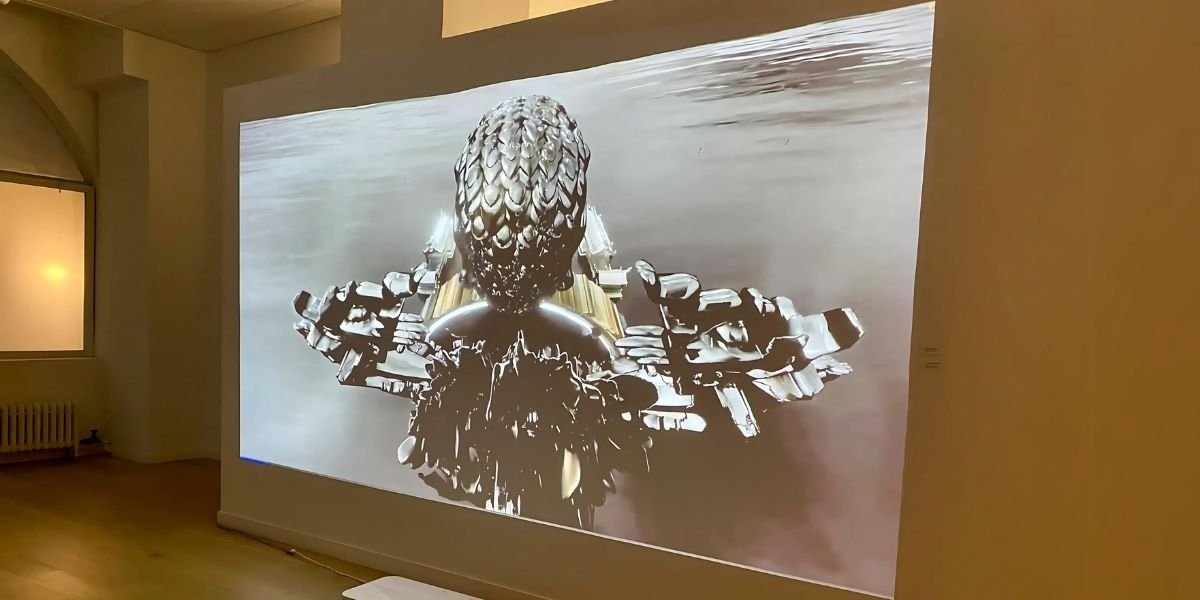
Recently, Wang’s work was featured in Transient Reality, an exhibition held at BluBlu Gallery in New York at the end of 2024. This exhibition explores how technology reshapes human experience, art expands its boundaries, and traditional narratives undergo digital metamorphosis. As seen in The Ultimate Samsara, Wang engages deeply with themes of transformation, rebirth, and renewal, aligning with the philosophical inquiries raised by contemporary digital artists. This moving image work is not merely a visual spectacle; it is a transcendental meditation on identity, tradition, and the cyclical nature of existence.
The Ultimate Samsara is a poetic meditation on identity and tradition, offering a transcendent experience that fuses ancient rituals with digital innovation. This captivating moving image demonstrates Wang’s mastery of intertwining elegance and cultural depth, while her refined storytelling elevates the emotional and visual resonance of the piece. By exploring reincarnation within the conceptual framework of the metaverse, the work reveals a profound engagement with themes of transformation, rebirth, and renewal, bridging the past and present with remarkable sophistication.
The foundation of The Ultimate Samsara lies in the traditional Chinese Nuo dance, which Wang reimagines with a delicate balance of respect and innovation. Through intricate movements and hypnotic visual sequences, the piece creates a spiritual journey that is both deeply introspective and visually mesmerizing. Its beauty lies in the meticulous aesthetic and its ability to evoke a timeless connection to cultural memory, making it a work of exceptional depth.

Photo Courtesy: Record of Exhibition, BluBlu, 2024
In comparison to Wang’s earlier projects, The Ultimate Samsara represents a significant evolution in her practice. While works such as Shaman Dance and Golden Breaks the Dawn showcase her ability to draw inspiration from mystical traditions, this new piece delves deeper into universal narratives, contemplating the ephemeral and the eternal with striking clarity. For instance, Shaman Dance explores animism and funeral rites with experimental vigor, but The Ultimate Samsara weaves these elements into a coherent narrative of rebirth and renewal that resonates universally.
Wang’s earlier explorations of digital identity in Self-Talk and ecological themes in The Virus provide context for understanding her growth as an artist. In The Ultimate Samsara, she integrates cutting-edge 3D environments with traditional architectural motifs, creating an immersive visual space where ancient courtyard houses coexist with futuristic skyscrapers. This juxtaposition of history and modernity enriches the narrative, transforming it into a layered experience of breathtaking refinement.
The moving image is further distinguished by its nuanced use of symbolism. The cycles of life and death are conveyed through visuals imbued with poetic beauty, inviting introspection, and inspiring emotional engagement. Wang’s ability to blend the tactile with the intangible transforms The Ultimate Samsara into a work that transcends the screen, challenging viewers to reconsider their perceptions of self and existence in an ever-evolving digital world.
The Ultimate Samsara stands as a testament to Ziyi Wang’s artistic maturity, balancing cultural homage with contemporary exploration. Its entrancing visuals, thematic ambition, and emotional resonance solidify its place as a landmark in her body of work. By merging traditional influences with innovative practices, Wang reaffirms her position as a vital voice in the intersection of culture, identity, and technology.
As Zhuangzi reminds us: “A path is made by walking on it,” and Ziyi Wang’s artistic journey is undoubtedly one to follow with care and admiration.
Author’s Biography:
Karen Lappon is a distinguished member of the International Confederation of Art Critics, specializing in contemporary and modern art. With a keen eye for innovation and a deep appreciation for artistic evolution, her writings delve into the intersections of culture, identity, and technology, offering insightful critiques that resonate across global art communities.
Published by Stephanie M.