
There was a time when technology promised a clean break from the past, with smooth glass, sterile metals, and materials designed to resist any trace of wear. Devices arrived immaculate and stayed that way only as long as they remained untouched. Yet somewhere along the way, a quiet shift began. People started to question whether perfection without memory is really desirable. In that shift, leather found its way back into everyday tech.
Not as nostalgia. Not as decoration. But as a counterpoint, something that evolves, softens, and records use rather than hiding it.
The Appeal of Materials That Change
Most modern accessories are built to look the same from day one to the day they are discarded. Plastic cases crack, silicone stretches, and synthetic finishes peel. They rarely age. They simply deteriorate. Leather behaves differently.
Full-grain leather, in particular, retains the natural surface of the hide, including its pores and subtle irregularities. That surface is not treated to erase its identity. It is preserved. Over time, exposure to light, touch, and air transforms it. The color deepens. The texture softens. Fine marks appear and blend into a richer, more complex surface.
This transformation is known as patina, and it is the reason leather stands apart from nearly every other material used in tech accessories.
A plastic case tries to remain unchanged and fails. Leather changes deliberately and succeeds.
Craftsmanship as a Form of Longevity
There is a tendency to associate durability with industrial precision. Machine-made products promise uniformity and scale, which often translates into affordability and consistency. Yet when it comes to materials like leather, uniformity can work against longevity.
Handmade craftsmanship introduces something that machines struggle to replicate: sensitivity to material.
Each cut, stitch, and fold responds to the specific piece of leather being used. Slight variations in thickness, grain direction, or flexibility are not treated as flaws but as characteristics that guide the process. A skilled artisan adjusts tension in stitching, aligns edges carefully, and ensures that stress points are reinforced in a way that suits the material itself.
This attention results in products that do not just last longer. They age more gracefully.
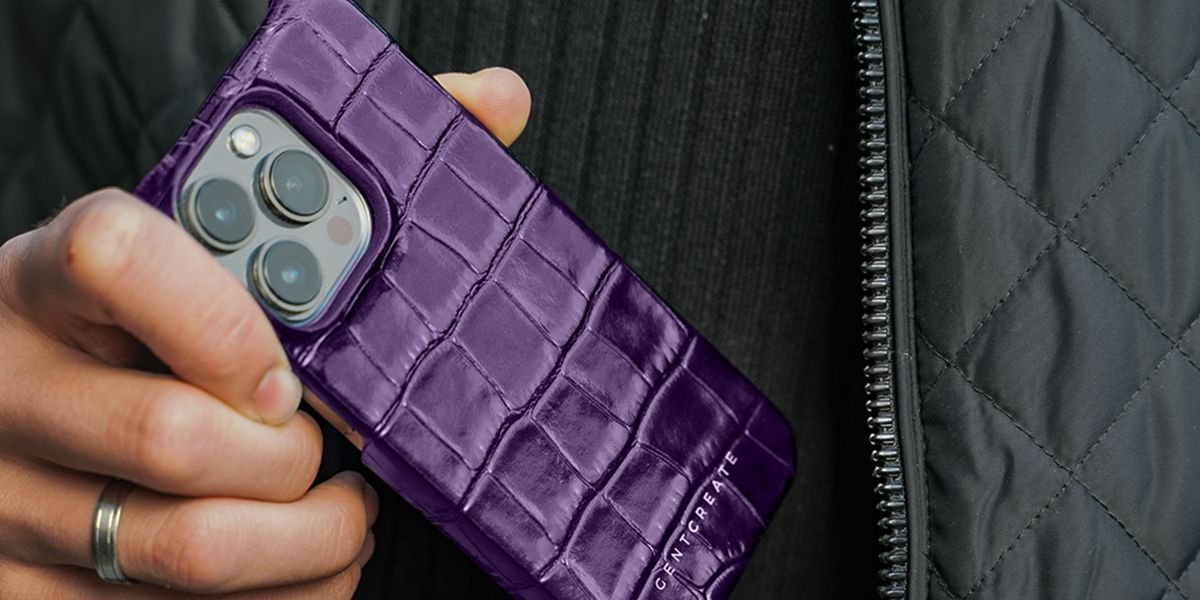
The rising interest in artisan-crafted leather iPhone flip cases reflects this shift in values. People are looking for more than protection. They want objects that carry evidence of time and use without falling apart, while also appreciating the practical structure of a flip-case design. Craftsmanship becomes visible not in flashy details but in how well an item holds its shape, how evenly it wears, how it feels after months or years of daily handling.
Patina as a Record, Not a Flaw
In most consumer goods, wear is treated as damage. Scratches, fading, and marks are signs that something needs to be replaced. Leather challenges that logic. Patina is not damage. It is a record.
It captures patterns of use: how a device is held, where it rests, how often it is handled. Areas that receive more contact darken faster. Edges soften. Surfaces develop a gentle sheen that cannot be manufactured in advance.
No two pieces age in the same way. Even identical items, used by different people, will diverge over time. One may develop a deep, even tone, while another may show subtle contrasts and variations.
This uniqueness creates a quiet form of ownership. The object becomes less interchangeable. It reflects time spent, habits formed, and environments encountered.
Such qualities cannot be replicated by synthetic materials designed for uniformity. They resist change, and in doing so, they also resist individuality.
The Tension Between Speed and Permanence
The broader context behind this shift toward leather is not limited to design preferences. It connects to a growing awareness of consumption patterns.
Tech accessories are often treated as disposable. New device, new case. Minor wear, replacement. Trends change, and materials follow.
Yet this cycle comes with costs, both financial and environmental.
Short-lived materials contribute to waste. Production processes for plastics and synthetics rely on resources that are difficult to recycle effectively. Products that degrade quickly require constant replacement, increasing overall consumption.
Leather, when sourced and produced responsibly, offers a different model.
A well-made leather accessory can remain functional for years. Its changing appearance reduces the urge to replace it purely for visual reasons. Patina adds value rather than diminishing it.
In this sense, durability becomes a form of sustainability.
The Sensory Dimension of Use
There is also a tactile aspect that often goes unspoken.
Glass and metal feel precise, cool, and controlled. Leather introduces warmth. It responds to touch in a way that evolves over time. The surface becomes smoother, more familiar. Edges soften slightly, making the object more comfortable to hold.
This sensory shift influences how people interact with their devices. The accessory becomes part of the experience, not just a protective layer.
Such qualities are subtle. They do not announce themselves immediately. They emerge gradually, through repeated use. And that gradual emergence is part of the appeal.
Between Utility and Meaning
Objects that age well occupy a space between utility and meaning.
They perform their function (protecting a device, improving grip, adding structure), but they also accumulate significance over time. Not in a sentimental sense tied to personal stories, but in a material sense. The object itself changes, and that change becomes part of its identity.
Handcrafted leather iPhone cases fit naturally into this broader picture. They are not simply positioned as premium alternatives. They represent a different philosophy of ownership, one that values continuity over replacement, material integrity over surface perfection, and time as a contributing factor rather than an enemy.
Resisting Disposability
The culture of fast consumption encourages constant renewal. New models, new accessories, new designs. The pace leaves little room for objects to develop character. Leather resists that pace. It does not look its best on day one. It reaches that point gradually. The longer it is used, the more complete it becomes.
This reverses the typical lifecycle of consumer products. Instead of declining from perfection to wear, leather moves from potential to maturity.
Such a shift requires a different mindset. One that accepts change, values imperfection, and recognizes that longevity can be more satisfying than novelty.
Quiet Signals of Value
In a market saturated with bold designs and attention-grabbing features, leather accessories communicate value in a quieter way.
They do not rely on bright colors or complex patterns. Their appeal lies in material quality, craftsmanship, and the promise of transformation over time.
This quietness aligns with a broader trend in how people define quality. Less emphasis on immediate visual impact, more emphasis on durability, feel, and long-term experience.
It is not about making a statement that others can see instantly. It is about choosing something that reveals itself slowly.
Where Time Becomes an Asset
Most objects are designed to fight time. Coatings resist fading. Surfaces aim to remain unchanged. Wear is treated as failure. Leather accepts time as part of its design.
Each day of use contributes to its development. Light, touch, and environment shape its appearance. The result is not a loss of quality but a transformation of it.
That transformation is what gives leather tech accessories their distinctive place in a category otherwise dominated by uniform, short-lived materials.
They remind readers that not all value is immediate. Some of it accumulates quietly, becoming visible only after months or years.
And in a culture that often prioritizes speed and replacement, that kind of value stands out, not loudly, but persistently.