By: Seetal Solanki
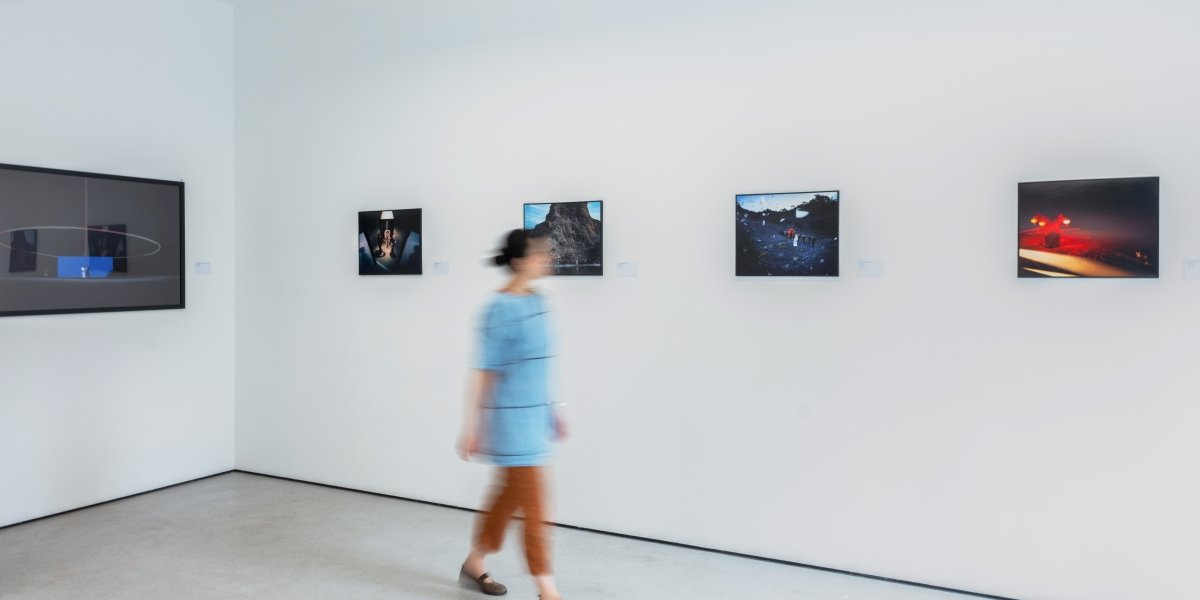
When it comes to Yue Zhou’s approach to Before Becoming (2024) and her practice, it’s less about the presence of anticipation as a dramatic action towards a permanent destination than the quiet position of suspense. Her use of oil paint intensifies the presence of these tensions and consolidates them into a place where the threshold before identity is opened up to the future; this begins to wield its authority, all while the shape of that future is unknown. Zhou ultimately generates a fertile space which feels alive and in constant flux, which gets the viewer to overcome the absence as presence.
There seems to be no measurable moment with Zhou’s paintings, which depict an environment of two opposing realities – one of wakefulness and the other a dream state. These states are further enhanced by Zhou’s use of muted tones, which set the scene of what would be considered two opposing realities in coexistence with one another, with an interrelatedness. Borderless realities are formed in Zhou’s worldbuilding, which in turn inhabits non-specific ecologies of space where the figures appear to rest effortlessly. This may offer up uncertainty with the viewer, and this is the whole point. When it comes to Zhou’s premise: she would rather focus on the in-between, the grey area, the ambiguous, the lived-in rather than the defined – how each emotion can be entirely open to interpretation and an enduring resolution.
That is the path to “Becoming”, which has no final destination as such but a journeying that is complex and in motion. Detachment often appears as a metaphor throughout Zhou’s work and offers up the notion of not being too fixed on the outcome, but appreciating the exploration that you are seeking and trusting the unseen further. The illusion of the naked eye can be preoccupied with completeness and less transformative. Dwelling in what she describes as “the void” is exactly the state of mind she allows her practice to exist within; being able to offer that kind of liberation to others is why she does what she does.
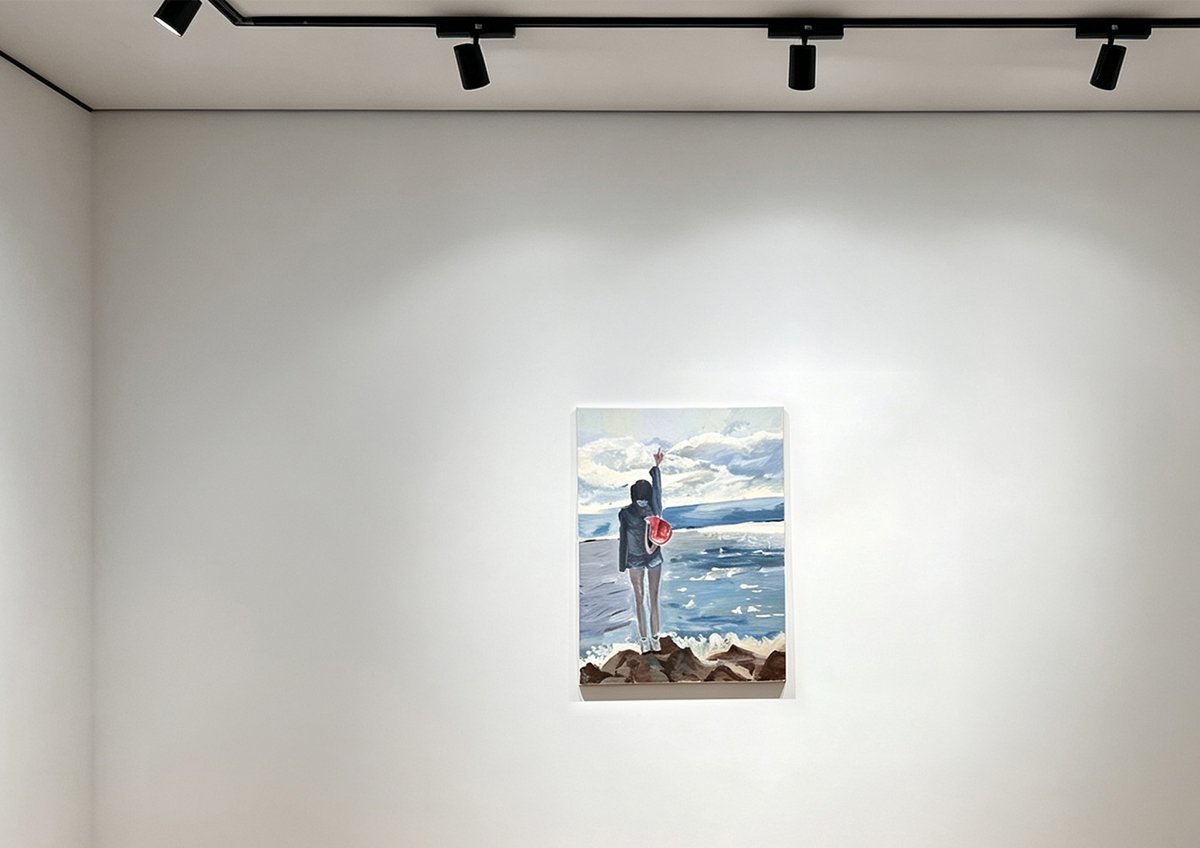
The mixed media combination of oil, acrylic, and watercolor is the freedom to be able to exist inside a more intuitive and emotive process of being guided by how her internal world is perceived. Fragmented realities are being reorganized into psychological landscapes which hold memory, dream and imagination. All of this internalizing gives Zhou a unique position which constantly encourages her to be authentically herself but also deeply rooted in ancient wisdom. The tangible and intangible meet across mental states and visual form.
If Before Becoming was more inward-gazing of the present and future self, then Another Window has set the precedent that both internal and external worlds can be participating collectively and create a complex narrative that can be expressed in a meaningful way.

In Zhou’s work, there is no singular definitive narrative that she imposes; instead, it’s a sophisticated blend of ethereal color, liminal space, and all of the complex emotions in between. The concluding image becomes a highly contemplative space to move between: the present, the future, stillness, movement, and tensions that are lived as well as internalized. What follows on from here is yet to be discovered, and the future is yet to become.