
By: Cecilia March
There has always been a deal at the heart of heavy metal. Not a real one, necessarily, but a myth that rock has carried around for decades: the crossroads, the contract, the devil waiting somewhere in the shadows while some poor bastard decides whether greatness is worth the cost of his soul. It is one of the oldest stories in popular music, worn smooth by repetition but still potent enough to conjure danger. Which is exactly why Ashes Awaken calling a song “We Sold Our Souls to Heaven” is such a wonderfully provocative move. The title sounds wrong the first time you hear it, and that is precisely why it works.
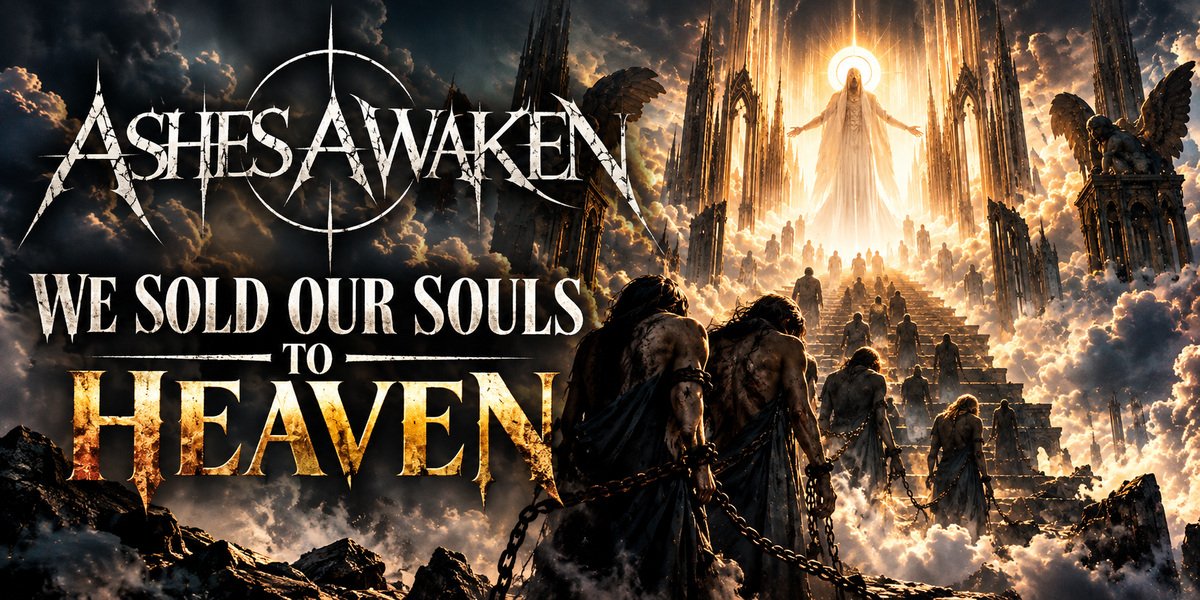
Written by Michael Stover, the new Ashes Awaken single takes one of rock and metal’s most familiar ideas and simply turns the signpost around. There is still a bargain. There is still surrender. There is still the sense of a life being handed over to something greater. Only this time, the devil never gets invited into the room. “It was a deal that changed my life / The day I let my savior take control.” There it is. No mystery, no flirtation, no attempt to hide the Christian message beneath poetic fog. Stover tells you exactly what he believes and exactly what this song is about.
In another setting, that kind of directness might feel painfully earnest. Here, it feels defiant. Heavy metal, for all its supposed rebelliousness, has developed its own rules over the years. Darkness is acceptable. Nihilism is cool. Despair can be fashionable. Satan has practically become a branding exercise. Yet write a genuinely heavy song about surrendering yourself to Christ, and suddenly you are the controversial one. There is something almost amusing about that, and Ashes Awaken appears entirely comfortable with the contradiction.
“We Sold Our Souls to Heaven” is built around the idea that surrender does not have to mean defeat. In Stover’s world, giving up control is the beginning of reclaiming your life. The song deals in pain, fear, isolation, and the feeling of being spiritually lost, but it refuses to remain there. “When you are lost, what will you do?” is a remarkably simple lyric, yet that simplicity serves the song. The question is not intellectual so much as existential. When everything you trusted stops working, where do you go? Stover has his answer: Jesus. Not self-help, not fame, not another drink, another high, another relationship, or another temporary distraction dressed up as salvation. Christ.
Whether you share that belief is almost beside the point when judging whether the song works. Great rock has never required listeners to agree with the person holding the microphone. What it requires is conviction. You need to believe that they believe it, and Ashes Awaken certainly does. The title phrase itself is the song’s smartest weapon. “We sold our souls to heaven” sounds almost blasphemous until you understand it as testimony. The traditional rock bargain says you surrender your soul to gain something temporary: fame, fortune, power, pleasure. Stover’s inversion suggests that the real bargain is giving up the things destroying you in exchange for something lasting.
That gives the track more depth than its initially flashy title suggests. There is something else going on here, too. For decades, Christian rock has often seemed desperate to prove that it could sound like secular rock. Christian metal bands were repeatedly compared to whichever mainstream act happened to be fashionable at the time, as though faith-based heavy music required permission to exist. Ashes Awaken does not sound interested in asking for that permission. The project treats Christian belief not as an apology but as its foundation, and there is no nervousness about the message. That confidence suits metal remarkably well.
After all, metal has always been about absolutes: life, death, heaven, hell, love, hate, war and God. Nuance may make for excellent dinner conversation, but nobody ever raised a fist in the air because the chorus offered a carefully balanced middle position. “We Sold Our Souls to Heaven” understands that. It wants the big gesture, and it earns one.
The song’s most interesting achievement is that it makes salvation feel confrontational. This is not soft-focus spirituality. It is redemption presented as combat, faith as resistance, surrender as rebellion against everything that once owned you. That may be the song’s real secret. The person giving up control is not becoming weaker. He is changing allegiance.
And perhaps that is why the whole thing fits metal better than it has any right to. Heavy music has always been about choosing sides. Ashes Awaken has chosen theirs. The old myth ends with a man standing at the crossroads, contract signed, soul gone, and darkness closing in. Michael Stover has written himself a different ending.
He signs nothing. He walks toward the light.
And somewhere behind him, the devil is left holding a contract nobody wants anymore.