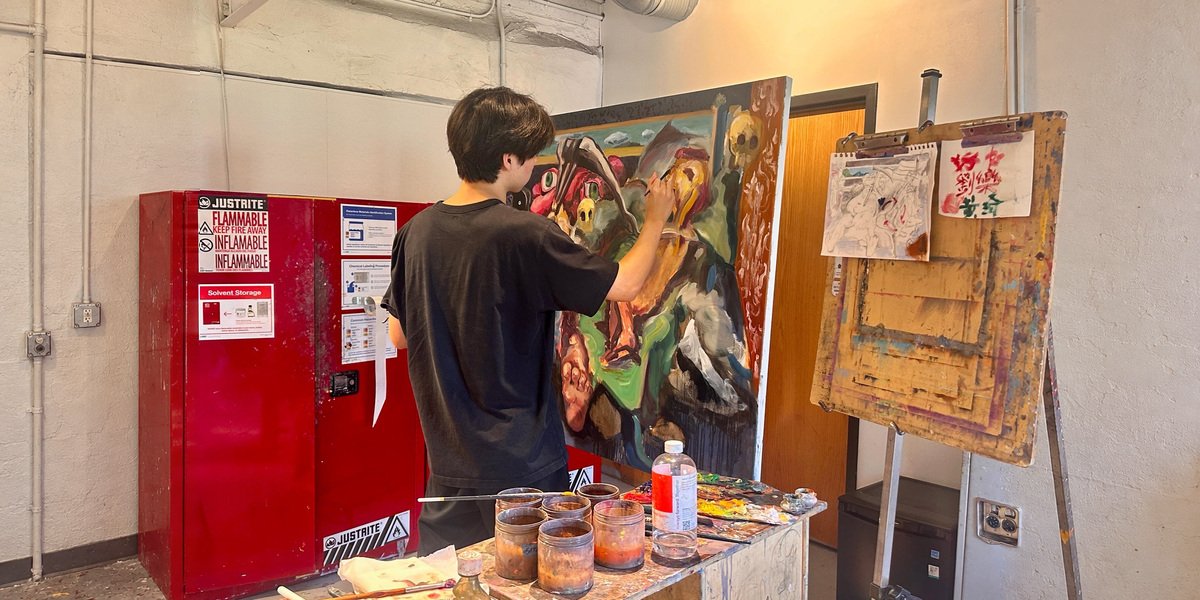

ADHD is often misunderstood as purely a challenge, but in creative fields, it can be a powerful asset. Many creative professionals with ADHD thrive when they tailor their environments and routines to match their energy and thinking patterns. As illustrated by Ken Perlstein, their ability to break away from linear patterns and explore unconventional routes makes them valuable assets in industries that prioritize fresh perspectives.
While challenges such as distractibility or disorganization may arise, they can often be managed with personalized strategies. With the proper support and understanding, individuals with ADHD often produce work that is bold, emotionally resonant, and refined.
ADHD and Its Link to Creativity
ADHD, or attention-deficit/hyperactivity disorder, is commonly associated with impulsivity, distractibility, and restlessness, but it also includes traits like hyperfocus and divergent thinking. These characteristics can often support creative thinking in unique ways.
Some individuals with ADHD are naturally inclined to think outside traditional patterns, offering fresh perspectives and unconventional solutions. Their minds often leap between ideas quickly, giving them access to a wide range of possibilities that others might overlook.
Creative Strengths Rooted in ADHD Traits
Impulsivity, often viewed as a challenge, can actually spark bold and original ideas. People with ADHD may be more willing to take risks or explore directions others might hesitate to try. This openness can lead to breakthroughs across design, music, storytelling, and entrepreneurship.
Their tendency toward nonlinear thinking allows them to connect seemingly unrelated concepts, creating something entirely new from a fresh combination. During brainstorming, their minds can jump from topic to topic, generating a flood of ideas in a short period, which can energize collaborative work.
Because they often don’t feel confined by traditional rules or expectations, individuals with ADHD may approach problems with a unique mindset. This can be especially powerful in creative fields where innovation and originality are prized.
Hyperfocus in Creative Work
Hyperfocus is one of the lesser-known aspects of ADHD, yet it’s a state where intense concentration can lead to exceptional productivity. When a person with ADHD is interested in a task, they may become fully absorbed, tuning out distractions and working for long stretches without interruption.
In creative work, this ability to remain immersed in an idea or project can yield detailed, high-quality results. Writers might lose track of time while developing a story, or visual artists may become so engaged with their work that hours pass unnoticed. This deep flow state can also heighten emotional investment in the work.
This level of engagement is often driven by passion, making the creative process feel exciting rather than exhausting. When properly supported, hyperfocus can become an effective tool in a creative professional’s workflow.
Balancing Challenges While Supporting Creative Output
While creativity often thrives in the ADHD mind, challenges such as distractibility and disorganization can disrupt progress. Many creative individuals with ADHD develop personalized systems to stay on track—visual timers, color-coded to-do lists, or breaks to reset.
Rather than suppressing their natural tendencies, learning to work with them can be more effective. A songwriter might record quick voice notes during moments of inspiration before the idea slips away, while a designer might use flexible deadlines to account for fluctuating energy levels.
It’s not about eliminating every challenge, but about recognizing what helps channel their creative flow. With the right tools and conditions, those hurdles can become manageable, allowing strengths to shine through.
Professionals Who Thrive with ADHD
Musicians, authors, and entrepreneurs with ADHD have often spoken about how their unique thought processes fuel their success. Their ability to think rapidly and outside the box has shaped everything from innovative business models to award-winning films. Their work tends to break molds rather than fit into them.
Some credit their spontaneous ideas and relentless curiosity for breakthroughs that others never saw coming. A filmmaker might weave together diverse influences into a story that feels familiar and entirely new. At the same time, an inventor may pursue an idea others consider too ambitious—and make it work. This daring approach often results in compelling originality.
Encouraging Neurodiverse Thinking in Creative Fields
Creative industries benefit when they embrace a wide range of cognitive styles. Teams that include neurodivergent thinkers often come up with ideas that challenge the status quo and push genres forward.
By making room for different working styles, companies and studios can tap into unconventional talent. This might mean rethinking deadlines, offering quiet workspaces, or fostering open-minded collaboration.
Disclaimer: The information provided in this article is for informational purposes only and does not constitute medical or psychological advice. ADHD affects individuals differently, and the strategies discussed may not work for everyone. Please consult a healthcare provider or mental health professional for personalized advice and support.