
The Renaissance, a term meaning “rebirth,” marked a monumental cultural shift that began in Italy during the 14th century and spread across Europe. It was a period of revival in art, science, literature, and philosophy, laying the groundwork for the modern world. This era saw artists, thinkers, and innovators challenge the conventions of the Middle Ages and explore new ways of thinking, creating, and understanding humanity’s place in the world. The Renaissance was not only about artistic achievement but also about the flourishing of humanism, which emphasized the potential and dignity of man.
The Spark of the Renaissance: From Medieval to Modern
The Renaissance emerged as a response to the constraints of the Middle Ages. For centuries, European life had been shaped by feudalism, the Catholic Church, and a largely agrarian society. However, with the decline of the Byzantine Empire and the rise of powerful city-states in Italy, new intellectual and artistic currents began to flourish. The rediscovery of classical Greek and Roman texts fueled a shift toward a more human-centered view of the world, moving away from the religious focus that dominated medieval Europe.
A key turning point in the Renaissance was the fall of Constantinople in 1453, which led to an influx of Greek scholars into Italy. This brought renewed access to ancient knowledge and contributed to the rise of intellectual movements like humanism, which sought to reconcile classical ideas with Christian beliefs.
The Visionaries Who Defined the Renaissance
The Renaissance gave birth to an incredible array of thinkers and artists whose works would change the course of history. Here are some of the most iconic figures who played pivotal roles:
Leonardo da Vinci: The Polymath of the Renaissance
Leonardo da Vinci was not only one of the greatest artists of the Renaissance but also a scientist, engineer, and inventor. His work bridged art and science, exemplified by masterpieces like The Last Supper and Mona Lisa. Leonardo’s ability to blend meticulous observation with creative expression made him a symbol of the Renaissance ideal of the well-rounded genius. His notebooks, filled with sketches and scientific observations, have influenced countless disciplines, from anatomy to engineering.
Michelangelo: Sculptor, Painter, and Visionary
Michelangelo Buonarroti was another towering figure whose contributions continue to resonate today. Renowned for his sculpture of David and the frescoes on the ceiling of the Sistine Chapel, Michelangelo’s works are a testament to the human ability to capture beauty and strength. His sculptures, in particular, emphasize the idealization of the human form, a hallmark of Renaissance art. His deep understanding of anatomy allowed him to create figures that seemed almost alive, exuding both grace and power.
Raphael: The Master of Harmony and Balance
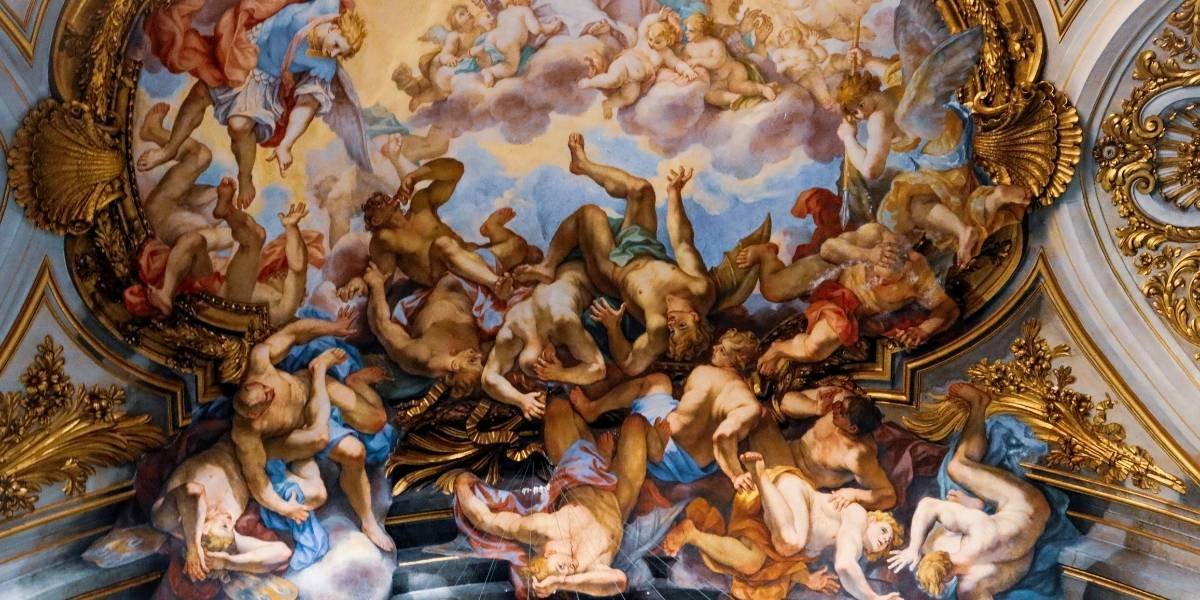
Photo Credit: Unsplash.com
Raphael, known for his harmonious compositions and serene beauty, was a master of both painting and architecture. His frescoes in the Vatican, including The School of Athens, are prime examples of Renaissance ideals. Raphael’s work represented the synthesis of classical ideals with Renaissance humanism, and his influence on art and design can still be felt in contemporary aesthetics.
Turning Points: Major Shifts in Art, Science, and Thought
While individual artists defined the Renaissance, several key moments and innovations made the period even more transformative.
The Invention of the Printing Press
In 1440, Johannes Gutenberg’s invention of the printing press revolutionized communication and the dissemination of knowledge. For the first time, books could be produced quickly and cheaply, leading to a surge in literacy and the spread of new ideas. The printing press played a critical role in the success of Renaissance humanism, allowing thinkers like Erasmus and Thomas More to spread their ideas across Europe.
The Rise of Patrons and Art Collectors
During the Renaissance, the role of patrons in the arts became increasingly significant. Wealthy families, most notably the Medici family in Florence, funded the works of artists, sculptors, and architects. This patronage system not only fueled the production of masterpieces but also established the idea of art as both a social and intellectual pursuit. The Medici family, in particular, became known for their investment in the arts and their ability to influence the direction of Renaissance culture.
Scientific Advancements and the Shift to Empirical Observation
While the Renaissance is often celebrated for its artistic achievements, it was also a time of great scientific discovery. Figures like Nicolaus Copernicus, Galileo Galilei, and Andreas Vesalius challenged medieval conceptions of the universe, the human body, and the natural world. Copernicus’ heliocentric theory, which posited that the Earth revolved around the sun, and Galileo’s support of this theory marked the beginning of the scientific revolution. These advancements reflected the Renaissance’s emphasis on observation, experimentation, and rational thinking.
The Decline of the Renaissance: From Italy to Northern Europe
The Renaissance reached its zenith in Italy during the late 15th and early 16th centuries, but by the mid-16th century, its influence began to spread throughout Europe, reaching countries like France, Spain, and England. This expansion led to the flourishing of Northern Renaissance art, which was marked by detailed realism and a focus on daily life, as seen in the works of Albrecht Dürer and Jan van Eyck.
However, the Renaissance also began to decline in Italy due to political instability, invasions, and economic difficulties. As the Renaissance spread to other parts of Europe, it began to take on different characteristics, leading to the birth of new artistic movements such as the Baroque and Mannerism.
Legacy of the Renaissance: An Enduring Influence
The Renaissance fundamentally reshaped Western culture, laying the groundwork for the modern world. It redefined the role of the artist, the relationship between humanity and nature, and the pursuit of knowledge. The intellectual and artistic innovations of this period continue to influence our culture, from art and literature to politics and science.
Today, Renaissance works are still revered for their mastery and vision. The impact of this transformative period can be seen in the way contemporary artists and creators approach their craft, drawing on the Renaissance’s blend of creativity, exploration, and intellectual inquiry.