Time travel has long captured the imagination of artists, filmmakers, and scientists alike. From the complex theories of physicists to the vibrant worlds created in books and films, the question persists: can we actually travel through time? While we may not yet have a functioning time machine, the concept continues to drive cultural exploration, especially within the realms of art and entertainment. Let’s dive into the intersection of time travel, creative expression, and the questions it raises about our relationship with time.
Time Travel in Art: A Visual Exploration
In the world of visual arts, time travel is often used as a narrative device to explore memory, history, and the future. Artists manipulate the passage of time through their mediums, bending perception and reality in ways that mirror the time travel stories we know and love. Many contemporary artists use techniques such as mixed media, digital manipulation, and performance art to create spaces where the past, present, and future can coexist.
One such example is the work of visual storyteller Refik Anadol. His immersive digital art installations, like Machine Hallucinations, explore the intersection of artificial intelligence and the human experience of time. By using real-time data from the world around us, Anadol’s pieces create ever-shifting environments that seem to bend time, as viewers experience evolving narratives and fragmented moments in real-time. His work touches on the concept of ‘temporal abstraction,’ using technology to express the fluidity of time and memory in a digital age.
Time travel in the arts, especially in visual mediums, speaks to the human desire to transcend time’s linearity. Artists challenge our perceptions, often asking: what if time was not a straight line, but a series of intersecting moments?
Time Travel in Music: Echoes from the Past, Future, and Beyond
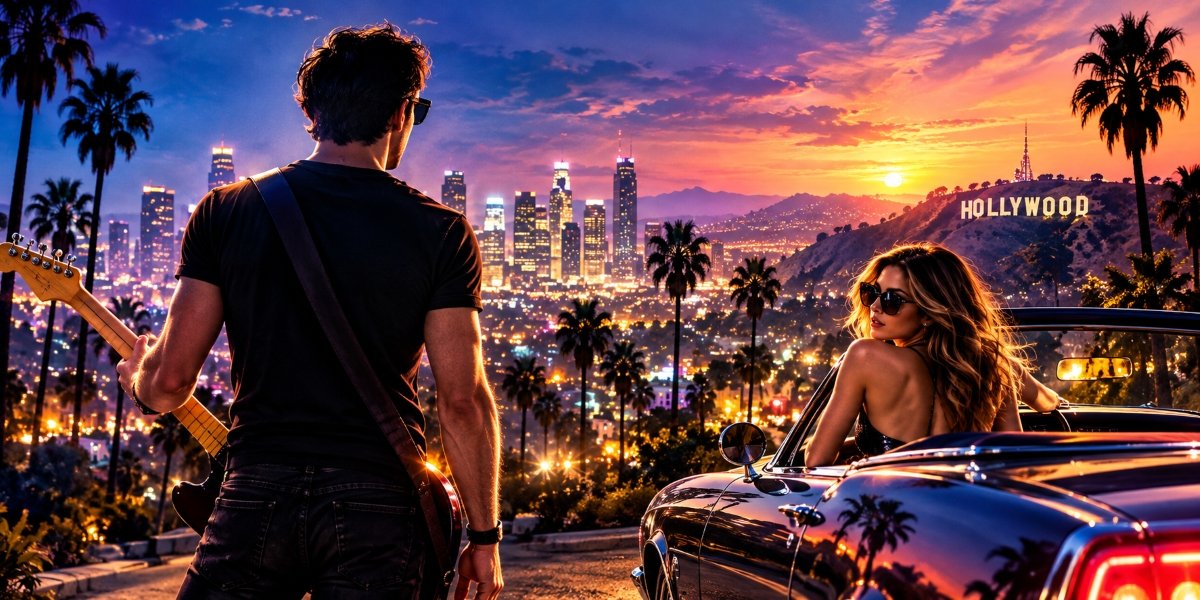
Music, with its intrinsic connection to rhythm and flow, offers a natural avenue for exploring the concept of time travel. Artists have long used sound as a way to express emotions tied to specific moments in time, as well as to break free from traditional notions of time altogether.
For instance, the genre of electronic music has frequently delved into the idea of time travel. Artists like Jon Hopkins and Flying Lotus use layered beats, looping techniques, and digital effects to create a soundscape that feels otherworldly, invoking the sensation of traveling through space and time. By playing with the idea of repetition and distortion, these musicians take their listeners on a journey where time is both fluid and suspended, mimicking the feeling of stepping into another era or dimension.
Similarly, within classical music, composers like Philip Glass and Steve Reich have used minimalist techniques to alter the listener’s sense of time. Through repeating patterns and ever-developing rhythms, their music evokes a feeling of stasis and movement, transporting the audience across different temporal experiences.
These musical interpretations of time travel allow audiences to reflect on the passage of time in ways that are less direct and more abstract, offering new perspectives on how time can be manipulated to evoke emotion and storytelling.
Scientific Theories of Time Travel: Is It Possible?
On the scientific front, time travel is a concept that both fascinates and baffles physicists. Theoretical physicists like Albert Einstein and Stephen Hawking have explored the possibility of time travel through their work on relativity and the fabric of spacetime. According to Einstein’s theory of general relativity, time and space are intertwined in what’s known as spacetime. The curvature of spacetime, caused by massive objects like stars and planets, means that time is not constant but can bend and warp depending on gravity and speed.
One intriguing idea in the realm of time travel is the concept of the “wormhole.” A wormhole is a theoretical passage through space-time that could create shortcuts for long journeys across the universe. Theoretically, if one could travel through a wormhole, they might be able to move between different points in time, not just space. However, this remains speculative, as we have yet to observe wormholes or develop the technology needed to navigate them.
Another widely discussed concept is the idea of time dilation, a phenomenon predicted by Einstein’s special theory of relativity. Time dilation occurs when an object approaches the speed of light, causing time to slow down relative to an observer. This concept has been tested with particles and astronauts in space, confirming that time behaves differently at high velocities. While this doesn’t allow for traveling backward or forward in time in the science-fiction sense, it does show that time can behave in non-intuitive ways under certain conditions.
Though time travel remains in the realm of theory and imagination, the scientific community’s interest in the possibilities continues to inspire new discussions about what might be achievable in the future.
Cultural Impact of Time Travel: Creative Movements and Pop Culture

Photo Credit: Unsplash.com
Time travel has become an essential part of pop culture, influencing films, literature, and art in profound ways. From H.G. Wells’ The Time Machine to films like Back to the Future, Doctor Who, and Tenet, the concept of traveling through time offers endless narrative possibilities. These stories provide a framework for exploring alternate realities, rewriting history, and imagining the future.
In pop culture, time travel often serves as a metaphor for personal growth and reflection. It’s no surprise that many artists, filmmakers, and musicians use time travel as a narrative tool to explore the human condition, from the desire to correct past mistakes to the longing to understand the future. The ability to traverse time represents not only the ultimate form of escapism but also a way to reflect on identity, mortality, and our place in the grand arc of existence.
Moreover, time travel is a recurring theme in the creative strategies used by contemporary artists. For example, artists who work with interactive installations often incorporate elements of time manipulation into their pieces, inviting audiences to engage with art in real-time while pondering the layers of past, present, and future.
Time Travel as a Cultural Concept
While we may not yet have a working time machine, the concept of time travel continues to serve as a powerful tool in the creative and scientific worlds. From the visual artist exploring the intersection of past and future, to the musician bending the rhythms of time, and to the physicist pushing the boundaries of what we know about spacetime, time travel remains an endless source of inspiration.
Whether through art, music, or scientific inquiry, the notion of time travel challenges us to think beyond the linear nature of time, offering new ways to engage with the world around us and within us. For artists, it’s not just about traveling through time—it’s about transcending it.