
By: Catalina Santorini
There is a particular kind of historical fiction that uses its period setting not as decoration but as the actual source of its moral and psychological tension, in which the specific social and political pressures of a specific historical moment create the conditions for a story that could not have unfolded in quite the same way at any other time or place. Caroline Taylor’s The Faker’s Guide to Survival is that kind of fiction, set in Washington, DC in 1975 in the immediate aftermath of the Vietnam War, when the country was still sorting through the wreckage of a decade of conflict and deception, and when the art of faking it, of presenting a face to the world that had little to do with the reality underneath, had become practically a survival skill for anyone caught on the wrong side of the forces at play.
Flora has been faking it since she was a teenager, doing what she had to do to protect her mother, maintaining a version of herself carefully constructed for public consumption while the person underneath lived a far more complicated reality. That long-practiced art of strategic self-presentation is about to be tested beyond anything she has previously encountered when her concealment is exposed, and she finds herself entangled with Mercer, a man accused of smuggling weapons who has been recruited into a covert arrangement by Max, a handler presenting himself as a CIA agent. Max wants the names of anti-war protesters. Mercer, to his credit, refuses to play ball. And Flora, watching this unfold from her complicated position at the intersection of all of it, begins to wonder whether Mercer is actually what he appears to be or whether he is simply a better faker than most.
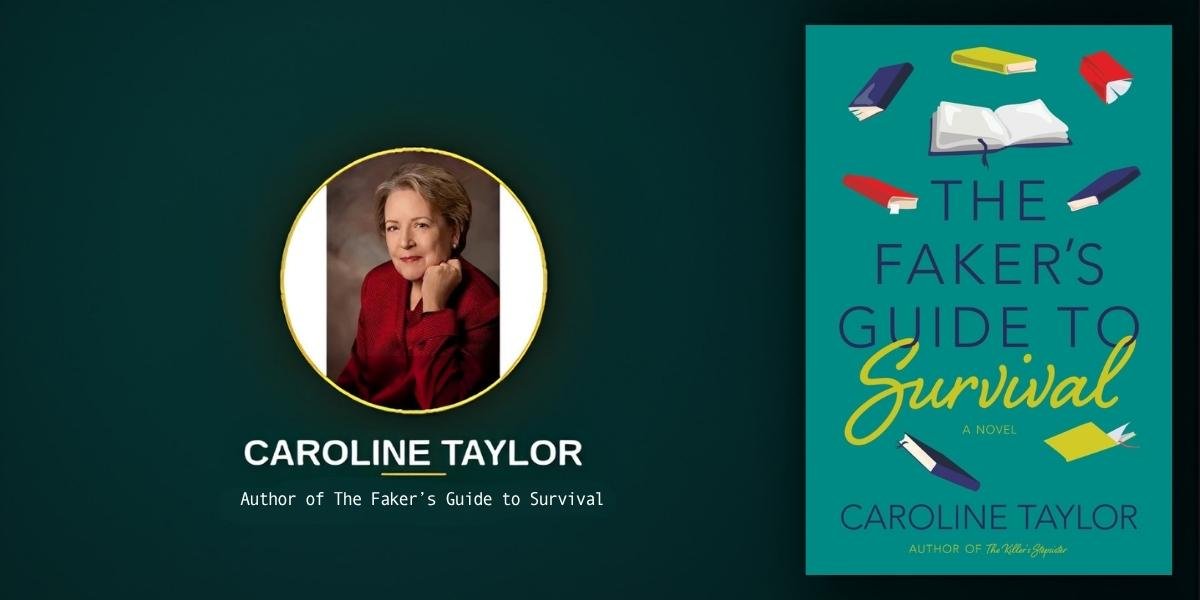
Taylor writes the specific atmosphere of 1975 Washington with the authority of someone who has not just researched the period but genuinely understands it, and her author biography explains that authority. She grew up in the Mountain West and traveled widely before enjoying a brief stint in the Foreign Service, and her adventures included being abandoned by her father in a foreign country as a teenager, an experience that came close to stories she later read in The Mosquito Coast and The Poisonwood Bible. That biographical texture, the direct personal experience of navigating foreign environments with limited resources and unreliable adults, gives her fiction about deception and survival a grounded quality that purely imagined treatments of the same themes rarely achieve.
The novel’s central question, whether death could ultimately be the price of faking it, is posed with the seriousness it deserves and pursued through the kind of plot that keeps the reader genuinely uncertain right up to the moment the answers arrive. A fellow author described Taylor as producing a masterpiece of esoteric duplicity with more twists and turns than a runaway rollercoaster, and that description captures something essential about how the book reads: propulsive and carefully layered, with revelations that land with the force of things that were always there to be discovered.
What gives the novel its particular staying power is the way Taylor refuses to make any of her major characters simply what they first appear to be. Flora’s faking is protective rather than predatory. Mercer’s refusal to cooperate is principled in a world where principles are expensive. Max’s apparent authority conceals a desperation that shapes everything he does. The novel builds its tension not through the familiar mechanics of thriller fiction but through the accumulated psychological pressure of characters who are all managing the gap between who they are and what the situation is asking them to be, which turns out to be both more interesting and more genuinely unsettling.
Taylor is a member of Mystery Writers of America and Sisters in Crime, and her novels have won multiple International Firebird Book awards, credentials that reflect a writer who has been consistently producing work of genuine quality across a long and varied career. The Faker’s Guide to Survival is among her most accomplished novels and one of the more historically rich and psychologically layered thrillers available to readers who want suspense with genuine human depth.
The Faker’s Guide to Survival by Caroline Taylor is for readers drawn to historical thrillers that use their period setting as the actual engine of moral and psychological complexity, populated with characters too human and too complicated to reduce to simple categories of good and bad. It returns to 1975 Washington, where everyone is faking something and the cost of being found out can be steep. Grab your copy on Amazon today and step into 1975 Washington, where everyone is faking something and the cost of being found out might be everything.