By: Jim Manely
There are stories that feel written for the stage, and then there are stories so wild, so improbable, that even the theatre has to catch its breath before attempting to contain them. Lost in Del Valle belongs squarely in the latter category. After a celebrated, award-winning run at the Edinburgh Festival Fringe, where it took home the Derek Award for Best Overseas Production, the solo show arrives in New York not as a curiosity, but as a fully realized force, equal parts confession, performance, and survival story.
Written and performed by Ned Van Zandt and directed by Amir Arison, the production unfolds as a kind of theatrical high-wire act. Van Zandt, alone onstage, conjures a world that stretches from the debauched chaos of the Chelsea Hotel in the late 1970s to the stark fluorescent reality of a Texas jail cell. Along the way: rock legends, addiction, brushes with history, and a descent that somehow bends toward redemption.
It is, unmistakably, the kind of story that might have been dismissed as too much, too cinematic, too sprawling, if it weren’t lived.
“Tick tock,” Van Zandt recalls, echoing the words of his longtime mentor Doris Roberts, who encouraged him for decades to tell this story. “My play has been over ten years in the making,” he says, describing a journey that stalled during the pandemic before reigniting through a chance reconnection with Arison. What followed was a long process of development, including workshopping at The Orchard Project and a breakthrough run in Edinburgh that confirmed what collaborators had long suspected: this story had legs.
But Lost in Del Valle is not merely a recounting of excess. It is carefully and deliberately shaped into something more reflective. That evolution did not come easily. Early responses to the material, Van Zandt admits, were blunt. “Half of them loved it, but the other half asked, ‘what’s the point?’ That stung.” The question lingered long enough to force a deeper excavation. “It took about a year, but I rewrote it and found more meaning.”
That meaning, as it emerges in performance, is tied not only to survival but to transformation, how a life that veers into chaos can still circle back toward purpose.
Arison, who has been developing the piece with Van Zandt for years, recognized the potential immediately. “Along comes Ned with this jaw-dropping story about survival, and acting,” he says. “Every character is so rich and multi-dimensional and alive.” His role, he explains, was not to impose structure but to protect the delicate balance between Van Zandt the writer, Van Zandt the performer, and Van Zandt the man reliving it all. “My job would be to honor each of those roles independently and help him navigate between them.”
That navigation is no small feat. The solo format demands that Van Zandt embody dozens of characters while maintaining a clear emotional throughline. Night after night, it requires a level of vulnerability that borders on reckless. “It’s kind of like Groundhog Day,” he says with a laugh. “I get in my head: ‘What am I doing exposing myself like this?’ Then I get on stage… and I’m off on the rollercoaster.”
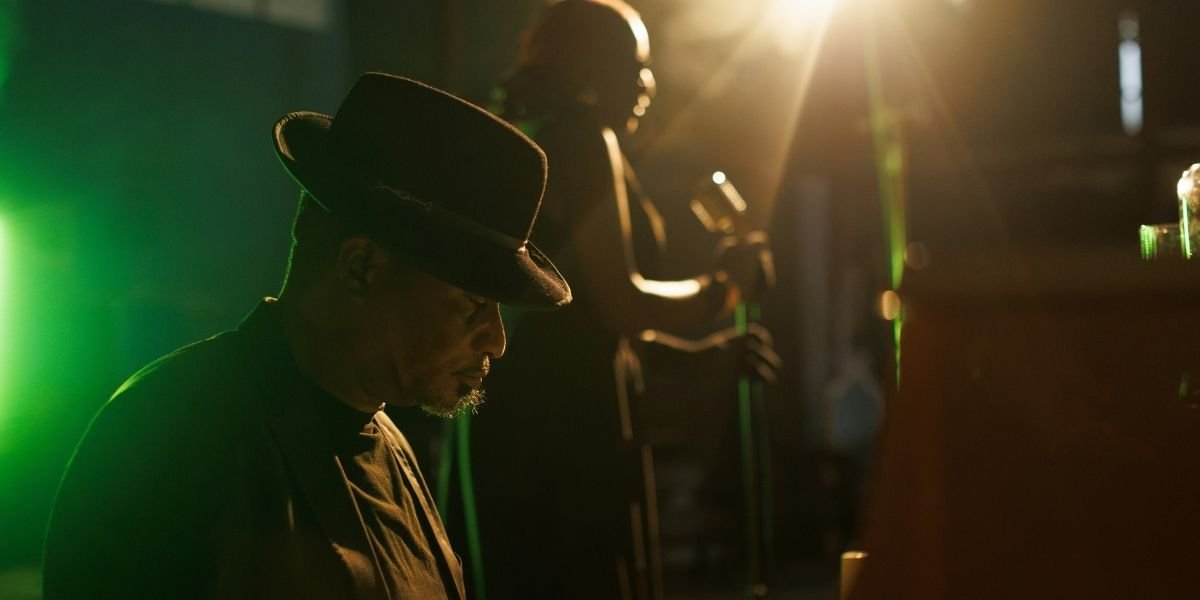
The production’s stripped-down aesthetic only heightens that immediacy. There are no elaborate sets, no visual distractions, just a performer, a story, and, crucially, a live guitarist who underscores the action. The addition of live music, suggested by producer Craig Balsam, has proven transformative. Rather than functioning as background, it becomes a living, breathing partner in the storytelling.
Arison describes it as “harnessing real live musical energy to pump up the lifeblood of the piece.” The guitarist does more than set mood; he helps transport the audience across time and place, creating what Arison calls “a musical vocabulary for each character and story.” It’s a sonic layer that feels organic rather than ornamental, grounding the piece even as it moves through increasingly heightened territory.

Photo Courtesy: Ned Van Zandt / Amir Arison (Arison and Van Zandt; Mike Moore, Arison and Van Zandt)
For Van Zandt, revisiting the world of the Chelsea Hotel, a nexus of art, fame, and self-destruction, requires a careful balance between nostalgia and reckoning. “Oh, but I do romanticize it, until I don’t,” he says. The memories are vivid: encounters with cultural icons, nights that blurred into mornings, a sense of limitless possibility. But they are shadowed by violence and loss, including his proximity to the infamous death of Nancy Spungen.
The play resists the temptation to glamorize that era. Instead, it allows the contradictions to coexist: the exhilaration and the danger, the freedom and the cost.
That duality extends into the show’s tonal shifts, which move seamlessly between humor and darkness. “There is comic relief in the darkest places,” Van Zandt says. It’s a philosophy that shapes both the writing and the performance, allowing the audience to laugh even as the material veers into deeply uncomfortable territory.
At its core, however, Lost in Del Valle is about resilience. Van Zandt’s time in a Texas jail, “the worst thing that ever happened to me and it was the best”, becomes a turning point, a moment of clarity that ultimately leads to sobriety and a new chapter helping others through recovery. “You can change,” he says. “You can come back from the depths of despair and build a productive life.”
Arison is quick to emphasize that the production’s power lies in its honesty. “Comedy and pathos are both born from deep commitment to the character and to the scene,” he says. “It’s gotta be grounded in truth.” That commitment ensures the material never tips into sensationalism, even when the events themselves border on the unbelievable.
Following its success in Edinburgh, the transition to New York has involved both refinement and expansion: new material, deeper framing, and an even more integrated use of music. Yet the essential core remains unchanged, a man standing before an audience, telling a story that refuses to let go.
If there is a takeaway Van Zandt hopes audiences carry with them, it is not a tidy moral but a feeling. “I want them to have a good time, be entertained,” he says. “It’s about resilience… If people are moved, that’s great.”

Photo Courtesy: Ned Van Zandt / Amir Arison (Director Amir Arison and Ned VanZandt at rehearsal)
Lost in Del Valle, written and performed by Ned Van Zandt and directed by Amir Arison, is now playing at SoHo Playhouse in a limited engagement through May 3, 2026. Produced by Craig Balsam and Ari Edelson in association with The Orchard Project, the production marks its New York debut following its award-winning international run. Tickets are available at sohoplayhouse.com.