
By: Shawn Mars
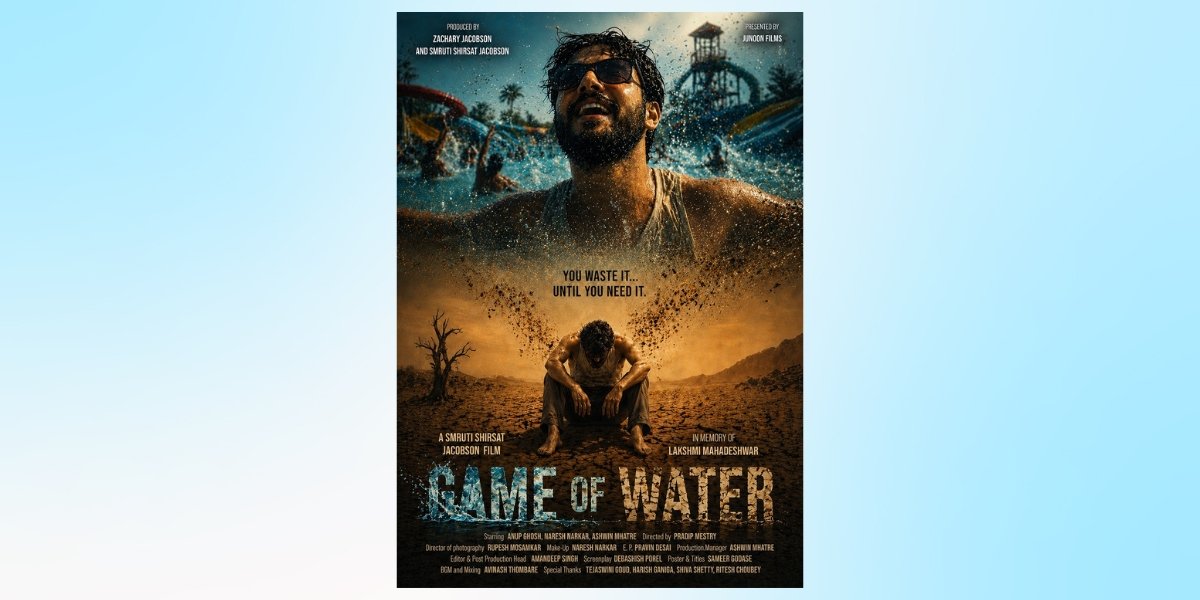
Game of Water is a short film built around one of the most urgent environmental issues of our time. Presented by producing duo Smruti Shirsat Jacobson and Zachary Jacobson, the project treats water scarcity less as a statistic and more as a story about the people living through it.
The filmmakers describe the project as a movement rather than a standalone release, a cinematic statement on a water crisis that now threatens millions of lives across continents.
Smruti Shirsat Jacobson conceptualized and initiated the project in India. She developed the narrative with her husband, Zachary Jacobson, as a way to bring water scarcity, pollution, and inequality to the forefront. Driven by a social message, she began production with a clear mission, which was to make the world stop and think about water before it is too late.
Zachary Jacobson has taken on the work of carrying that vision outward. A photographer based in New York City, he handles outreach for the film beyond India, with the aim of putting its message in front of audiences well outside the region where it was made.
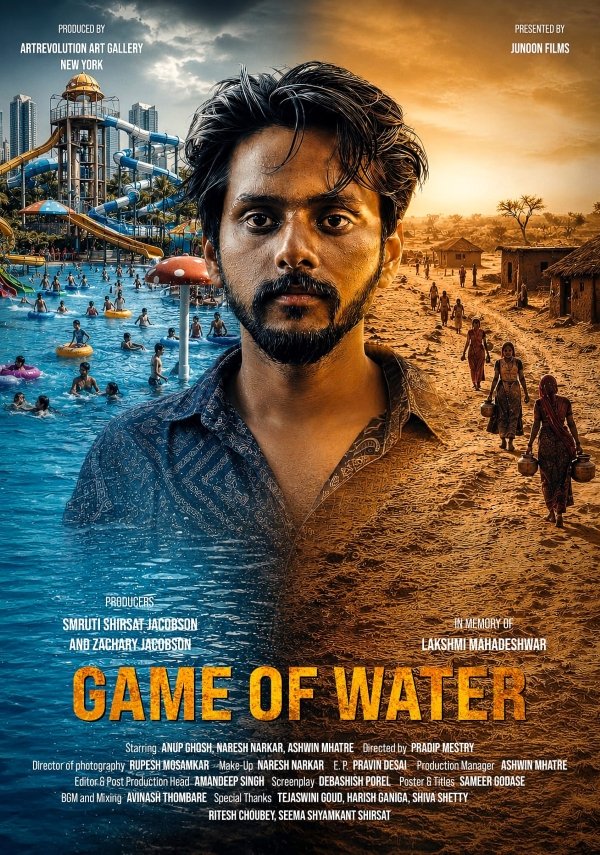
Water sits at the center of the film as both a resource and a flashpoint. The story examines how something essential to life became a subject of conflict, politics, and survival. Its storytelling and imagery follow the struggles of specific communities, the pressure climate change places on them, and the case for sustainable action.
Timing shapes the project. Environmental strain on water systems has intensified worldwide, and the filmmakers position the work as both a warning and an argument for action. The project draws on Indian storytelling while addressing a problem that crosses borders, and Shirsat Jacobson and Jacobson lead it together.
Behind the Production
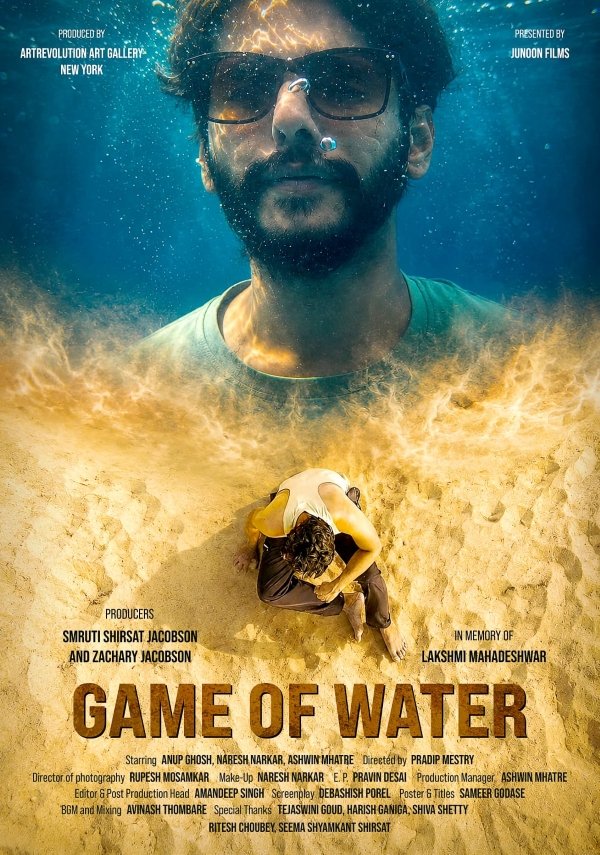
Artrevolution Art Gallery LLC is moving beyond the canvas with Game of Water, an upcoming short film produced by Smruti Shirsat and Zachary N. Jacobson. The project is based in New York City and marks the gallery’s first step into cinematic storytelling.
Pradip Mestry directs, with an ensemble cast that includes Anup Ghosh, Naresh, and Ashwin. Cinematographer Rupesh Mosamkar handles the visual narrative, and makeup artist Naresh Narkar oversees the cast’s on-screen look.
Pravin Desai serves as executive producer and Ashwin Mhatre as production manager. Amandeep Singh leads the edit. Debashish Porel wrote the screenplay, which the team credits with giving the storyline its depth.
The production also extended acknowledgments to Harish Ganiga, Shiva Shetty, and Ritesh Choubey for their contributions.
Zachary Jacobson, a photographer and thoroughbred owner based in New York City, co-produces alongside Smruti Shirsat. A release date for Game of Water has not yet been announced.
Why Our Cities Are Running Out of Water
Turn on a tap in any modern metropolis and water flows without effort. That ease masks a harder reality, which is that urban centers are running short of water. Smruti Shirsat and Zachary Jacobson have launched a global awareness campaign in response, aimed at cutting through urban complacency and changing how city dwellers think about what comes out of the tap.
Their campaign runs alongside the film. As metropolitan areas push infrastructure to its limits, the initiative frames urban water management as something cities need to rethink now rather than later.
The Illusion of Abundance
Water covers roughly 70% of the Earth’s surface, but only about 3% of it is fresh. Much of that fresh water is locked away in glaciers, which leaves a small fraction accessible to the billions of people who depend on it.
Rural populations keep moving into metropolitan areas at high rates, and urban infrastructure is buckling under the demand. Add the unpredictable weather patterns driven by climate change, and several major cities have edged toward Day Zero, the point at which municipal taps run dry.
Where Urban Water Goes to Waste
Shirsat and Jacobson argue that scarcity in cities is not only a supply problem. They describe it as a failure of conservation culture. Billions of gallons of treated, potable water disappear daily in major cities for reasons that include:
Aging infrastructure: Corroded underground pipes and hidden main breaks leak millions of gallons before water reaches a consumer.
Domestic negligence: Ignoring a leaky faucet, leaving the tap running while brushing teeth, and taking long showers add up to substantial structural waste.
Commercial overuse: Large commercial complexes, luxury recreational facilities, and manicured urban landscaping draw heavily on drinking-quality water for non-essential purposes.
When water is cheap and arrives at the turn of a handle, its value fades from view. That gap between availability and consumption is where wasteful habits take root.
What the Campaign Asks Cities to Do
The initiative works along two tracks: localized accountability and public education. Shirsat and Jacobson advocate for changes at both the municipal and individual level:
Smart metering and tech integration: Cities deploy water meters that track real-time usage and flag anomalies, letting homeowners and city engineers catch and repair leaks quickly.
Mandatory graywater recycling: Municipalities require commercial and residential buildings to recycle graywater from sinks, showers, and laundry for building cooling, toilet flushing, and landscaping.
Public awareness and behavioral shifts: Educational campaigns treat water conservation as an ongoing civic duty rather than a temporary emergency measure.
Water Scarcity as a Shared Responsibility
The campaign led by Smruti Shirsat and Zachary Jacobson reminds us that every drop wasted in a city is a drop stolen from our collective future. Water scarcity is no longer confined to arid climates or developing nations. It has reached the world’s largest financial and cultural hubs.
Policy alone will not resolve it. Overcoming the urban water crisis calls for a change in how people behave day to day. Treated with urgency, conservation turns urban populations from passive consumers into stewards of the resource they depend on.