
By: Ayidana Tianshan – MA Candidate in Communication, Johns Hopkins University
On May 2, 2026, Global Art & Culture USA presented an international cultural concert in Washington, D.C., bringing together a distinguished lineup of emerging artists from diverse artistic and cultural backgrounds. Featured artists included Dr. Boya Li, Dr. Xi Lu, Dr. Shanshan Zhang, Danyi Ma, Ziwei Xu, Qingzhou Zhang, Lucas Chao Liu, Jingyi Xu, Jiayi Zhao, and others.
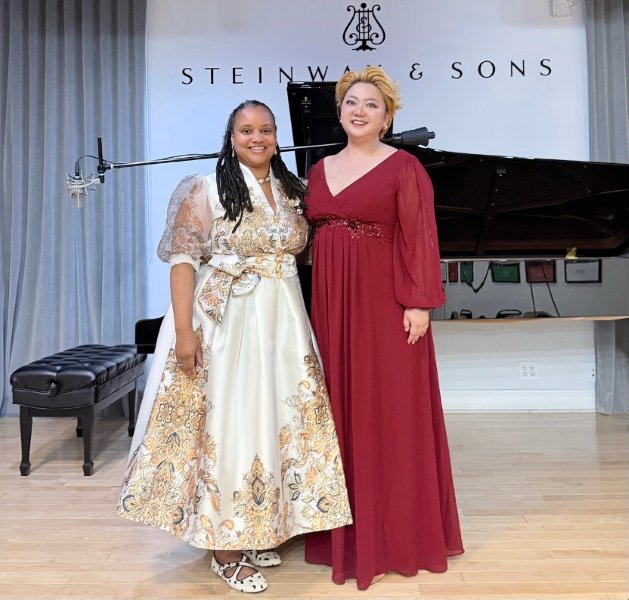
The event was formally recognized by H.E. Ambassador Dr. Tiffany Lancaster, United Nations Special Envoy for Public Affairs, and the Washington, D.C. Mayor’s Office on African Affairs. This recognition highlighted Global Art & Culture USA’s growing role in advancing international cultural exchange, artistic collaboration, and cross-cultural understanding through the arts.
The concert integrated music, visual art, and poetry, while also exploring the Chinese pentatonic system in a contemporary global context. A solo exhibition by artist Liaoweichang further connected the visual and performing arts.
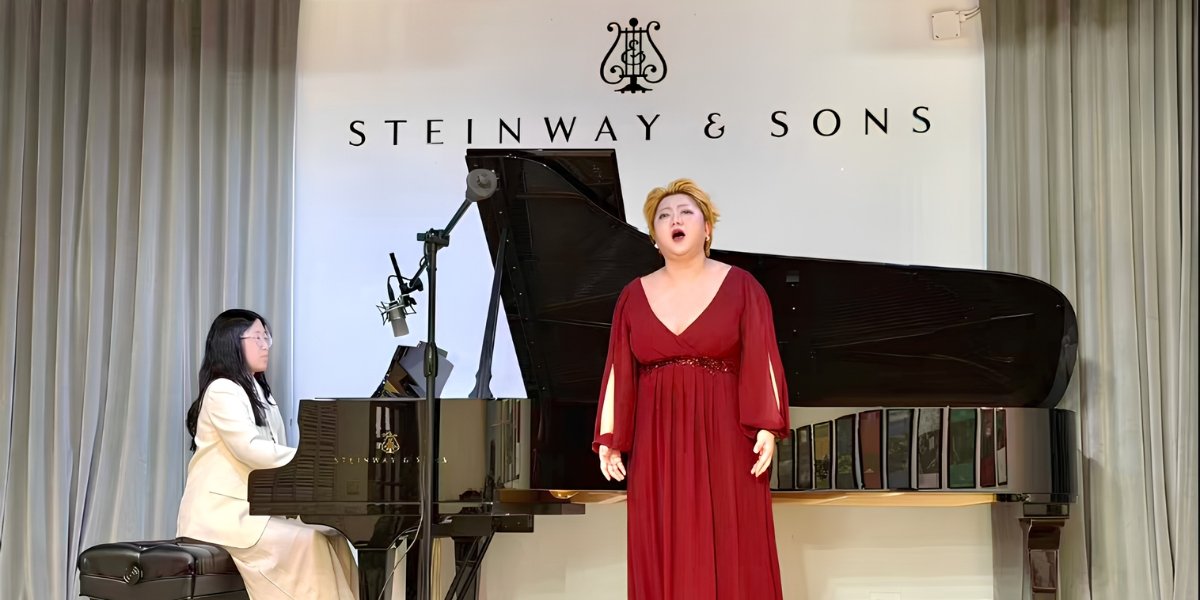
As part of the evening’s vocal program, mezzo-soprano Dr. Shanshan Zhang, in collaboration with pianist Dr. Xi Lu, performed “Suicidio!” from La Gioconda, Op. 9, Act IV, by Amilcare Ponchielli (1834–1886). Widely recognized as one of the most dramatic and emotionally demanding arias in the Italian operatic repertoire, “Suicidio!” requires the performer to combine vocal power, technical precision, emotional intensity, and theatrical depth.
Although the aria is often associated with a dramatic soprano voice, it also presents significant challenges for mezzo-soprano performers because of its expansive vocal range, intense dynamic contrasts, and sustained emotional weight. The work demands careful control of breath, phrasing, diction, dramatic pacing, and vocal color. Its musical writing moves through vulnerability, despair, strength, and tragic resolution, making it a work that tests both vocal technique and artistic maturity.
Dr. Zhang’s interpretation brought a powerful emotional presence to the stage. Her performance conveyed the aria’s tragic intensity through expressive vocal color, clear musical phrasing, and strong dramatic commitment. With a warm and resonant tone, she shaped the aria’s emotional arc with sensitivity and control, allowing the audience to experience both the character’s inner struggle and the grandeur of Ponchielli’s operatic writing.
Throughout the performance, Dr. Zhang demonstrated impressive technical command and expressive depth. Her voice carried both strength and nuance, balancing dramatic power with lyrical sensitivity. Her stage presence further enhanced the emotional impact of the aria, creating a performance that was both musically refined and deeply moving. At the conclusion of the piece, the audience responded with enthusiastic applause, recognizing the intensity, artistry, and vocal accomplishment of her interpretation.
Following her performance, Dr. Zhang was invited for an individual interview, where she reflected on cultural exchange, artistic growth, teaching, and her future vision as a young artist.
When asked how she views the importance of cultural exchange, Dr. Zhang shared:
“I view cultural exchange as an essential part of artistic growth and human connection. Music has the power to communicate beyond language, nationality, and cultural background. Even when people do not speak the same language, they can still understand emotion, beauty, struggle, joy, and hope through music.
As a performer, cultural exchange broadens the way I interpret music. It allows me to approach repertoire not only through technique and style, but also through history, identity, and human experience. When artists from different backgrounds come together, we are not only presenting our own cultures; we are also learning how to see the world through someone else’s perspective.
As a voice teacher and voice pedagogy researcher, I also believe cultural exchange plays an important role in education. Students come from different backgrounds, and each student brings a unique voice, story, and way of learning. Cultural exchange reminds me to teach with openness, curiosity, and respect. For me, cultural exchange is not simply about performing music from different countries. It is about building bridges between people.“
Dr. Zhang also spoke about her future goals as an artist and the kind of contribution she hopes to make to society:
“As a young artist, my future goal is to contribute to a more connected, compassionate, and emotionally aware society through music. I believe that art has the power to reach people in ways that ordinary language sometimes cannot. Music can comfort, inspire, challenge, and bring people together.
As a performer, I hope to use my voice to tell stories that speak to shared human experiences. As a teacher, I hope to support the next generation of singers and help students develop confidence, discipline, and self-expression. I want my students to understand that their voices matter, and that singing is not only a technical skill but also a powerful form of communication.
In the future, I hope to continue bringing together performance, education, research, and cultural exchange. Ultimately, I want to become an artist whose work is artistically strong, socially meaningful, and deeply human.“
When asked how she balances performing and teaching in her daily work, Dr. Zhang emphasized that the two roles are deeply connected:
“Balancing performing and teaching requires both discipline and flexibility. In my daily work, I see these two roles as connected rather than separate. Performing keeps me artistically active and reminds me of the vulnerability, focus, and courage required to sing on stage. Teaching, on the other hand, gives me the opportunity to reflect more deeply on vocal technique, communication, and the learning process.
My experience as a performer helps me understand what students face when they prepare for auditions, recitals, or performances. At the same time, teaching strengthens my own musicianship because it encourages me to explain, listen, observe, and solve problems with greater clarity. What I learn on stage informs my teaching, and what I learn in the studio deepens my artistry as a performer.“
Dr. Zhang further reflected on how teaching shapes her own artistry:
“Teaching has a deep influence on my work as a performer. When I teach, I have to listen carefully, observe closely, and explain vocal technique in a clear and meaningful way. This process reminds me to be more aware of my own instrument, my breath, my resonance, my diction, and the way I communicate through music.
Teaching also helps me become a more thoughtful performer. In the studio, I often help students work through challenges such as stage anxiety, musical interpretation, technical coordination, and emotional expression. These conversations remind me that performing is not only about producing sound, but also about telling a story with honesty and intention.“
When discussing what she hopes students learn beyond vocal technique, Dr. Zhang highlighted confidence, self-expression, and personal growth:
“Beyond vocal technique, I hope my students learn confidence, self-expression, and the courage to communicate through music. Singing is deeply personal because the voice is part of who we are. I want my students to feel that their voices, stories, and emotions matter.
I also hope they learn patience, discipline, and curiosity. Vocal growth takes time, and each singer develops at a different pace. For me, voice lessons are not only about creating beautiful sound. They are also about helping students develop a stronger sense of identity, confidence, empathy, and artistic imagination.“
Dr. Shanshan Zhang is a mezzo-soprano, voice teacher, and voice pedagogy researcher. Her work brings together performance, teaching, and research. As a performer, she explores the expressive power of the human voice on stage. As a teacher, she helps students discover and develop their own voices. As a researcher, she examines the ways in which voice instruction, communication, and pedagogy shape the learning process.
Her professional identity reflects a deep connection between artistry and education. For Dr. Zhang, performing and teaching are not separate paths, but mutually supportive forms of musical communication. Her work on stage informs the way she teaches, while her experience as a voice educator deepens the way she interprets music and connects with audiences.
Through her participation in the Global Art & Culture USA international cultural concert, Dr. Zhang contributed to a broader celebration of artistic diversity and global dialogue. Her performance of “Suicidio!” showcased her vocal strength, dramatic sensitivity, and interpretive artistry, while her interview highlighted her thoughtful commitment to cultural exchange, education, and social connection through music.
As Global Art & Culture USA continues to expand its platform for international artistic collaboration, artists such as Dr. Shanshan Zhang represent the next generation of performers, educators, and researchers committed to advancing cultural understanding through the arts. Her performance and reflections offered a powerful reminder that music can communicate across differences, inspire emotional connection, and contribute to a more compassionate global society.