
By: James Manley
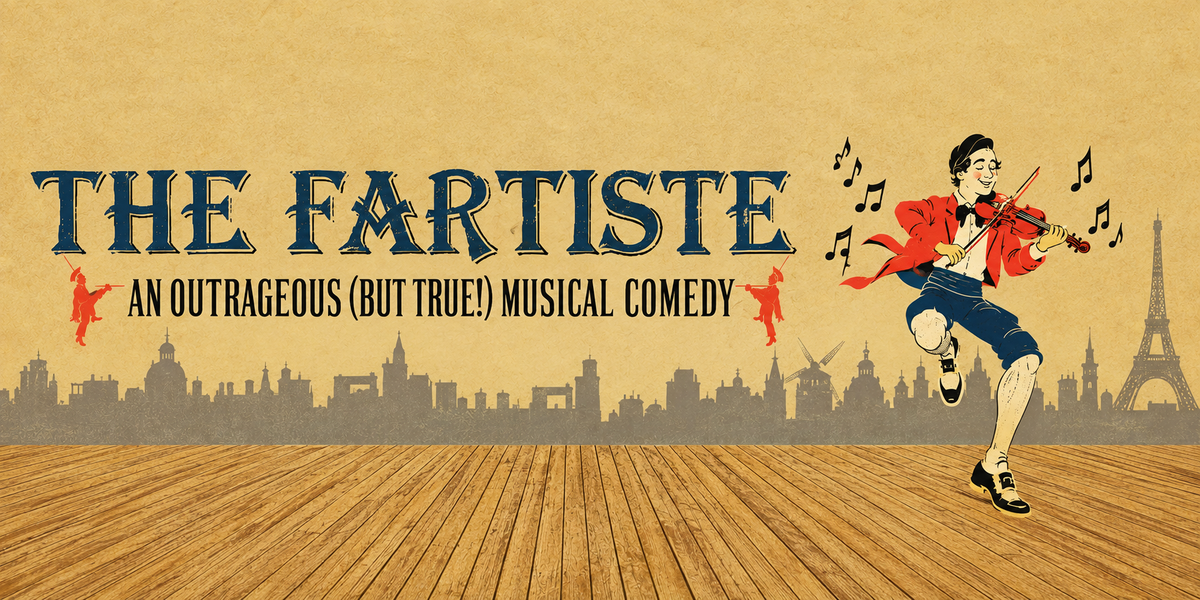
The award-winning musical about history’s most celebrated professional farter returns to New York, and composer Michael Roberts insists the joke was never really the point.
There are certain sentences that probably should not lead to a musical.
Here is one: In 1890s Paris, one of the Moulin Rouge’s biggest stars was a man who could fart on command.
And yet, twenty years after composer-lyricist Michael Roberts and playwright Charlie Schulman turned the unlikely true story of Joseph Pujol, better known as Le Pétomane, into The Fartiste, the musical is returning to New York.
Which raises an obvious question: How does a show about a professional flatulist last twenty years?
According to Roberts, the answer is that The Fartiste was never really about farting.
“That was the challenge from the beginning,” he says. Beneath the title and the built-in laughs, Roberts and Schulman saw someone who recognized the strange gift nature had handed him and transformed it into something extraordinary.
“At the heart, we were telling the story of a person who took what was unique to them, and then made something special out of it,” Roberts says.
That may sound suspiciously inspirational for a musical whose hero’s most famous instrument was his backside. But it is precisely that contradiction that has kept The Fartiste alive.
The show returns September 28 and 29 at the Laurie Beechman Theatre, twenty years after its original 2006 New York International Fringe Festival production won Best Musical. It later received an Off-Broadway production during the 2011–12 season and development work in London.
The anniversary concerts reunite Roberts and Schulman with a show they largely left behind after London. When original producer Stephen Hanks suggested bringing it back, they were immediately interested.
Before influencers, there was Le Pétomane.
Joseph Pujol was no fictional comic invention. He was a genuine French celebrity.
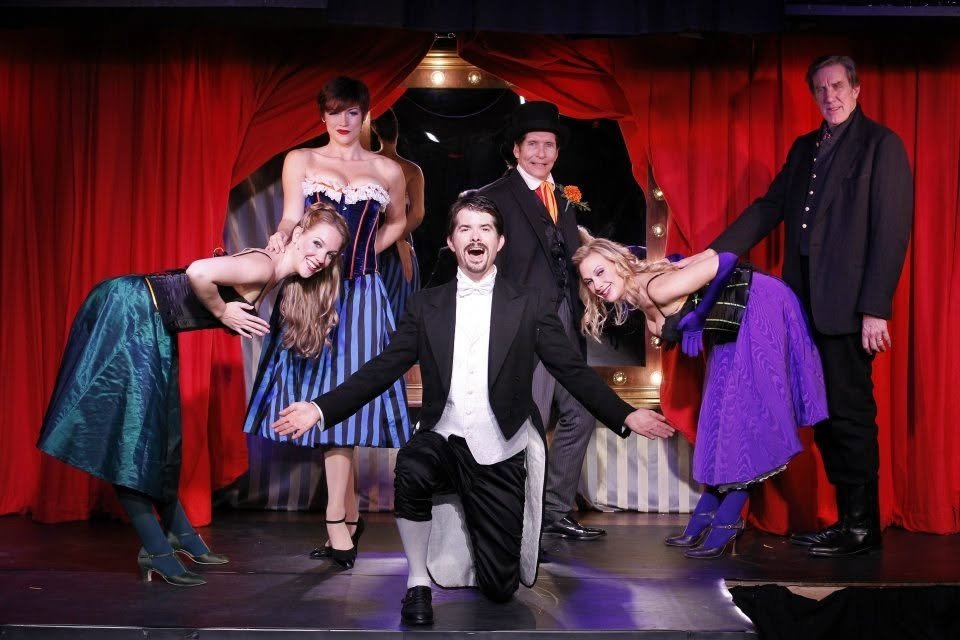
Originally a baker, Pujol discovered extraordinary control over his abdominal muscles, eventually developing an act in which he could reproduce sounds, imitate musical instruments and build comic routines from controlled expulsions of air. By the 1890s, he was a sensation at the Moulin Rouge.
What surprised Roberts most was not what Pujol could do. It was how famous he became.
“Pujol was a star,” Roberts says.
That distinction became important as Roberts and Schulman developed the musical. When they began writing The Fartiste, America was entering an era when fame could become a career in itself. Roberts remembers thinking about Paris Hilton and what he calls “empty celebrities”, people famous largely for being famous.
Pujol, ridiculous as his talent may sound, was different. He actually had one. And he worked at it.
The difference between notoriety and developed ability became one of the show’s unexpected themes. Two decades later, in an age of TikTok stars and influencers, it may be even more recognizable.
If Pujol were alive now? Roberts imagines a world tour, a YouTube instructional channel and perhaps a TED Talk.
“Preferably at an outdoor venue,” he adds.
The danger of The Fartiste is obvious. You can make an audience laugh at the title before anyone has played a note. Keeping them interested for an entire musical is harder.
Roberts and Schulman understood that the piece could work only if they resisted treating Pujol himself as the joke. The comedy could be outrageous. The storytelling could not be contemptuous.
Pujol’s trajectory, discovering an unusual ability, refining it, risking humiliation, seeking an audience and eventually becoming successful, was, Roberts realized, essentially the trajectory of almost every performer.
“His story isn’t essentially different than any determined, high-performing artist,” he says. “It’s a very traditional human story.”
Even the score reflects that contradiction. For all its unusual subject matter, Roberts describes The Fartiste as an exceedingly traditional musical, filled with old-school Broadway tunes. People who hear the title may expect bathroom humor, only to discover a conventional musical comedy hiding beneath the provocation.
Twenty years ago, even saying the name was a problem. Roberts remembers television outlets covering the original production that were unwilling to say The Fartiste on the air.
He wonders whether anyone will still be quite so delicate in 2026.
Probably not. The internet has happened.
The revival also preserves one of the show’s cleverest devices: two performers essentially create Joseph Pujol. One plays Pujol as the singing, dancing, emotional center of the story. Another provides the extraordinary sound effects, generated, Roberts emphasizes, with his mouth.
Together, the performances create what Roberts calls a “three-dimensional Joseph Pujol.”
Roberts now jokingly calls himself a “theater veteran”: old enough to see his own work revived. Revisiting The Fartiste, he was struck by how light the show remains.
“Breezy,” he calls it.
Yes, he knows. The pun was unavoidable.
The more interesting reason to revisit The Fartiste is that Pujol’s story somehow feels less bizarre now. We live in a culture in which an unusual talent can become global content overnight. Questions about who deserves fame, and whether fame itself constitutes accomplishment, have only become more complicated.
Pujol would probably understand the influencer economy perfectly.
What differentiates him, Roberts argues, is what differentiated him in 1890s Paris: He took the absurd thing he could do and worked until he could do it extraordinarily well.
That makes him ridiculous.
It also makes him an artist.
That is the sly charm Roberts and Schulman found in Pujol: the stranger the talent, the more familiar the ambition becomes. Strip away the novelty, and what remains is an entertainer determined to be taken seriously.
And after twenty years, that may be the secret of The Fartiste: The title gets you through the door laughing. Then the musical quietly asks you to reconsider what you were laughing at.
Not bad for a show about a man who could blow out candles without using his mouth.

Now, 20 years after its critically-acclaimed Off-Broadway run, THE FARTISTE brings its outrageous true story back to the stage with an explosive Anniversary Concert celebration on September 28 & 29 at the Laurie Beechman Theatre at the West Bank Café, 407 W 42nd St, New York, NY 10036. Both shows are at 7 pm. Tickets are $50 with a $25 food/beverage minimum per person. THE FARTISTE is produced by Stephen Hanks and Revive Entertainment, with Christopher Scott serving as Director. The cast will be announced at a later date. For reservations, go to: 9/28 / 9/29