Music education has long been confined to classrooms and private lessons, but German cellist Louise Thiele redefines how the instrument is taught. With a career spanning global concert stages, she merges classical training with digital accessibility, proving that structured learning can transcend borders. Her online course, Cello Fundamentals – Learn to Play the Cello in 90 Days, brings high-quality instruction to adult beginners, making cello education more accessible than ever.
Thiele’s journey began in 2007, shaped by Germany’s rigorous classical training system and over a decade of study, refined her skills in both performance and teaching, laying the groundwork for her innovative approach. While performing in orchestras and ensembles, she sought to expand beyond traditional settings. In 2018, two years before the global pandemic, she digitized her teaching method, pioneering online instruction at a time when it was met with skepticism in Germany. Despite facing ridicule for embracing online teaching so early, her foresight allowed her to easily navigate the crisis. In 2022, she moved to the Middle East, where she performed in luxury venues while continuing to develop her digital teaching methods, seamlessly blending live performance with online education and breaking barriers in music instruction.
One of Thiele’s most significant contributions is her digital learning platform for cellists. Launched in 2018, her online course for Cello beginners provides structured video lessons, exercises, and worksheets, offering a self-directed learning experience without compromising instructional quality. Built upon years of hands-on teaching, it has helped students worldwide achieve their musical goals.
Alongside her work in education, Thiele’s performance career has flourished. Her versatility has led to engagements in high-end venues, where she plays for internationally recognized hotels and restaurants. Beyond performing, she has positioned herself as a consultant within the hospitality industry, advising on the integration of live music to enhance guest experiences.
How the Online Course for Cello Beginners Was Created
While mentoring students, Thiele recognized a gap in structured, mindful learning for adult beginners. Drawing from her own early learning experience, she initially coached her first students in 2007 using the same approach that had helped her master the cello as a child. This method consistently led beginners to success, expanding her student base through referrals. Determined to make learning even more accessible, she digitized her teaching approach in 2018, Cello Fundamentals – Learn to Play the Cello in 90 Days. This guided online course takes students from the very beginning, such as holding the instrument, to playing their first small, easy pieces, even without prior experience in reading music. By distilling years of teaching experience into a clear, adaptable format, she empowers learners to progress independently, join ensembles, or even perform live.
“The online course is my way of making this method accessible to more people and enabling myself to teach from anywhere,” Thiele explains. “I have achieved that.”
Beyond her role as an educator, Thiele is an accomplished performer specializing in both classical and crossover music, seamlessly blending pop, jazz, Latin, and soul into her repertoire. Her teaching philosophy reflects this versatility, offering structured instruction while integrating modern learning tools to make classical training more approachable.
Her method has already transformed the musical journeys of students from diverse backgrounds. A 14-year-old beginner, balancing school and practice, learned to play from scratch with the support of her mother and Thiele’s structured beginner’s course. Meanwhile, a Canadian CEO with prior cello experience refined his skills through advanced training and ultimately achieved his goal of joining a local amateur orchestra.
These stories illustrate the broad appeal of Thiele’s approach. By blending structure with flexibility, she empowers students of various ages and backgrounds to incorporate music into their lives, whether as a rewarding personal pursuit or a pathway to professional performance. While her digital lessons are designed specifically for adults looking to fulfill a lifelong dream, she encourages children to learn through a music school or a private teacher. Believing that young learners already spend enough time in front of screens, she advocates for in-person instruction to help them reconnect with their bodies and reconnect with the real world.
Challenges and Obstacles
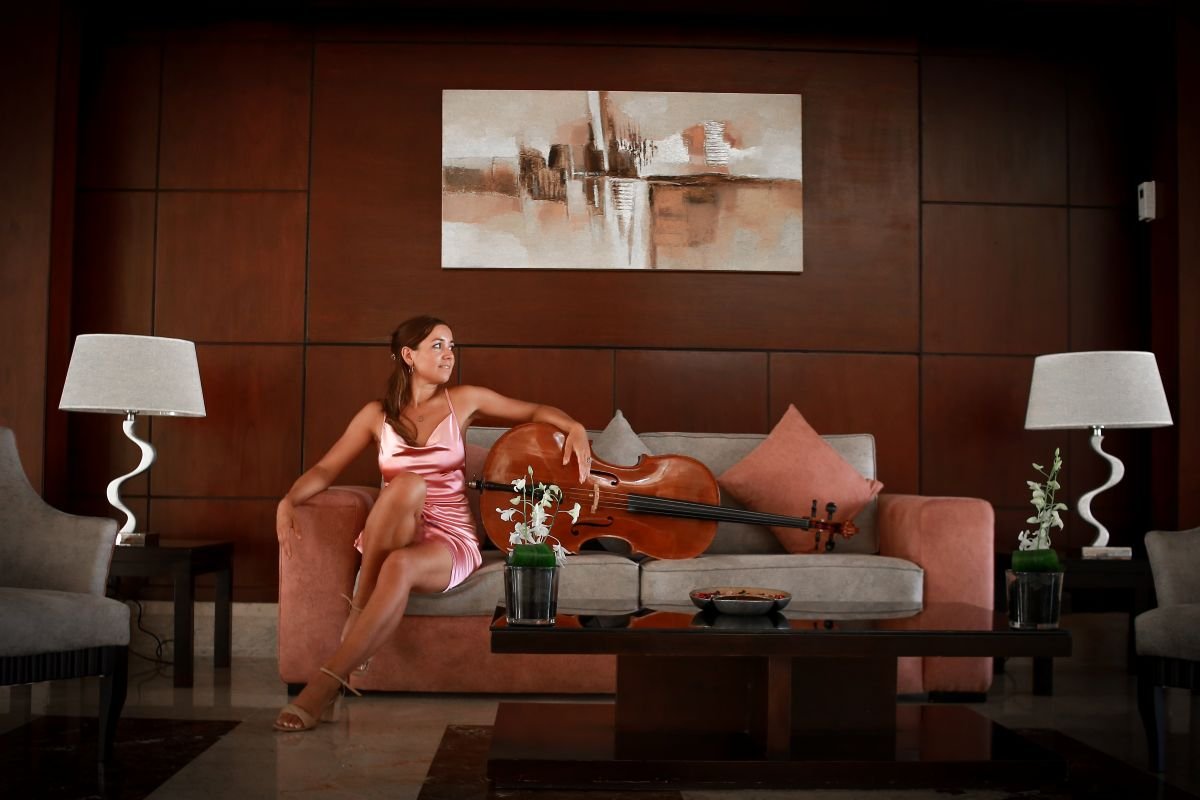
Photo Courtesy: Louise Thiele
Transitioning from traditional music education to digital teaching was not without obstacles. Initially, Thiele´s prospects resisted modern technology, relying on paper sheet music and in-person instruction. However, the high demand from students from different cities pushed her to adapt, ultimately leading to the creation of her online course. When she went digital in 2018, she was the first in the German market, facing skepticism and even ridicule from colleagues who doubted the effectiveness of online instruction. Many believed in-person lessons were superior, dismissing the idea that digital teaching could be just as effective, if not more so. However, Thiele soon proved them wrong. By providing structured, recorded lessons that students could revisit as often as needed, she found that their progress often surpassed that of traditional one-on-one instruction. Embracing digital tools not only expanded her reach to a global audience but also reinforced the effectiveness of her structured approach.
Breaking into the hospitality industry as a musician presented another challenge. Unlike the orchestral and freelance work she was familiar with in Germany, performing in luxury hotels required a different understanding of the target audiences, venue dynamics, and business operations. To succeed, Thiele expanded her previously exclusively classical repertoire from her music studies to include various styles and immersed herself in the world of upscale hospitality and fine dining entertainment, ensuring her performances enhanced the atmosphere of each venue.
Throughout her journey, Thiele credits her last cello teacher as a key influence. The detailed, structured training she received from 2006 to 2012 became the foundation of her teaching philosophy. She explains, “I believe that every person is musical, but many lose touch with it over time. The task of a good teacher is to help them reconnect through mindfulness, knowledge, and experience.”
Future Plans and Aspirations
Thiele is expanding her digital education offerings beyond the cello, introducing comprehensive music training programs. She is also creating additional online courses and mentorship opportunities to offer students more personalized guidance. As a performer, she continues to play in luxury venues worldwide while exploring new opportunities in music consultancy within the hospitality industry.
Currently, she holds the position as the resident cellist of the renowned 5-star hotel Fairmont in Riyadh, Saudi Arabia, working in a managerial position. In addition to her performances, she manages one of the hotel´s social media channels and oversees three digital brand projects in the field of Food & Beverage.
Advice for Aspiring Musicians
Thiele emphasizes the importance of dedication and structured practice in musical development. She advises students to seek guidance from experienced mentors rather than relying solely on self-teaching resources. While digital platforms provide valuable learning tools, she believes that personal mentorship remains essential for mastering an instrument.
Her approach to music reflects a philosophy that blends tradition with adaptability. She encourages aspiring musicians to remain open to different styles, to use technological advancements to evolve traditional learning, and to continuously refine their craft through disciplined practice and continuity.
Published by Jeremy S.