
By: Kahyun Lee
As Nathan Jurgenson has argued, the conceptual gravity of how we read images today is “less art historical and more social theoretical”.1 Vision is itself a social act, a means by which hierarchies are actively enforced and performed. Chenyu Wang’s Social Structures in Vision (2025) sits precisely within this terrain. Social Structures in Vision follows a genderless figure across the span of life from infancy to adolescence through three distinct sections. They are watched, attended, and offered tributes. They never look back.
At the outset, Wang stages the work within a tholos ringed by thirteen Doric columns, with single entrance flanked by red-horned beasts. At the centre of the tholos, a golden infant is held in a sophisticated cot, surrounded by numerous figures coated with copper rust leaning towards the infant. They appear identical and interchangeable, yet each is marked with a barcode at the nape. The standing figures form concentric rings around the cot, while every gaze is programmed to terminate at the cot. All of these are arranged into the choreography of an ongoing cult ceremony.
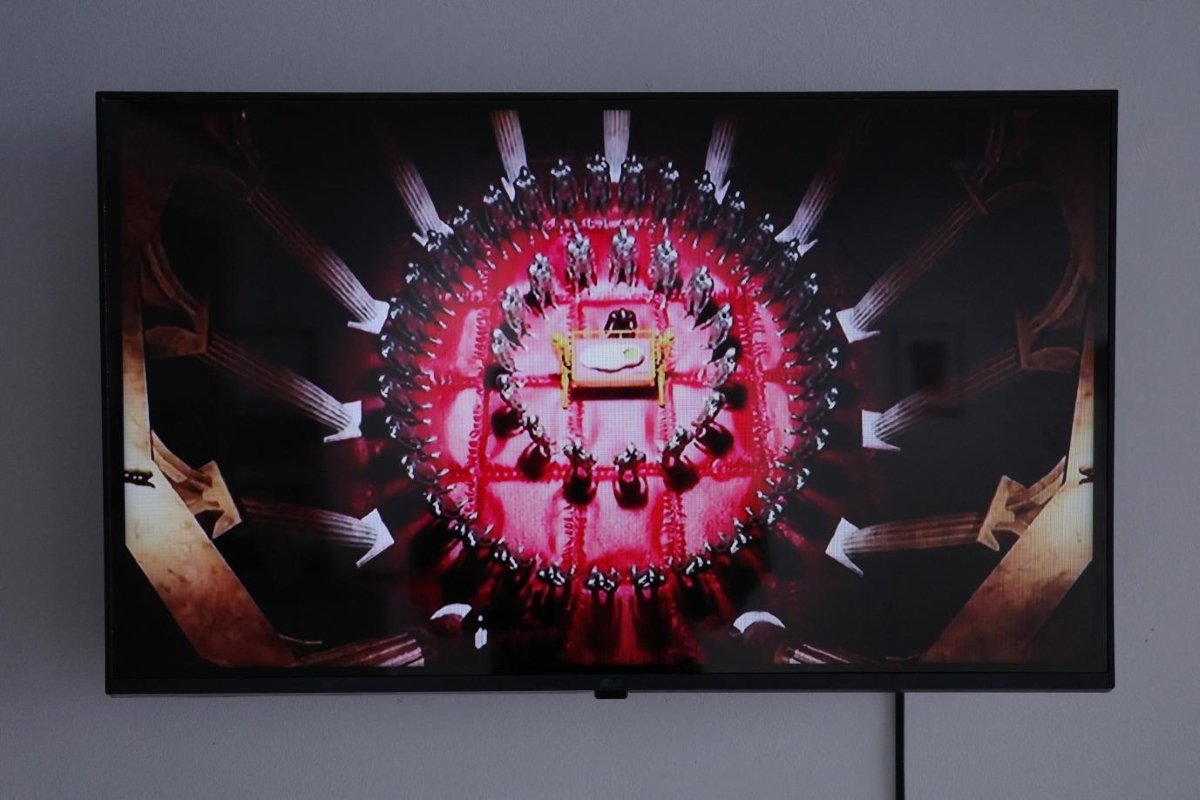
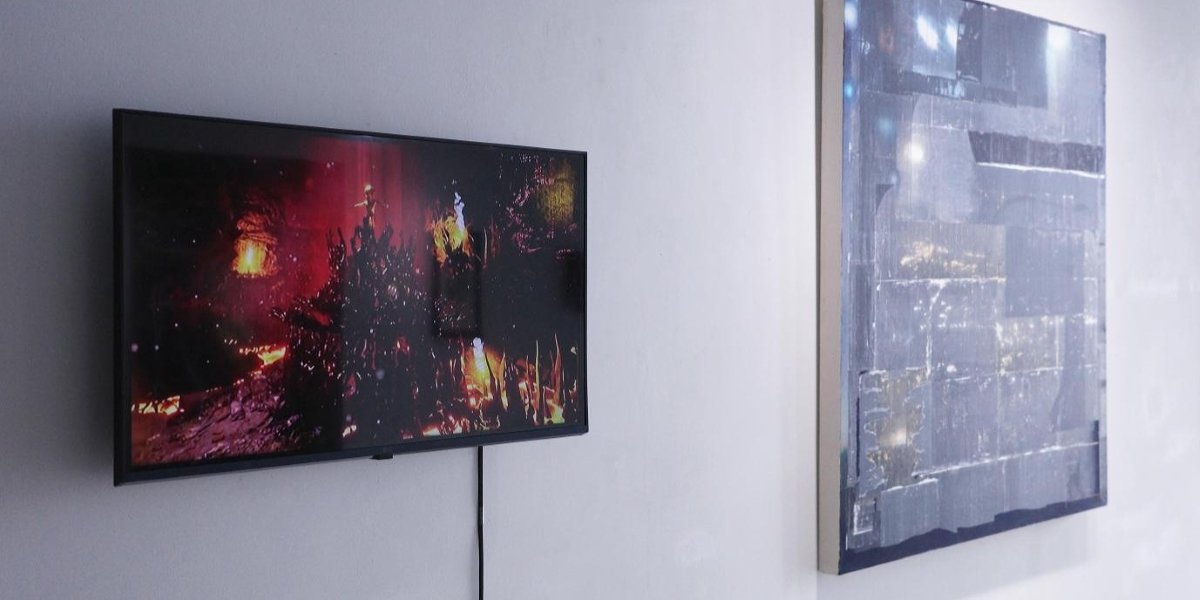
The figures kneel on one knee with both hands raised in offering, while the now-grown child sits on an oversized sofa, feet swinging in the air. Everything they touch or use, from their toys to their playground slide, is entirely gold. The colour becomes the designation of the locus where everything accumulates. They clap and dance repeatedly, claiming the space they occupy and inserting their presence. By the third and final scene, the site of dancing moves to a cave of flowing lava, where the child stands atop a pyramid of bodies whose hands reach upwards in supplication. The arc from cot to summit is complete. They are always seen, never seeing. The figures are always seeing, yet never seen. Wang depicts this contrast of seeing as the mechanism of the optics of power. The indistinguishability among the participatory figures generates an otherness that becomes eerie.
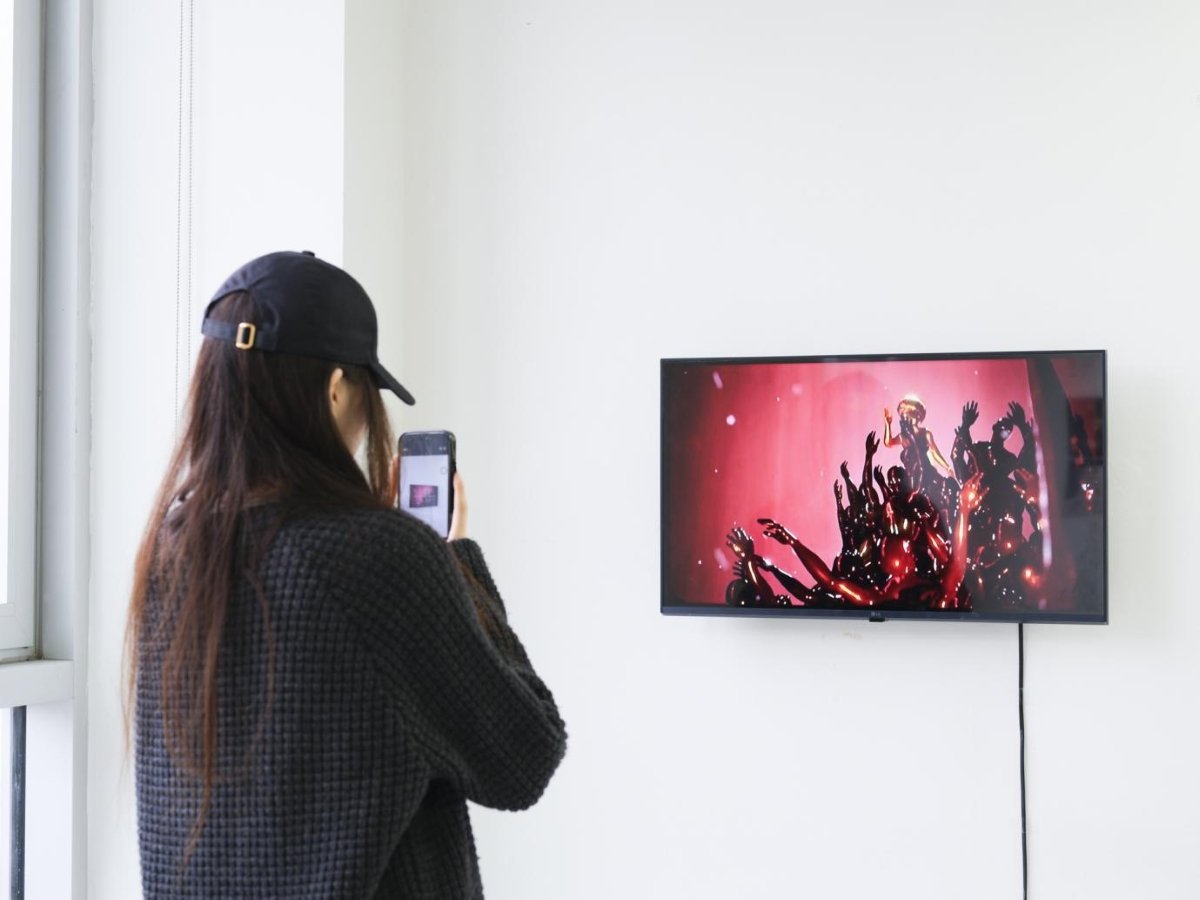
What makes the work uncanny is not the central figure’s ambiguity but their familiarity. They are unremarkable in every feature except the androgyny that marks them as the abstract form of sovereignty itself, freed from the particularities of body that bind everyone else. Social Structures in Vision registers how power, in its consumerist iteration, depends on being looked at. Wang observes how power is not manifested through physical force, command, or violence, but through the mechanism of optics. Wang’s work reveals the operation of the act of looking, a figure being gazed at, and the power surrounding it. By rendering this circuit in the sleek visual language of CGI, Wang holds the image at the distance required to see it at all. Eventually, the viewer, watching the watchers, completes the structure.