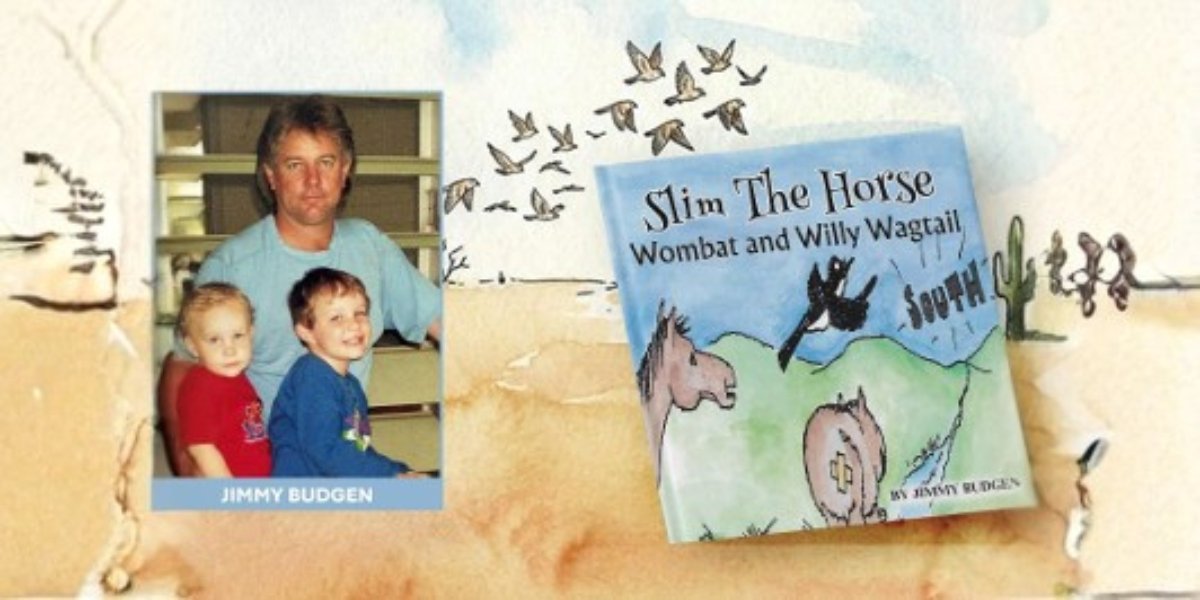

Jimmy Budgen didn’t set out to write literature. He was a project manager in Weipa, a bauxite mining town clinging to Cape York’s edge, spinning bedtime stories for two boys who needed them. What emerged was something rarer than polished prose: a story that breathes like the country it describes.
Slim the Horse, Wombat and Willy the Wagtail operates on deceptively simple machinery. A starving horse. A cheerful bird. A grumpy marsupial with a thorn in his rump. Yet Budgen captures the particular cruelty of Australian drought, the way the west bleaches to bone while the east stays green, how survival often means knowing which direction to walk.
The book’s geography is precise. Budgen wrote in 2003, and the landscape he describes, those Queensland ranges where creeks begin their journey to the ocean, still functions as living map. When Willy Wagtail directs Slim east toward the mountains “where the sun comes up,” he’s offering more than navigation. He’s transmitting Indigenous-adjacent knowledge that many contemporary children’s books sanitize or ignore.
Reg Seabourn’s illustrations deserve their own study. A power station attendant who drew cartoons for the “local rag,” Seabourn, understood the visual language of Australian humor, those watercolor washes that suggest vastness without conquering it, the way Slim’s ribs show through his hide without traumatizing young readers.
What stays with you isn’t the plot. It’s the texture of mutual rescue. Wombat saves Slim from mud; Slim extracts Wombat’s thorn. Neither enjoys the intimacy. Both honor the debt. This is friendship as Australians often practice it, practical, reluctant, deeply binding.
The book has survived twenty years in manuscript drawers and family memory. Its 2026 publication feels less like a debut than a resurrection.