
By: Tabish Khan
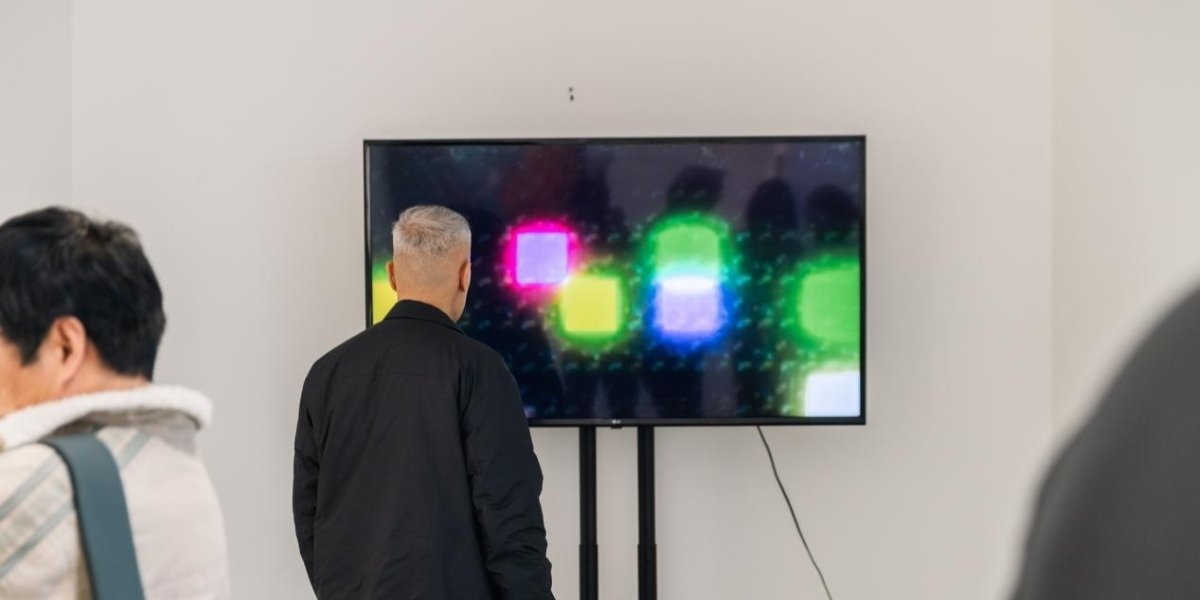
We open our phones or turn on our laptops, and we’re overwhelmed with data, colours, ideas, and connection; it’s overwhelming. We get that same sensation from Yaxuan Liao’s film, ‘Emotional Algorithm’, where a close-up of a face is bathed in unearthly colours as connections occur behind and in front of it. Are these online connections or those within our brain’s synapses, and have we reached the point where we can’t tell the difference? How long before our consciousnesses can be uploaded to the cloud? These are important questions that Yaxuan Liao tackles through her art.
In the four-part series, ‘Resonant archives’, data from multiple sources jumps from abstract lines and waveforms to an avatar that seems to be enacting fighting moves, and a gong that transforms into a bell, which can be heard amid the digital sounds. Chinese symbols, English text, and urns are also present in films that aim to overwhelm you with data, including migratory flows, familial memories, mental health statistics, and information on stellar lifecycles and constellation trajectories.
It brings to mind the work of acclaimed artist Ryoji Ikeda and Refik Anadol, who use data to create immersive experiences that overwhelm us yet leave us hypnotized by the abstract patterns interspersed with recognizable imagery. Artists have always been at the forefront of using the latest technology, going back to Nam June Paik and his early experiments with video art, and to the wider Fluxus movement and its approach to using the materials that wider society had to offer.

While the previous works we’ve discussed by Yaxuan Liao deal with the universal and societal impacts of data, ‘Self as Data’ breaks it down into a more personal level. We are all creating data as we live our lives: step counts, our sleep patterns, and our location through GPS. Our phones store enough data to create a replica of ourselves, and that’s what this work asks us to consider.
We can use this data to improve our lives and learn how to live more healthily, but what are we giving away in terms of data privacy? The author Shoshana Zuboff has named this process ‘Surveillance Capitalism’ as companies seek to monetize our data. How far off are we from companies selling items to us that we can’t resist? We already receive targeted advertising, but could there be a dystopian future where technology knows what we will buy and what decisions we will make before we do?
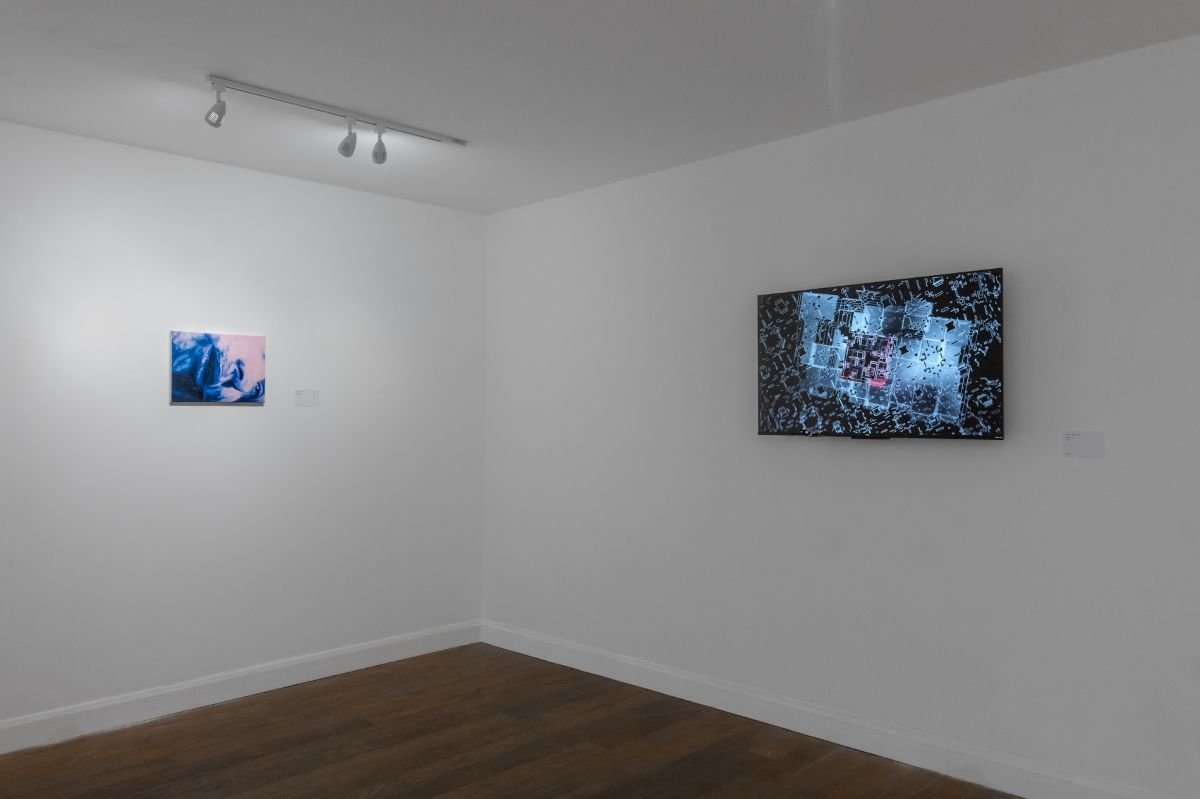
The artist is not providing answers but asking us to question this possibility ourselves. Much like contemporaries such as Hito Steyerl, through her lauded work ‘How not to be Seen’, and Lawrence Lek, who creates eerie worlds we can navigate with video game controllers, including his work ‘Notel’, where we navigate a fictional zero-star hotel.
We’re living through the information age, and with the rise of AI, the future looks uncertain. It’s important that artists like Yaxuan Liao are questioning it and challenging us to question what that future may look like, whether we should run from it or embrace it.